

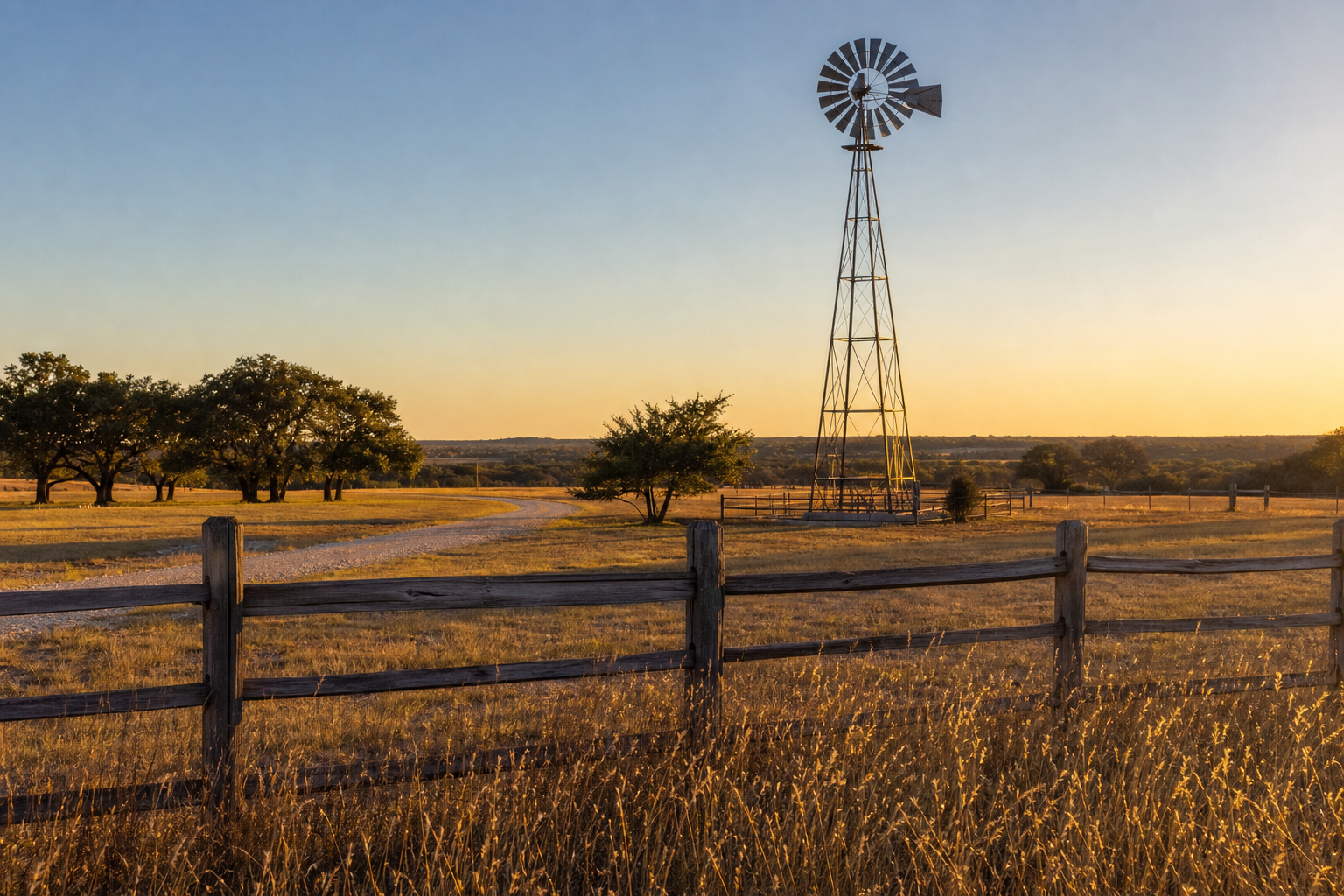
The 1897 Aurora, TX UFO Crash and What the Town Looks Like Today
What really happened during the 1897 Aurora, Texas, UFO crash, and what does this small Wise County community look like for visitors and investors today?
On April 17, 1897, a mysterious airship reportedly crashed into a windmill in Aurora, Texas, sparking one of America’s oldest UFO legends. Today, the tiny Wise County community still draws curious visitors, and that enduring story carries real implications for investors eyeing North Texas land.
Why Aurora’s UFO Legend Matters Right Now
If you’re exploring investment opportunities in the rural and exurban corridors stretching west from Fort Worth, you’ve probably driven right through Aurora along State Highway 114 without giving it a second thought. That could be a missed opportunity.
I’ve spent 17 years working real estate across Parker County, Wise County, and the surrounding North Texas region, and one thing I consistently see is that investors underestimate the value of a community’s story. Aurora has a story unlike any other small Texas town: an alleged UFO crash that predates the famous Roswell incident by nearly 50 years. Whether you believe the tale or not, it generates steady curiosity, annual tourism events, and a kind of cultural gravity that most rural communities simply can’t manufacture.
With DFW metro growth continuing to push buyers outward along major highway corridors, communities in Wise County, Parker County, Hood County, and beyond are catching investor attention. Aurora sits squarely on one of those growth corridors, and understanding what makes this place tick, from its colorful past to its present-day infrastructure, is worth your time.
The Aurora UFO Crash Story: What the 1897 Account Actually Said
So what exactly happened on that April morning in 1897? Here’s the account that put Aurora on the map, stripped down to what was actually reported.
According to a front-page article in the *Dallas Morning News* written by S. E. Haydon, a mysterious airship appeared over Aurora at around 6:00 a.m. on April 17, 1897. The craft reportedly struck a windmill on the property of Judge J. S. Proctor, crashing and scattering debris across several acres of the judge’s land. The article described a pilot who was “not of this world” and claimed the being had perished in the wreck. Town residents reportedly buried the pilot with Christian rites in the Aurora Cemetery and disposed of the wreckage in a nearby well on Proctor’s property.
Now, here’s the part you need to know as a critical thinker. The Texas State Historical Association characterizes Haydon, who was a cotton buyer by trade, as having written a fictional “news” story. Why would he do that? Because Aurora was dying. The town had been founded in the 1850s and had grown through the mid-1880s, but a spotted fever outbreak hit in 1888. Two years later, the Burlington Northern Railroad abandoned its plan to lay tracks through Aurora, and most of the remaining population relocated to Rhome, just two miles southeast, where the new railroad stop was built.
Was the story a tall tale designed to draw attention to a fading town? In a 1980 interview with *Time Magazine*, Aurora resident Etta Pegues, who was 86 at the time, claimed some of the town’s men “meant it for a joke to bring interest to Aurora” because “the railroad bypassed us and the town was dying.”
Whether it started as a hoax or not, the legend took on a life of its own.
The Crash Site, the Cemetery, and What You Can See in Aurora Today
If you’re planning to visit Aurora or you’re scouting the area for potential investment, here’s what’s actually on the ground today.
Aurora Cemetery and the Texas Historical Commission Marker
The Aurora Cemetery is the central landmark tied to the legend. A Texas Historical Commission marker stands on the cemetery fence, giving a brief history of the cemetery’s beginnings in the 1860s and mentioning prominent families buried there. The State of Texas also erected a historical plaque in town that outlines the UFO tale and labels it a “legend.” There was once a stone marker at the alleged alien burial site, though it has since been removed.
Judge Proctor’s Property and the Well
The windmill that was supposedly struck by the airship stood on Judge J. S. Proctor’s property. A well on that land was said to have been filled with crash debris. In 2004, the University of North Texas conducted a study of the well and found only typical household items, nothing extraterrestrial. Still, the site remains a point of interest for UFO researchers and enthusiasts.
State Highway 114: Aurora’s Lifeline
Here’s a piece of context I think every investor should understand. When postal service was discontinued in Aurora in 1901, the community was close to vanishing entirely. What saved it? The construction of State Highway 114 through the town in 1939, per the city of Aurora’s historical information. That same highway corridor now connects Wise County to the Fort Worth metro, and it’s the primary artery for commuters and investors moving between the DFW core and the rural land markets to the west and northwest.
Investigations and Debates: Believers vs. Skeptics in Aurora
You might be wondering whether anyone has seriously investigated the Aurora crash story. The answer is yes, more than once, and the findings have fueled both sides of the debate.
In 1973, Bill Case, an aviation writer for the *Dallas Times Herald* and the Texas state director of MUFON (the Mutual UFO Network), led an investigation that uncovered two new eyewitnesses to the crash.
On the skeptic side, the 2004 University of North Texas well study turned up nothing unusual. And of course, Etta Pegues’ candid admission to *Time Magazine* points squarely toward a publicity stunt by desperate townsfolk.
The cultural footprint, however, is undeniable. The Aurora story is frequently cited as one of the earliest alleged UFO crashes in U.S. history. It was dramatized in the 1986 film *The Aurora Encounter* and discussed during the History Channel’s *Ancient Aliens* third-season premiere. These media appearances keep the legend circulating and, more importantly for you as an investor, keep people curious about the actual location.
What Aurora’s Legend Means for Real Estate Investors in Wise County
Let me connect the dots between a 129-year-old UFO story and your investment thesis. In my experience helping investors evaluate ranch properties in Parker County, recreational land across Wise County, and lake properties near Possum Kingdom Lake, I’ve learned that a “story asset” is one of the hardest things to replicate, and Aurora has one of the strongest in North Texas.
Tourism and Short-Term Rental Potential
Aurora has hosted recurring alien-themed events, including the Aurora Alien Encounter, which draws UFO-curious tourists to the crash site and cemetery. The first annual event was held on April 16, 2016, and these gatherings have continued to attract crowds. For investors considering short-term rental plays along the SH-114 corridor, that kind of recurring visitor event is worth factoring into your research, though you should verify actual occupancy and demand data before underwriting any short-term rental play.
Agritourism and Event Venue Opportunities
Living on a ranch myself and working with buyers looking at farm land and recreational land across this region, I see firsthand how agritourism has grown. A property near Aurora with the right zoning and infrastructure could support event-venue or agritourism concepts that tie into the UFO lore. Think stargazing weekends, themed retreats, or farm-stay experiences with a quirky historical angle. These ideas might sound niche, but niche concepts can support stronger nightly rates in rural short-term rental markets.
The SH-114 Corridor and DFW Growth
Aurora sits along State Highway 114, which serves as a commuter and investor route connecting Wise County to the Fort Worth metro. As DFW metro growth continues to push outward, communities along major highway corridors in Wise, Parker, Hood, Palo Pinto, and Jack counties have drawn attention from buyers and investors looking outward from the DFW core. Aurora’s position on this corridor, combined with its unique identity, creates a different investment profile than a generic rural parcel.
How Aurora, TX, Compares to Other Small North Texas Communities
You have plenty of choices when it comes to rural and exurban land in North Texas. So why should Aurora be on your radar compared to other small communities?
- Name recognition. Most tiny Texas communities have no national profile. Aurora’s UFO story gives it outsized name recognition, which translates to organic search traffic, media coverage, and visitor curiosity that you simply can’t buy.
- Highway access. SH-114 gives Aurora direct connectivity to the Fort Worth metro, unlike many rural parcels that require navigating county roads and FM routes.
- Proximity to Rhome. Rhome, located about two miles southeast, provides nearby services, schools, and infrastructure. Aurora benefits from that proximity without the density.
- Low entry cost potential. While I don’t have verified current market figures for Wise County to share here (always check with your agent for the latest NTREIS data before making any offers), the broader exurban areas in Wise County may offer lower entry costs than other parts of the region.
With over 300+ closed transactions across this region, I can tell you that the communities generating the most investor interest right now are the ones with a combination of highway access, a distinctive identity, and room for creative use of the land. Aurora checks all three boxes.
Frequently Asked Questions About the Aurora, TX, UFO Crash
What happened during the 1897 Aurora, Texas, UFO crash?
According to an April 17, 1897, article in the *Dallas Morning News* by S. E. Haydon, a mysterious airship struck a windmill on Judge J. S. Proctor’s property in Aurora at around 6:00 a.m. The crash scattered debris over several acres, and the pilot, described as “not of this world,” reportedly died. Townspeople buried the pilot in the Aurora Cemetery and disposed of wreckage in a well on Proctor’s property.
Is the Aurora UFO crash story considered real or a hoax?
The Texas State Historical Association characterizes S. E. Haydon’s account as a fictional story. In a 1980 *Time Magazine* interview, Aurora resident Etta Pegues, who was 86, stated the men of the town “meant it for a joke to bring interest to Aurora” because the railroad had bypassed the community. However, a 1973 MUFON investigation found two eyewitnesses who described the crash as real, so the debate continues.
Where is the alleged alien buried in Aurora, Texas?
The pilot’s remains were reportedly buried in the Aurora Cemetery in Wise County. A stone marker was once placed at the gravesite, but it has since been removed. A Texas Historical Commission marker on the cemetery fence provides historical context about the cemetery, which dates to the 1860s. A separate historical plaque erected by the State of Texas in town outlines the UFO legend and labels it a “legend.”
Has anyone scientifically investigated the Aurora crash site?
Yes. In 2004, the University of North Texas analyzed a well on Judge Proctor’s former property that was supposedly filled with crash debris. The study found only typical household items, with nothing supporting the UFO claim. Earlier, a 1973 investigation led by Bill Case of MUFON uncovered eyewitness testimonies but no physical evidence.
Where exactly is Aurora, Texas?
Aurora is a small community in Wise County, Texas, located along State Highway 114. It sits approximately two miles northwest of Rhome and within the broader exurban corridor connecting Wise County to the Fort Worth metro. The DFW metroplex is accessible to the southeast via State Highway 114.
Can you visit the Aurora UFO crash site today?
You can visit the Aurora Cemetery, where the Texas Historical Commission marker acknowledges the legend and gives historical context. The community has hosted recurring events like the Aurora Alien Encounter, which began in 2016, drawing tourists to the cemetery and crash area. Judge Proctor’s property remains of interest, though access to private land requires the owner’s permission.
What saved Aurora, Texas, from disappearing?
After the railroad bypassed Aurora in the early 1890s and postal service was discontinued in 1901, the town nearly vanished. The construction of State Highway 114 through the community in 1939 is credited with saving Aurora from extinction, keeping it connected to the broader region.
Is the Aurora UFO story older than Roswell?
Yes. The Aurora incident reportedly occurred on April 17, 1897, predating the more famous Roswell, New Mexico, incident by nearly 50 years. It is frequently cited as one of the earliest alleged UFO crashes in the United States.
Are there investment opportunities in Aurora, Texas, for real estate investors?
Aurora’s unique legend, SH-114 highway access, and position along a DFW growth corridor create potential for short-term rental properties, agritourism, and event-venue investments. The recurring Aurora Alien Encounter events and visitor curiosity tied to the legend provide a tourism demand signal that most small rural communities lack.
What counties does the Aurora, Texas, area fall within for MLS purposes?
Aurora is in Wise County, which falls within the NTREIS MLS footprint alongside neighboring Parker County, Hood County, Palo Pinto County, Jack County, and Tarrant County. This means properties near Aurora are listed and searchable through the same MLS infrastructure used across the greater Fort Worth market.
The Bottom Line
Aurora, Texas, is one of those rare places where history, curiosity, and location converge in a way that matters for investors. The 1897 UFO crash story, whether a brilliant hoax or something stranger, has given this tiny Wise County community a cultural asset that generates attention year after year. Pair that with SH-114’s direct corridor to Fort Worth and the broader pattern of DFW growth pushing into Wise, Parker, Hood, and Palo Pinto counties, and you have a community worth investigating for ranch properties, recreational land, or creative tourism plays.
I’m Lynae Amason with Williams Trew Real Estate in Weatherford, Texas, and I’ve spent 17 years helping investors and buyers find the right properties across this region, from first-time home buyers in Weatherford to seasoned investors evaluating ranch land and lake properties near Possum Kingdom Lake. With 300+ closed transactions, 38 five-star reviews, and an Accredited Buyer’s Representative (ABR) designation, I know this market from the inside out. If Aurora or any part of the North Texas rural corridor is on your radar, give me a call at 817-522-2897 and let’s talk about what makes sense for your goals.