
Moving From Fort Worth to Parker County: Cost, Commute, and Lifestyle Compared
What does it really cost to move from Fort Worth to Parker County, and is the commute worth the lifestyle upgrade?
Moving from Fort Worth to Parker County means paying more per property but gaining significantly more land, space, and rural character, with a commute of roughly 25 to 30 miles along I-20 that keeps you connected to DFW employment centers.
Why This Matters for Investors Right Now
If you’re weighing whether to buy in Parker County instead of staying in the Fort Worth urban core, your timing is interesting. Texas home sales increased slightly overall in Q1 of 2026, with the statewide median sales price declining 0.8% year-over-year, marking the first such drop in more than a decade. That softening has created a window where sellers in exurban markets carry a bit less leverage than they did in 2021 or 2022.
At the same time, Parker County continues to attract Fort Worth relocators who want acreage, horse properties, and a quieter pace without giving up their DFW-area jobs. That structural demand pattern is what makes this corridor compelling for investors. Having closed over 300 transactions across this market with 17 years of experience, I watch these cycles closely. The fundamentals here haven’t shifted, but the negotiating dynamics have, and that distinction matters when you’re making an acquisition decision.
The Price Gap Between Fort Worth and Parker County
Let’s talk numbers, because this is where most investors start their analysis.
The Dallas-Fort Worth-Arlington MSA posted a median sales price of $285,000 in Q1 2026. Parker County’s median listing price, by contrast, stood at $557,175 in June 2026, per Federal Reserve Economic Data.
That’s a significant difference on paper, but here’s what I tell my clients: you’re comparing apples to oranges. Parker County listings typically include far more land and square footage than what $285,000 buys you in the urban Tarrant County core. A Fort Worth property at that price point is often a smaller lot in a dense neighborhood. A Parker County property at its median price may come with several acres, outbuildings, or room for livestock.
What You Actually Get Per Dollar
The Texas statewide median listing price per square foot was $182 in August 2026. Parker County’s higher price point reflects land value and acreage, not just the structure sitting on it. If you’re investing in ranch properties in Parker County, or luxury properties in the Weatherford corridor, you’re acquiring an asset class that simply doesn’t exist inside the Fort Worth city limits.
So is Parker County “more expensive” than Fort Worth? In absolute dollars, yes. In terms of what you receive for those dollars, the calculation often favors Parker County, especially for investors targeting buyers who want space, privacy, and a rural lifestyle within commuting distance of the metro.
The Commute From Parker County to Fort Worth
You can’t evaluate a relocation without understanding drive time, because for investors, commute feasibility is what sustains your tenant pool and your resale demand.
Weatherford, the Parker County seat (and where my office is located on Fort Worth Highway), sits approximately 25 to 30 miles west of downtown Fort Worth along I-20. Weekday drive times vary depending on traffic, time of day, and exact start and end points within each area.
Why This Distance Works for Your Investment
What makes this commute range so attractive from an investment perspective is that it’s short enough to retain Fort Worth and broader DFW commuters, but far enough west to deliver the space and lifestyle that those commuters can’t find in Tarrant County. Communities like Weatherford, Aledo, Willow Park, and Millsap all feed into this corridor.
I consistently see buyers who work in Fort Worth, Alliance, or the mid-cities area choosing Parker County because they want land and don’t mind the drive. That demand pattern is durable. It doesn’t depend on a single employer or a speculative growth story. It’s driven by a structural preference for more space, and the I-20 corridor makes it practical.
For investors, this means your tenant pool and your eventual resale buyer pool both draw from one of the three highest-volume real estate markets in Texas. The DFW MSA remained one of the three highest-volume real estate markets in Texas in Q1 2026, reinforcing the depth of that buyer pool.
Inventory and Negotiating Conditions in 2026
Here’s where the current market cycle gets interesting for you as an investor.
The DFW MSA carried 4.6 months of inventory in Q1 2026. Statewide, Texas had 5.0 months of inventory during that same period. Both figures have climbed compared to the ultra-tight conditions of recent years, meaning you have more choices and more room to negotiate.
Texas statewide average days on market hit 80 days in Q1 2026, up six days from the same quarter in 2025. What does that actually mean for your negotiating position? It means sellers are sitting longer.
Reading the Market as an Investor
With 17 years of watching these cycles in Parker County, I can tell you that rising inventory and longer days on market don’t mean the sky is falling. For investors, that environment can mean more choices, more time to conduct due diligence, and more room to negotiate than in prior cycles. You’re not competing against fifteen other offers on every property, and sellers whose properties have been on the market longer may have more flexibility to work with a prepared buyer.
If you’re evaluating ranch properties in Parker County, first-time home buyer investment plays in the Weatherford area, or luxury properties along the I-20 corridor, these conditions favor your entry right now more than they have in several years.
Lifestyle Factors That Drive Sustained Demand in Parker County
Investors sometimes dismiss “lifestyle” as fluff, but in Parker County, lifestyle is a fundamental demand driver. Here’s why.
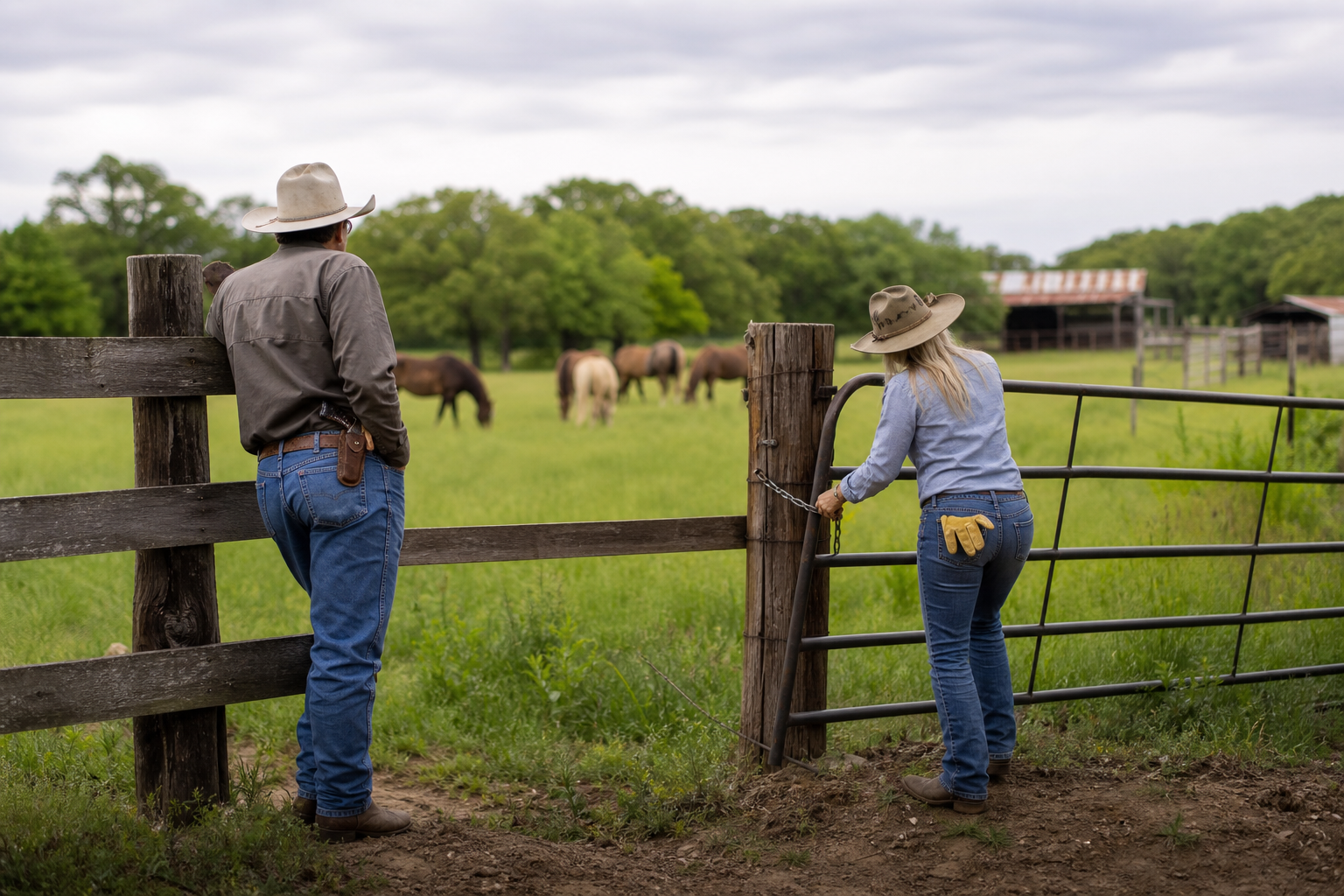
Parker County offers a rural and suburban character that is structurally different from Tarrant County. Horse properties, cattle ranches, larger lot subdivisions, and genuine small-town communities are the norm, not the exception. Living on a ranch myself and raising cattle here, I understand this market from the inside. The equestrian community is active. The pace is slower. The neighbors know each other.
For your investment, that lifestyle is what keeps demand persistent. Buyers relocating from Fort Worth aren’t just looking for a cheaper house. Many of them are looking for a fundamentally different way to live, and Parker County delivers that within a practical commute distance. That’s a value proposition that doesn’t erode when mortgage rates fluctuate.
Adjacent Counties Offer Even More Options
Parker County is the closest and most liquid exurban market west of Fort Worth, but adjacent counties, including Palo Pinto, Wise, Hood, and Jack, offer lower price points and even more rural character. If you’re considering lake properties near Possum Kingdom Lake in Palo Pinto County, or raw land plays in Wise or Jack County, those markets provide a different risk and return profile.
What I always tell investors about these adjacent counties is that they are less liquid than Parker County. Properties there may take longer to sell, and your buyer pool is smaller. That’s not necessarily a dealbreaker, but it’s a factor you need to underwrite honestly before acquiring in those areas. Parker County sits in a sweet spot of access, amenities, and demand depth that the more remote counties haven’t yet matched.
What First-Time Investors in Parker County Should Know
If this is your first investment outside the Fort Worth city limits, a few things are worth understanding before you write an offer.
- Property taxes vary by jurisdiction. Parker County’s tax rates differ from Tarrant County’s, and specific rates depend on the school district, city, and special districts your property falls within. Work with a tax professional to model your actual carrying costs.
- Well and septic systems are common. Many rural Parker County properties are not connected to municipal water or sewer. Budget for inspections and potential maintenance costs that don’t apply to urban Fort Worth properties.
- Acreage requires different insurance. If you’re buying a ranch property or a home on several acres, your insurance needs will differ from a standard residential policy. Livestock, outbuildings, and fencing all factor in.
- Zoning is less restrictive in unincorporated areas. This can be an advantage for investors, but it also means your neighbor’s land use may change in ways you didn’t anticipate.
Rated 5 out of 5 stars by past clients, I walk investors through these specifics before they commit to a property. One of my clients put it this way: “Her local knowledge of available properties is invaluable. She is a true professional in every sense.”
Frequently Asked Questions
How much more does a typical Parker County home cost compared to Fort Worth?
Parker County’s median listing price was $557,175 in June 2026. The gap reflects larger lots and more land, not just higher per-square-foot costs. You’re comparing different property types in many cases.
How long is the commute from Weatherford to downtown Fort Worth?
Weatherford sits approximately 25 to 30 miles west of downtown Fort Worth along I-20. Typical weekday drive times vary depending on traffic, time of day, and exact start and end points within each area.
Is now a good time to invest in Parker County real estate?
Market conditions in 2026 offer more negotiating leverage than investors have had in years. The DFW MSA carried 4.6 months of inventory in Q1 2026, and statewide days on market averaged 80 days. Both figures have risen compared to the tight market of 2021 and 2022, which generally shifts conditions in a direction that favors buyers.
What types of properties are available in Parker County for investors?
Parker County offers a range of investment opportunities including ranch properties, luxury estates, new construction subdivisions, raw land, and horse properties. Adjacent areas, including Palo Pinto County near Possum Kingdom Lake, add lake properties to the mix.
Are Parker County properties good for rental income?
The commute proximity to Fort Worth creates a consistent tenant pool of workers who prefer rural living. Rental income potential varies by property type, location, and condition; the commute proximity to Fort Worth is a qualitative demand factor worth evaluating for each specific property.
How does Parker County compare to adjacent counties like Hood or Palo Pinto?
Parker County offers the best balance of DFW access and rural character. Adjacent counties like Palo Pinto, Wise, Hood, and Jack offer lower price points but are less liquid, meaning properties may take longer to sell and your buyer pool will be narrower.
What should I budget for beyond the purchase price in Parker County?
Plan for property taxes (which vary by jurisdiction), well and septic inspections if applicable, higher insurance costs for acreage properties, and potential costs for fencing, outbuildings, or land clearing. These carrying costs differ substantially from urban Fort Worth properties.
Is the Texas housing market declining in 2026?
The statewide median sales price declined 0.8% year-over-year in Q1 2026, the first such drop in over a decade. This represents a modest softening rather than a sharp correction, and many markets, including Parker County, continue to attract strong demand from relocating buyers.
Can I find first-time home buyer opportunities in the Fort Worth to Parker County corridor?
Yes. While Parker County’s median listing price is higher than the DFW MSA median, the county includes a range of price points. Smaller lots in communities closer to Weatherford’s town center and properties in adjacent areas can work for first-time buyers, especially with favorable lending conditions.
Why should I work with a local Parker County agent instead of a Fort Worth agent?
Parker County’s market involves rural property considerations, including well and septic systems, agricultural exemptions, acreage evaluations, and livestock infrastructure, that most urban-focused agents rarely encounter. With 17 years and over 300 transactions in this market, plus the ABR (Accredited Buyer’s Representative) designation, I bring experience that directly applies to the property types you’ll evaluate here.
The Bottom Line
Moving from Fort Worth to Parker County is not just a lifestyle decision. For investors, it’s a strategic one. You’re trading a lower acquisition cost in the DFW urban core for substantially more land, a different property class, and access to a buyer and tenant pool that values space and rural character enough to commute for it.
The 2026 market gives you more negotiating room than you’ve had in years. Inventory is up, days on market are longer, and sellers are more willing to work with prepared buyers. Market conditions can shift, so working with current data and a local agent who tracks inventory closely is worthwhile before committing to a timeline.
If you’re ready to explore ranch properties, luxury homes, land, or lake properties in Parker County and the surrounding areas, I’d welcome the conversation. With 38 five-star reviews and 17 years of living and working in this market, I know these properties, these roads, and these communities from the inside. Reach me at 817-522-2897 or visit my office at 220 Fort Worth Highway, Suite 700, in Weatherford. Let’s figure out which piece of Parker County makes sense for your investment goals.