
Sunset, TX Real Estate: Homes and Land for Sale
What homes and land are available in Sunset, TX, and why should investors pay attention to this rural North Texas community?
Sunset, TX offers investors a land-rich corridor with raw acreage, ranch tracts, and agricultural parcels at lower price-per-acre entry points than closer-in DFW submarkets, plus significant property tax savings through agricultural exemptions.
Why Sunset, TX Real Estate Matters Right Now
If you’ve been watching the rural North Texas land market, you already know the window is shifting. The broader Parker County region saw new residential listings surge to roughly 600 units during spring 2026 before moderating to around 370 by September 2026, per NTREIS data via 10K Research. That seasonal pullback is consistent with the prior two autumn seasons in the region’s trend data.
What does that pattern mean for you? Sunset, TX sits within the rural corridor stretching from Wise County into the broader market I serve across Parker, Palo Pinto, Hood, Jack, and Tarrant counties. With 17 years in this business and over 300+ closed transactions, I can tell you that the fundamentals here are worth understanding: affordable acreage, agricultural tax benefits, and long-term land demand from DFW population spillover pushing buyers further northwest.
So is now the time? Let me walk you through what you need to know.
Understanding Sunset, TX and Its Position in the North Texas Land Market
Sunset is a small, unincorporated community in Montague County, right along the Wise County border, roughly 60 to 70 miles northwest of Fort Worth. It sits squarely in the rural-to-suburban corridor that defines much of the land investment in North Texas across multiple counties.
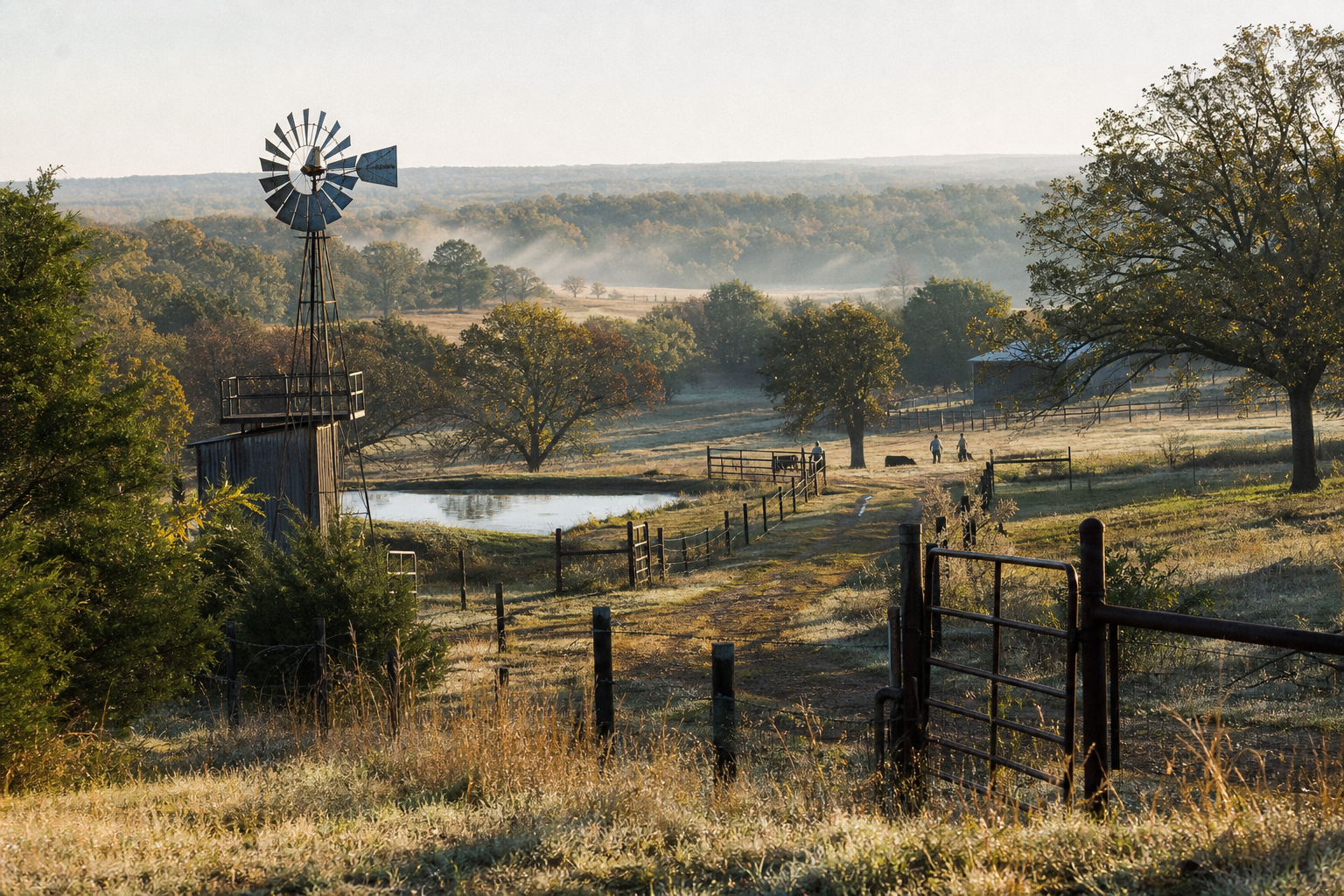
This is not a subdivision market. Sunset and its surrounding area are predominantly a land-play market. You’re looking at raw acreage, ranch tracts, agricultural parcels, and large-lot residential properties. The appeal is straightforward: lower entry costs per acre compared to anything closer to the DFW Metroplex, combined with the kind of open country that supports cattle operations, equestrian use, and recreational land.
Living on a ranch myself with my husband, raising cattle, and participating in the equestrian world, I understand the practical realities of owning rural land in North Texas. There’s a big difference between a property that looks good on paper and one that actually functions for agricultural or recreational use. Fencing conditions, water access, soil quality, road frontage, and existing infrastructure all factor into whether a tract pencils out as an investment.
How Sunset Connects to the Broader Market
Weatherford, the Parker County seat, serves as the commercial and services hub for this rural corridor. Its position along US-180 and I-20 gives investors a logistics reference point when evaluating access, utility availability, and resale liquidity for parcels further north and west, including the Sunset area. If you’re assembling a land portfolio, Weatherford is likely where your title company, lender, and support services are based.
The key advantage of targeting Sunset and its surrounding communities? You’re getting ahead of the growth curve. Population spillover from the DFW Metroplex has been pushing buyers further out for years, and affordability is a key driver.
Agricultural Exemptions: The Investment Advantage in Sunset, TX
Here’s where the numbers get interesting for investors, and it’s often the first question I hear. How do agricultural exemptions in Texas actually work, and how much can they save you?
Under the Texas Property Tax Code (Sections 23.41 through 23.57), qualifying land can receive a productivity appraisal rather than a market-value appraisal. The relevant authorities are the Texas Comptroller and your local county appraisal district. The difference in your annual tax bill can be dramatic.
To illustrate using a general scenario from the research: consider a 50-acre tract appraised at a market value of $500,000. If that land qualifies for agricultural productivity appraisal at $800 per acre, the productive value drops to $40,000. At an illustrative county tax rate of 1.5%, your market-value tax bill would be $7,500 per year, while the productivity-value bill would be $600 per year. That is a difference of $6,900 annually in holding costs. Actual rates and productive values vary by county appraisal district and must be verified with the relevant CAD.
What You Need to Know About Maintaining Ag Status
Here’s what I tell my clients consistently: ag exemptions do not automatically transfer after a sale in every situation. You need to verify whether the existing exemption remains in place or whether you will need to re-qualify the land under the new ownership. If an exemption lapses, you may face rollback taxes covering prior years at the full market-value rate — the number of years subject to rollback depends on your county appraisal district and an estate attorney or CAD representative can confirm the exposure.
Before purchasing any tract in the Sunset area or across Wise, Montague, Parker, or Jack counties, confirm:
- Current exemption status with the county appraisal district
- Rollback tax exposure if the use changes
- Qualification requirements for the specific type of agricultural use you intend (cattle, hay, wildlife management, etc.)
Each county in my coverage area has its own appraisal district and its own rate structure. If you’re building a portfolio across county lines, you cannot assume the rules are identical.
Multi-County Investment Strategy: Comparing Opportunities Around Sunset, TX
One of the most common conversations I have with real estate investors in North Texas involves comparing opportunities across the six counties I serve: Parker, Wise, Palo Pinto, Hood, Tarrant, and Jack. Sunset’s position near the Wise and Montague county borders makes it a natural starting point for investors considering a multi-county approach.
Each county presents a different profile:
Wise County borders the Sunset area directly and offers similar rural character with proximity to the Decatur commercial corridor
Parker County is the most developed of the rural counties in this group, with Weatherford providing infrastructure and services
Palo Pinto and Jack counties attract investors interested in energy-sector potential, including oil, gas, and wind, alongside agricultural uses
Hood County includes lake properties near Lake Granbury, adding a recreational and waterfront dimension to the investment picture
Tarrant County represents the urban anchor, with higher per-acre costs but also higher demand and liquidity
What I consistently see with real estate investment strategy in this corridor is that the most successful investors are not looking at a single tract in isolation. They are evaluating how properties in different counties complement each other in terms of tax treatment, appreciation potential, and eventual exit strategy.
Mineral and Water Rights Considerations
In rural North Texas, particularly around Sunset, TX and extending into Palo Pinto and Jack counties, mineral rights and water rights are a critical piece of any investment evaluation. In Texas, mineral rights can be severed from surface rights, meaning the land you buy may not include what is underneath it. Always verify mineral right ownership before closing. Water rights, especially access to groundwater, are equally important for agricultural operations and can significantly affect a property’s long-term value.
What Drives Demand for Land Near Sunset, TX
You might be wondering: why are investors targeting small communities like Sunset when there are established markets closer to Fort Worth? The answer comes down to several converging factors.
DFW population spillover. The Metroplex continues to push buyers further out as affordability tightens in closer-in markets. Communities that were considered “too far out” five years ago are now squarely on the radar.
Owner-financing and seller-carry structures. Rural land transactions in this corridor frequently involve creative financing structures. Owner financing appears in rural land transactions in this corridor, which can lower the barrier to entry for investors who may not qualify for traditional agricultural lending.
Lower holding costs. With agricultural and wildlife exemptions potentially reducing your property tax burden by thousands of dollars annually, the cost of holding land while you wait for appreciation is significantly lower than in suburban markets.
Energy-sector interest. Particularly in Palo Pinto and Jack counties, oil, gas, and wind energy create additional income potential for landowners who retain their mineral rights.
What I find most compelling for my investor clients is the combination of these factors. You are not relying on a single driver. Multiple demand signals are converging in the same corridor.
How to Evaluate Sunset, TX Properties as an Investor
When you’re looking at homes and land for sale in and around Sunset, TX, your due diligence checklist differs significantly from a suburban home purchase. With my background in ranch properties in Parker County, here is what I walk my investor clients through.
Access and road frontage. Does the property have deeded access? Is it on a county-maintained road or a private easement? This affects both usability and resale value.
Water. Is there well water, municipal water, or neither? For agricultural operations, water access is non-negotiable. Verify well permits and flow rates with the local groundwater conservation district.
Fencing and improvements. Existing perimeter fencing, cross-fencing, working pens, and barns add immediate value. Replacing fencing alone on a large tract can cost tens of thousands of dollars.
Flood zones and topography. Request a current FEMA flood map review. Rolling terrain may look beautiful but can limit buildable acreage.
Existing ag exemption documentation. Get copies of the current exemption paperwork from the seller before making an offer.
Having closed over 300 transactions and holding an Accredited Buyer’s Representative (ABR) designation, I approach these evaluations systematically. Rural properties reward thorough due diligence more than any other segment of real estate.
Frequently Asked Questions About Sunset, TX Real Estate
What types of properties are available in the Sunset, TX area?
The Sunset area is primarily a land market. You’ll find raw acreage, ranch tracts with existing improvements, agricultural parcels with active ag exemptions, and some residential homes on larger lots. This is not a typical subdivision market. If you’re looking for rural property with space for cattle, horses, or recreational use, Sunset fits that profile well.
How far is Sunset, TX from Fort Worth?
Sunset sits roughly 60 to 70 miles northwest of Fort Worth. The drive typically takes about an hour to an hour and a half depending on your route. Weatherford, the Parker County seat and my home base, serves as the nearest major commercial hub with full services.
Do agricultural exemptions transfer when you buy land near Sunset?
Agricultural exemptions do not always transfer automatically. Under the Texas Property Tax Code, the new owner may need to re-qualify the land for productivity appraisal. If the exemption lapses, rollback taxes covering prior years at full market value may apply — verify the applicable rollback period with the relevant county appraisal district. I always recommend verifying exemption status with the relevant county appraisal district before closing.
What counties does the Sunset, TX area border?
Sunset is in Montague County near the Wise County border. The broader investment corridor I serve includes Parker, Wise, Palo Pinto, Hood, Tarrant, and Jack counties. Each county has its own appraisal district, tax rates, and ag-exemption rules, so multi-county investors should verify requirements independently.
Are mineral rights included when you buy land in this area?
In Texas, mineral rights can be severed from surface rights. This means the land you purchase may not include mineral ownership. You should always verify mineral right status through a title search before closing, especially in areas near Palo Pinto and Jack counties where energy-sector activity exists.
Is owner financing common for rural land near Sunset, TX?
Owner financing and seller-carry structures are more prevalent in rural North Texas land transactions than in suburban residential markets. This can lower the entry barrier for investors, but terms, interest rates, and balloon payment schedules vary widely. Have an attorney review any owner-financing agreement before signing.
What should I look for when evaluating raw land in this corridor?
Focus on access and road frontage, water availability (well or municipal), existing fencing and infrastructure, topography and flood zone status, and current ag-exemption documentation. Each of these factors directly affects both your holding costs and your eventual resale value.
How do property taxes work for agricultural land near Sunset?
Qualifying agricultural land receives a productivity appraisal rather than a market-value appraisal under the Texas Property Tax Code. The difference can reduce your annual tax bill substantially, as illustrated by the general scenario described earlier in this article. Actual savings depend on your county’s appraisal district valuations and tax rates.
Can I use land near Sunset for a wildlife management exemption instead of agriculture?
Texas allows wildlife management as a qualifying use for productivity appraisal. Consult your county appraisal district and a wildlife management professional for specifics.
Why should I work with a local agent when buying land in rural North Texas?
Rural land transactions involve complexities that suburban home purchases do not, including ag exemptions, mineral rights, water rights, easements, and access issues. In my 17 years of experience, I’ve seen buyers run into costly problems because they assumed rural transactions followed the same playbook as city properties. Having someone who knows the multi-county landscape, and who lives this lifestyle personally, makes a measurable difference. One of my long-term clients put it this way: “Her local knowledge of available properties is invaluable. She is a true professional in every sense.”
The Bottom Line on Sunset, TX Real Estate
Sunset, TX and the surrounding rural North Texas corridor represent a genuine opportunity for investors who understand the land market. Lower entry costs per acre, significant property tax savings through agricultural exemptions, multiple demand drivers from DFW population growth, and energy-sector potential all converge in this part of the state.
The key is doing your homework. Verify ag-exemption status, confirm mineral rights, assess water access, and work with someone who knows the terrain, literally and figuratively. With 17 years in this market, 300+ closed transactions, and a 5-star rating across 38 client reviews, I bring the firsthand knowledge that comes from living this lifestyle every day on my own ranch in Parker County.
If you’re ready to explore what’s available in Sunset, TX and across the broader rural North Texas corridor, I’d welcome the conversation. You can reach me, Lynae Amason with Williams Trew Real Estate, at 817-522-2897 or through my office at 220 Fort Worth Hwy, Suite 700 in Weatherford, TX 76086. Let’s find the right property for your investment goals.