

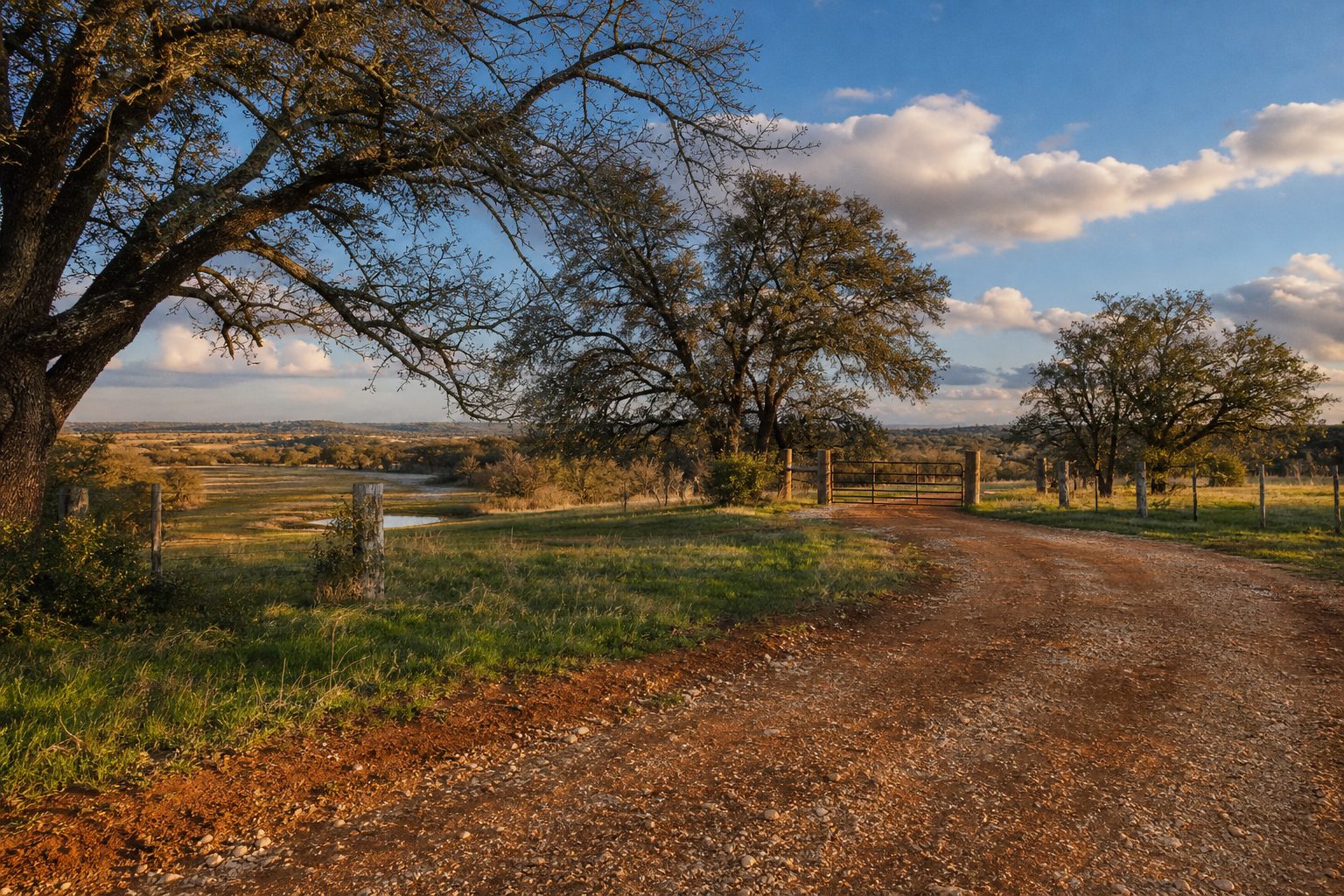
Navigating Parker County Acreage During an El Niño Winter Before Closing
What should rural buyers in Parker County check on acreage properties before closing during an El Niño winter?
You need to verify flood zone status, stress-test the septic system, inspect soil and foundation conditions, and confirm all-weather road access before closing on Parker County acreage during a wet El Niño winter.
Why This Matters Right Now in Parker County
If you’re looking at ranch properties in Parker County, Texas, right now, you’re shopping in a market where land is the primary value driver, and the weather is about to put every piece of that land to the test. El Niño winters in North-Central Texas historically bring above-average rainfall from late fall through early spring, and that changes the entire due diligence equation for acreage buyers.
I’ve spent 17 years working in this market, and I live on a ranch here with my husband where we raise cattle. I know firsthand what happens to rural property when the rain doesn’t stop for weeks. Saturated soils reveal problems you’d never catch during a dry summer walkthrough. The good news? If you know what to look for, an El Niño winter actually becomes your best inspection window. It shows you exactly how a property handles water before you own the problem.
With the average listing price in Parker County sitting at $690,742 as of September 2026 (per FRED data), and ranch properties at five acres or more carrying a median above $650,000 according to Q2 2026 market data, the financial stakes are significant. You can’t afford to skip the wet-weather checklist.
Flood Zone and Floodplain Verification Is Your First Step in Parker County
Here’s the single most important thing I tell every buyer looking at acreage in Parker County: check if the property is in a flood zone or floodplain. This is not optional, and it’s not something you verify casually. Parker County is crossed by numerous creeks feeding into the Brazos River system, and FEMA-designated Special Flood Hazard Areas are scattered throughout the county, particularly on rural tracts near creek beds and around Lake Weatherford.
During an El Niño winter, even properties that sit outside mapped flood zones can experience sheet flooding on the clay-heavy soils common throughout Parker County. What looks like a gently sloping pasture in August can become a temporary lake in February.
Here’s what you need to do:
- Request a flood zone determination certificate from your title company and cross-check it with FEMA’s Flood Map Service Center
- Walk the property after heavy rain to see where water pools, flows, and sits
- Ask about historical flooding from neighbors and the county
- Get flood insurance quotes before closing, because standard homeowner’s insurance does not cover flood damage, and policies in these areas can add $2,000 to $6,000 or more per year to your carrying costs
Properties near Lake Weatherford and creek corridors feeding into it carry especially significant flood risk. If you’re looking at lower-lying lots near North Fork Trinity River tributaries around the Weatherford area, this is critical.
Septic Systems, Soil, and Foundation Conditions on Parker County Acreage
Why an El Niño Winter Is Actually Your Best Septic Test
Most Parker County acreage relies on on-site sewage facilities, and the Parker County Environmental Health Department regulates septic permits. Here’s the thing: saturated soils during an El Niño winter can cause conventional septic systems to fail, back up, or surface. If a system is marginal, a wet winter will expose it.
I always recommend buyers request a septic inspection during or immediately after heavy rain events. You want to stress-test that system under the worst conditions it will face, not during a dry spell when everything looks fine.
Soil Expansion and Foundation Risk
Parker County sits on a mix of clay-heavy soils, including Eagle Ford Shale formation in the east and Paluxy Sand in the west. Those clay soils expand dramatically when wet and contract when dry, which creates serious foundation movement risk over time.
Here’s something most buyers don’t realize: an El Niño winter with sustained moisture can actually mask drought-related foundation damage. The soil swells, cracks close up, and doors that were sticking suddenly open and close perfectly. Then summer arrives, the clay contracts, and those foundation issues reappear. Budget for a thorough foundation inspection by a structural engineer, not just a general home inspector.
Road Access, Easements, and Getting to Your Parker County Property Year-Round
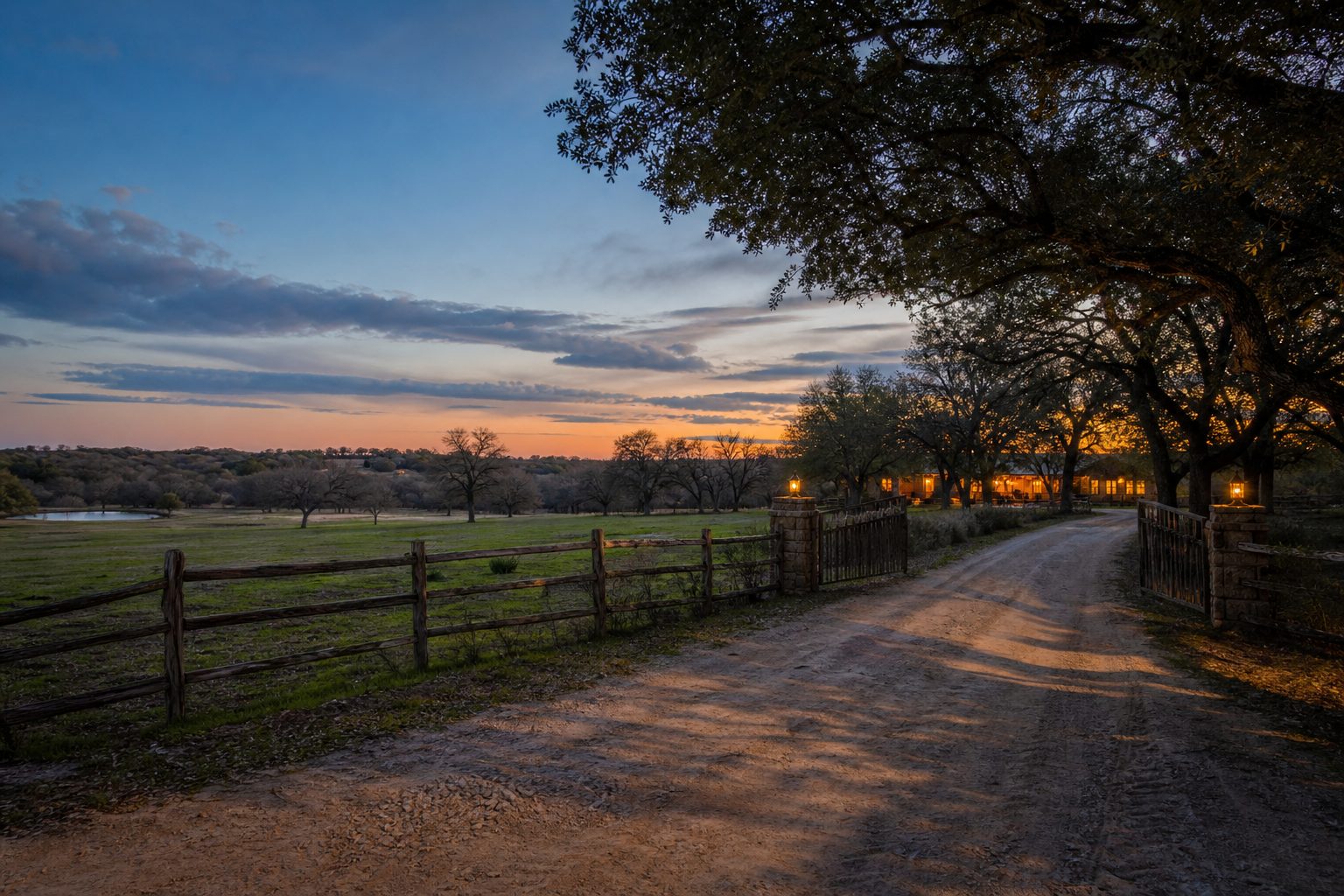
So you found the perfect 10-acre tract outside Weatherford. Beautiful views, mature post oaks, good fencing. But how do you get there when it rains for three weeks straight?
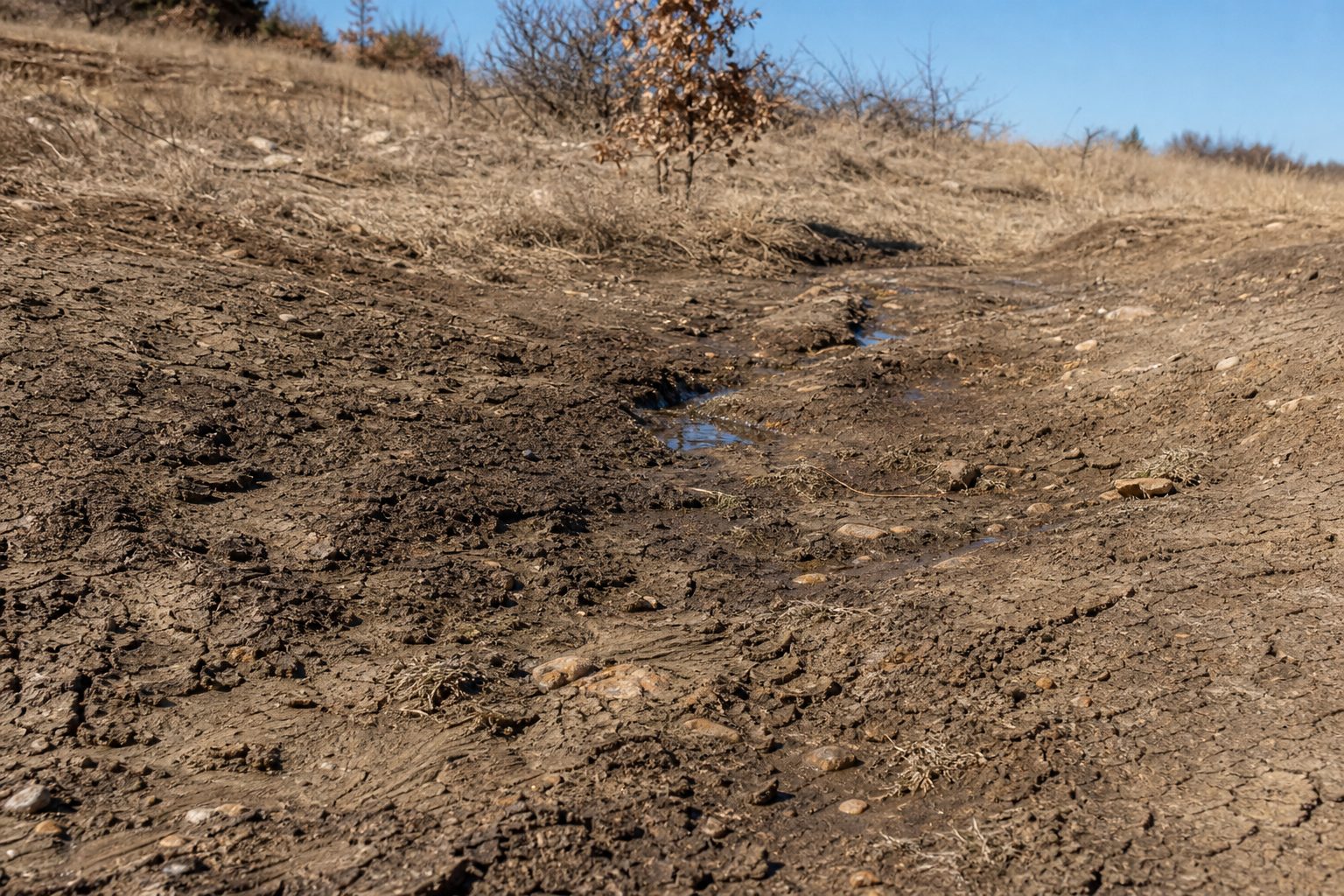
Many rural Parker County properties are accessed via unpaved county roads or private easements. Heavy winter rains can wash out caliche roads and reveal maintenance obligations that nobody mentioned during the listing presentation. Having closed over 300 transactions in this market, I can tell you that road access issues are one of the most overlooked problems in acreage deals.
Before you close, verify these items:
- Road maintenance agreements for any private roads serving the property
- County road classifications, because some county roads receive more maintenance than others
- Legal, all-weather access confirmed in the title commitment
- Easement language for any shared roads or driveways, including who pays for repairs
If the only access to the property is a dirt road that becomes impassable after two inches of rain, that’s a problem you need to negotiate before closing, not discover in January.
Water Wells, Stock Tanks, and What El Niño Conditions Hide on Rural Land
Water Well Performance Can Be Misleading
Rural acreage in Parker County typically relies on private water wells. The Upper Trinity Groundwater Conservation District and the Brazos River Authority oversee water resources in the area. During an El Niño winter, water tables rise temporarily, and a well that’s producing beautifully in December might underperform dramatically during the following summer drought.
Request a full well test with flow rate and recovery rate data. If possible, obtain historical well logs from the groundwater conservation district. A well that produces adequately only during wet conditions is a well that will fail you.
Fencing, Erosion, and Pasture Damage
For anyone looking at ranch properties or agricultural investment land, heavy winter rains can damage fencing, erode stock tank dams, and create gully erosion on sloped pastures. I see this on our own ranch every wet winter. Budget for post-winter fence and infrastructure repair as part of your acquisition cost analysis.
Parker County’s post oak cross timbers are also susceptible to oak wilt and hypoxylon canker, both of which can be worsened by wet winters followed by hot summers. Dead or dying trees represent both a liability and a clearing cost you should factor into your offer price.
Parker County Acreage Market Dynamics for Investors in Winter 2026
So why does all this matter from an investment perspective? Because the numbers are significant, and the opportunity is real if you do your homework.
Per Q2 2026 data, the median sales price for Parker County was $475,000, which was 2% less than Q2 2025, with 943 closed sales representing an 18% increase year-over-year (per FRED data). Inventory stood at 1,291 homes as of Q2 2026, and months’ supply of inventory dropped 21% year-over-year.
But ranch properties at five acres or more tell a different story. They carry a median above $650,000 and average 65 days on market, compared to suburban homes at $345,000 and 28 days on market, per Weatherford market segmentation data. Sellers of acreage properties should expect marketing periods measured in months rather than weeks.
What does that mean for you as a buyer? Winter is your window. Buyer activity slows during the holidays and into January and February, especially for acreage. Properties that have been sitting create negotiation room. One property in the Parker County market closed at 79.9% of original list price after 243 days on market, per Q2 2026 closed sales data, which shows just how much room exists on longer-held listings.
With 38 five-star reviews and my ABR designation backing up over 300+ closed transactions, I can tell you that the investors who do well in this market are the ones who embrace winter showings, do aggressive due diligence, and negotiate from a position of knowledge.
Insurance Considerations for Parker County Acreage Buyers
Before you close, get quotes for both flood insurance and comprehensive wind and hail coverage. El Niño winters can produce severe storm events across North Texas, and standard policies won’t cover everything.
- Flood insurance is separate from your homeowner’s policy and is required if any portion of the property falls within a Special Flood Hazard Area
- Wind and hail coverage should be reviewed carefully, as deductibles in North Texas can be steep
- Farm and ranch policies may be needed for properties with agricultural operations, livestock infrastructure, or equestrian facilities
Frequently Asked Questions
Is Parker County acreage in a flood zone?
Some of it is and some isn’t, which is exactly why this is the first thing you check. Parker County is crossed by numerous creeks feeding the Brazos River system, and FEMA-designated Special Flood Hazard Areas are common near creek beds and around Lake Weatherford. You need to request a flood zone determination certificate and cross-check it with FEMA flood maps before making an offer.
How does an El Niño winter affect septic systems on Parker County land?
Saturated soils during prolonged wet periods can cause conventional septic systems to fail, back up, or surface. Most Parker County acreage relies on on-site sewage facilities regulated by the Parker County Environmental Health Department. Request your septic inspection during or after heavy rains to see the system under stress.
What soil types should I worry about in Parker County?
Parker County sits on clay-heavy soils including Eagle Ford Shale in the east and Paluxy Sand in the west. Clay soils expand when wet and contract when dry, creating foundation movement risk. An El Niño winter can temporarily mask foundation problems by swelling the soil and closing cracks.
How long do ranch properties take to sell in Parker County?
Ranch properties at five acres or more average 65 days on market, per Weatherford market segmentation data, compared to 28 days for suburban homes. Some sit much longer. This extended timeline creates negotiation opportunities for buyers who can close during slower winter months.
What is the median price for acreage homes in Parker County?
Per Q2 2026 market segmentation data, acreage homes on one to five acres carry a median around $485,000, while ranch properties at five acres or more have a median above $650,000.
Do I need flood insurance on Parker County acreage?
If any portion of your tract falls within a FEMA-designated Special Flood Hazard Area, your lender will require it. Even if it doesn’t, flood insurance is worth considering. Policies in the Parker County area can run $2,000 to $6,000 or more per year depending on the property’s risk classification.
How do I check road access to a rural Parker County property?
Verify the county road classification, check for any private road maintenance agreements, and confirm legal all-weather access in the title commitment. Drive the property access roads after heavy rain to see their true condition before closing.
What should I know about water wells on Parker County acreage?
Request a full well test including flow rate and recovery rate data. During El Niño conditions, water tables rise temporarily, which can mask low-yield wells. Check historical well logs through the Upper Trinity Groundwater Conservation District when available.
Is winter a good time to buy acreage in Parker County?
Winter is actually one of the best times for acreage buyers. Buyer activity slows, creating negotiation room. And wet conditions reveal drainage, flooding, septic, and access problems you’d never see during a dry summer showing.
What’s happening with Parker County inventory in 2026?
As of Q2 2026, Parker County had 1,291 homes in inventory with months’ supply dropping 21% year-over-year, per FRED data. Closed sales totaled 943, up 18% from Q2 2025. The market is active but not overheated, and acreage properties move more slowly than suburban homes.
The Bottom Line
Buying acreage in Parker County during an El Niño winter takes more diligence than a suburban purchase, but it also gives you the clearest possible picture of how a property handles water. Check flood zone status first, stress-test the septic system, inspect foundations with a structural engineer, verify all-weather road access, and test the water well. The rain does half your inspection work for you if you’re paying attention.
I live this life every day on our ranch in Parker County, and I’ve helped investors, first-time home buyers, and luxury clients navigate these exact issues across 17 years and over 300 transactions. If you’re looking at ranch properties, lake properties near Possum Kingdom Lake in Palo Pinto County, or acreage anywhere from Hood County to Wise County and Jack County, I’d welcome the chance to walk the land with you. You can reach me, Lynae Amason, at 817-522-2897 or through my office at 220 Fort Worth Hwy, Suite 700 in Weatherford. As one of my long-term clients put it, “Her local knowledge of available properties is invaluable. She is a true professional in every sense.” I’d love to put that knowledge to work for you.