

Is Bowie, TX a good place to live, and does Montague County’s largest town offer real opportunity for real estate investors?
Bowie offers investors a lower entry point than most DFW-adjacent markets, an established rental base with roughly 37% renter-occupied housing, and a commuter-friendly location about one hour from Fort Worth, making it worth serious consideration in 2026.
Why Bowie, TX Matters for Investors Right Now
If you have been watching Parker County, Wise County, or Hood County prices climb steadily, you already know the challenge: finding entry-level investment properties close enough to the DFW job engine to sustain tenant demand. That search is pushing more investors north along US-287, and Bowie keeps landing on the radar.
The statewide Texas housing market is showing signs of shifting in buyers’ favor. According to Texas REALTORS, the statewide median home price in Q1 2026 sat at $328,000, down 0.8% year-over-year, while average days on market stretched to 80 days and months of inventory rose to 5.0. That broader softening tends to benefit investors who are ready to negotiate. With 17 years working in this region and over 300 transactions closed, I can tell you that smaller north-central Texas towns like Bowie frequently move on their own rhythm, so you need to verify local conditions before assuming statewide trends apply directly.
Bowie’s Housing Stock and What It Means for Your Portfolio
The 2020 Decennial Census counted 2,506 total housing units in Bowie. That is a manageable market with a compact, 5.54-square-mile footprint. What makes this interesting for you as an investor is the vacancy and tenure breakdown.
Vacancy: Risk or Opportunity?
The 2020 Census recorded a 15.1% overall vacancy rate in Bowie. That number raises a fair question: does this signal distress, or does it represent a runway for value-add investors? In my experience, small Texas towns with aging housing stock often carry elevated vacancy rates because properties sit underutilized, not because demand is absent. A 12.2% rental vacancy rate, per the same 2020 Census data, gives you a more targeted picture of the rental market itself.
Before you underwrite any deal in Bowie, I recommend verifying current vacancy against the Montague County Appraisal District’s records directly. Census data from 2020 provides the baseline, but conditions in a small market can shift quickly with even a handful of new leases or rehab projects.
Owner vs. Renter Split in Bowie
The 2020 Census showed 63.3% owner-occupancy and 36.7% renter-occupancy in Bowie. That renter share is significant for a town of roughly 5,400 people (per the 2020 Decennial Census). It tells you rental housing is not a fringe product here; it is an established part of how Bowie’s residents live.
What I tell my clients is this: a community where more than one in three households already rents is a community where landlords can find tenants without having to create demand from scratch. That is a fundamentally different real estate investment strategy than buying in a 90% owner-occupied subdivision and hoping renters materialize.
Location and Commuter Appeal of Bowie, TX
You cannot evaluate whether Bowie is a good place to live, or a good place to invest, without mapping it against the DFW employment corridor.
According to the City of Bowie’s official profile, the town sits approximately one hour from Fort Worth, one hour from DFW International Airport, 45 minutes from Wichita Falls, and about an hour and a half from downtown Dallas. Bowie anchors the crossroads of US-287, US-81, and Texas Highway 59, giving it highway access in three directions. For tenants who work in the Fort Worth corridor or the mid-cities, that drive time is a factor tenants will weigh individually against the housing cost savings Bowie offers.
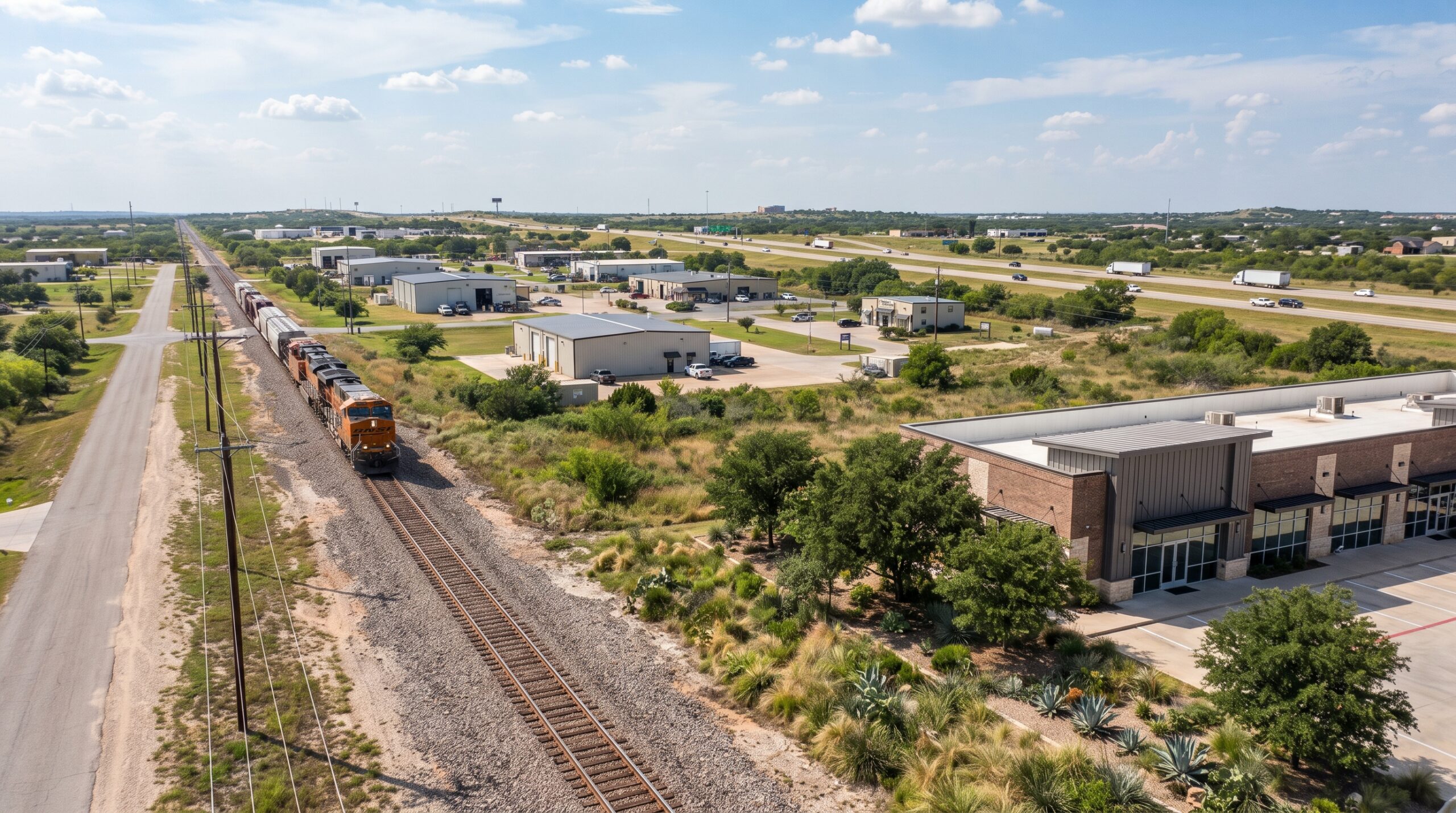
Both BNSF and Union Pacific rail lines intersect in downtown Bowie, per the City of Bowie’s profile. Rail infrastructure is a noted feature of Bowie’s city profile, and its presence alongside three major highways distinguishes Bowie from more isolated rural markets.
So what does this mean for your investment? Your potential tenant pool is not limited to people who work in Bowie itself. You can attract renters who commute to Fort Worth, Wichita Falls, or anywhere along the US-287 corridor, while offering them housing costs substantially below what they would find closer to DFW.
Bowie’s Economic Development and Long-Term Demand Drivers
Investing in any small town carries the risk that the local economy stagnates. Bowie has taken deliberate steps to address that concern.
The BEDC and Business Incentives
The Bowie Economic Development Corporation (BEDC) was formed in 1998 under the state’s 4A/4B Sales Tax designation, per the City of Bowie’s official profile. The BEDC offers business incentives, fast-track permitting, and one-stop administrative assistance for commercial and industrial relocations. That is not just a brochure talking point. A 4A/4B structure means dedicated sales tax revenue funds economic development, which gives the city a recurring budget to attract employers without relying on ad hoc grants.
Demographics That Support Stable Tenancy in Bowie
The 2020 Census showed that 33.1% of Bowie’s 2,127 occupied households had children under 18, and 44.8% were married-couple households. Meanwhile, 20.2% of residents were 65 or older, and 25.9% were under 18.
Why does this matter for your underwriting? Families with children tend to stay put longer. They want school stability, neighborhood familiarity, and predictable housing costs. Retirees on fixed incomes also tend toward longer lease terms. This is the kind of demographic profile that supports lower turnover and more predictable rental income, not the transient, high-churn tenant base that erodes your returns through vacancy loss and unit-turn expenses.
How Bowie Compares to Other Markets in the Region
If you are already investing in Parker County, Weatherford, or the Wise County corridor, you know those markets have appreciated significantly. Bowie offers a different entry point.
The statewide median home price in Q1 2026 was $328,000, per Texas REALTORS. Bowie’s price tier is qualitatively well below that statewide benchmark, though no Montague County-specific median was available from an approved authority source to pin down the exact gap. What I can tell you from working across this region for 17 years is that the spread between a DFW suburb and a town like Bowie can be substantial enough to change your cash-on-cash return calculation entirely.
Consider the trade-offs honestly:
- Lower entry cost means less capital at risk per door and potentially stronger gross yield ratios
- Smaller market means fewer comparable sales, which can make appraisals and financing more challenging
- Thinner buyer pool when you eventually exit, which may require longer hold periods
- Lower property management infrastructure than what you find in Weatherford or Tarrant County
With statewide inventory at 5.0 months as of Q1 2026 per Texas REALTORS, and days on market averaging 80 days statewide, the negotiating environment generally favors buyers. Rural markets like Bowie may not mirror that trend exactly, which is why working with someone who knows these specific counties matters.
What You Need to Verify Before Investing in Bowie
I always tell investors that investment property due diligence in a small market is more important, not less, than in a large metro. Here is what to check before you commit:
Current property tax rates. The Montague County Appraisal District is your source. Tax rates directly affect your net yield, and rural Texas counties can vary widely.
Updated vacancy data. The 2020 Census numbers give you a starting point, but you need current rental market conditions. Talk to local property managers.
Water and drought conditions. As of July 22, 2026, the City of Bowie entered Drought Stage 1, per the city’s official website. Water availability affects property values, insurance, and tenant satisfaction, so stay informed.
Housing stock condition. A 15.1% vacancy rate (per the 2020 Census) could mean rehabilitation opportunities, but it could also mean deferred maintenance across the housing stock. Inspect thoroughly.
Insurance costs. Rural north Texas properties can carry higher windstorm and hail premiums. Get quotes before you underwrite.
Frequently Asked Questions About Living and Investing in Bowie, TX
How far is Bowie, TX from Fort Worth?
Bowie is approximately one hour from Fort Worth, per the City of Bowie’s official profile. That puts it within a commutable distance for tenants who work in the Fort Worth metro, especially those willing to trade drive time for significantly lower housing costs. US-287 provides the primary corridor for that commute.
What is the population of Bowie, TX?
The 2020 Decennial Census recorded Bowie’s population at 5,448, making it Montague County’s largest municipality. No post-2020 estimate from an approved authority source is available, so that figure serves as the most recent official count.
Is Bowie, TX a good market for rental properties?
The 2020 Census showed a 36.7% renter-occupancy rate and a 12.2% rental vacancy rate. That combination suggests established rental demand with room for well-managed properties to absorb tenants. Verify current conditions with local property managers before relying on these baseline numbers.
What highways run through Bowie, TX?
Bowie sits at the crossroads of US-287, US-81, and Texas Highway 59, per the City of Bowie’s official profile. This triple-highway access is unusual for a town this size and supports both commuter and commercial traffic.
Does Bowie, TX have an airport?
Yes. Bowie Municipal Airport carries FAA identifier 0F2, per FAA documentation. While it primarily serves general aviation rather than commercial flights, DFW International Airport is approximately one hour away.
What is the owner-occupancy rate in Bowie, TX?
The 2020 Decennial Census recorded a 63.3% owner-occupancy rate in Bowie. That level of homeownership indicates an established owner base alongside the rental market, a combination worth weighing as part of your overall underwriting.
Are there economic development incentives in Bowie?
The Bowie Economic Development Corporation (BEDC), operating under 4A/4B Sales Tax authority since 1998, offers business incentives, fast-track permitting, and relocation assistance, per the City of Bowie’s official profile. These programs are designed to support job creation, which can in turn support rental demand.
How does Bowie’s price point compare to the Texas average?
Bowie’s housing costs are qualitatively well below the statewide Q1 2026 median of $328,000, per Texas REALTORS. No Montague County-specific median was available from an approved source, so contact a local agent for current pricing.
What are the current drought conditions in Bowie, TX?
As of July 22, 2026, the City of Bowie entered Drought Stage 1, per the city’s official website. Investors should monitor water availability and any associated restrictions, as drought conditions can affect landscaping requirements, insurance, and tenant satisfaction.
How many housing units are in Bowie, TX?
The 2020 Decennial Census counted 2,506 total housing units in Bowie. With a 15.1% vacancy rate at that time, there may be acquisition opportunities among underutilized properties, though current conditions should be verified through the Montague County Appraisal District.
The Bottom Line on Investing in Bowie, TX
Bowie offers a combination that is hard to find this close to the DFW corridor: established rental demand, lower entry costs than Parker or Wise County properties, meaningful highway and rail infrastructure, and an economic development corporation actively working to attract employers. The trade-off is a smaller, thinner market where due diligence and rural property due diligence matter more than spreadsheet assumptions.
With 17 years in this region, over 300+ closed transactions, and a 5 out of 5 star rating across 38 client reviews, I work with real estate investors in Parker County and beyond who are evaluating exactly these kinds of opportunities. If you are considering Bowie or any north-central Texas market for your next investment, I would welcome the conversation. You can reach me, Lynae Amason with Williams Trew Real Estate, at 817-522-2897. As one of my long-time clients put it, “Her local knowledge of available properties is invaluable. She is a true professional in every sense.” Let me put that knowledge to work for you.