

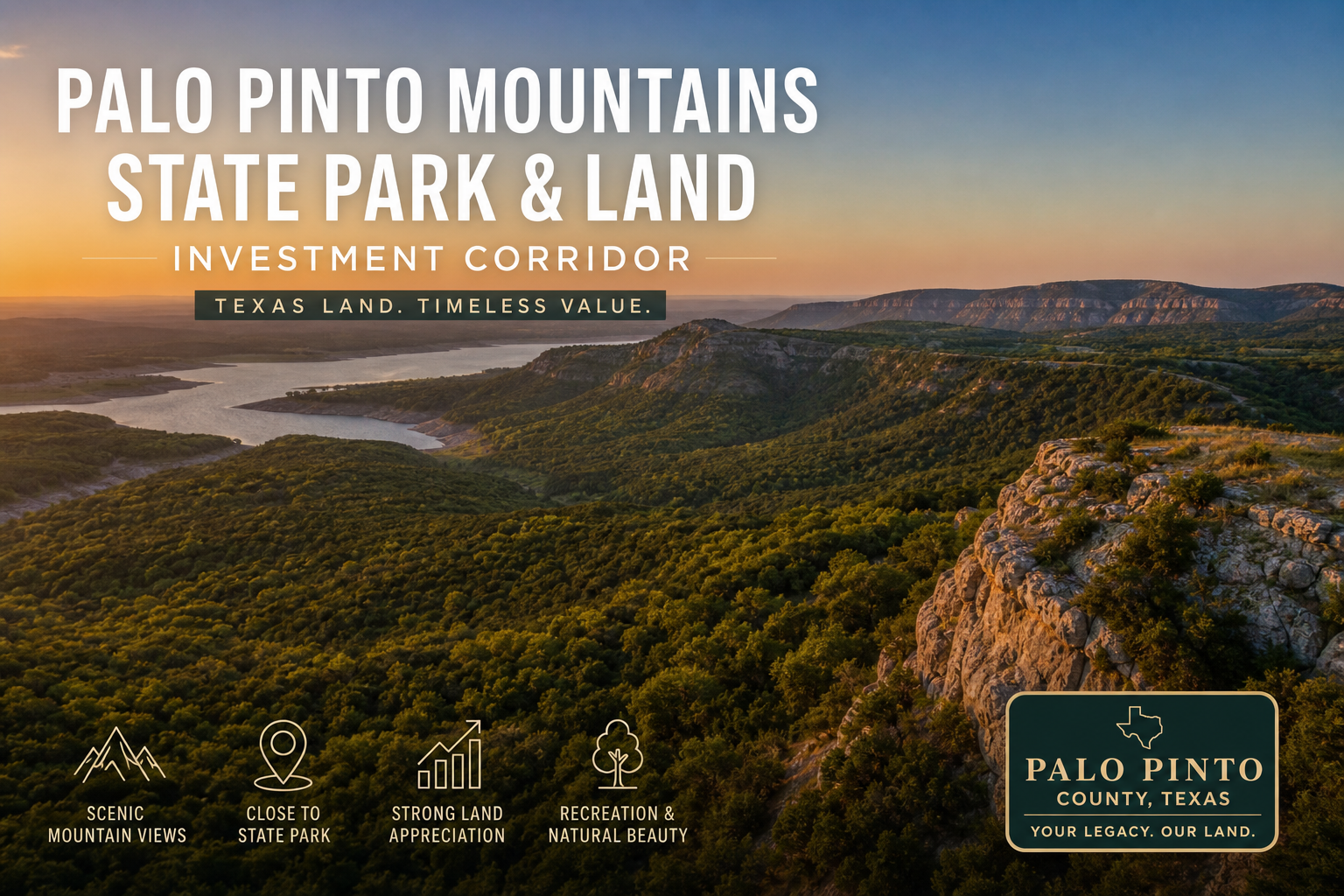
Buying Land Near Palo Pinto Mountains State Park in Gordon, Mingus, and Strawn
What should investors know about Palo Pinto Mountains State Park, its camping and trails, and buying land nearby in Gordon, Mingus, and Strawn?
Palo Pinto Mountains State Park opened March 1, 2026, drew over 15,000 visitors in its first month, and placed Gordon, Mingus, and Strawn at the front door of North Texas’s newest outdoor destination, creating a rare window for real estate investors.
Why This Matters Right Now for Gordon, Mingus, and Strawn Land Buyers
I’ve spent 17 years helping buyers find the right property across Parker County, Palo Pinto County, and the surrounding region. When something shifts the demand picture for rural land this dramatically, I pay attention, and you should too.
Palo Pinto Mountains State Park is the first state park to open in North Texas in more than 25 years, per the Texas Parks and Wildlife Department (as of March 2026). That alone would be noteworthy. But the fact that it welcomed more than 15,000 visitors for day use and overnight camping in its first month of operation (per TPWD, as of April 2026) tells you something about the appetite for outdoor recreation near the Dallas-Fort Worth Metroplex.
Gordon, Mingus, and Strawn are among the closest residential communities to the park entrance. Both the I-20 approach from Weatherford (Exit 361, Highway 16 north) and the Highway 180 approach from Palo Pinto (Highway 16 south) run directly through Strawn, making it the undeniable gateway community. If you’re an investor evaluating raw land, small ranches, or recreational acreage in this corridor, the timing and the geography are working in your favor.
What the Park Offers: Camping, Trails, and Water Access Near Strawn
So what exactly is drawing thousands of visitors to this stretch of Palo Pinto County? Let me walk you through the highlights, because understanding the park’s amenities is essential to understanding why nearby land carries increasing appeal.
Camping Options That Serve Every Visitor Type
The park spans 4,871 acres of former ranch land, per TPWD (as of February 2026), and offers a wide variety of camping configurations:
- Water-and-electric RV sites for the growing segment of RV travelers
- Walk-in tent sites for traditional campers
- Primitive hike-in sites roughly 2 miles from trailheads, attracting serious backcountry enthusiasts
- Russel Creek Equestrian Campground with water, 30/50-amp electric connections, and corrals for one to two horses
That last point matters to me personally. I live on a ranch with my husband, where we raise cattle and are deeply involved in the equestrian world. When I see a state park investing in equestrian infrastructure at this level, I know there’s a built-in audience of horse owners who will return repeatedly and need nearby accommodations, stabling, and land for their own operations.
A Trail System Built for Repeat Visits
The park features roughly 12.5 miles of trails open to hiking and biking, with equestrian access on designated routes, per TPWD. The terrain is quintessential Cross Timbers landscape: juniper-topped hillsides, hardwood bottomlands, limestone creek walls, and overlooks of Tucker Lake and Russell Creek. This is the same landscape you’ll find on available acreage in Gordon, Mingus, and Strawn, which means the scenic character that draws people into the park extends onto the surrounding parcels.
Tucker Lake and No-License Fishing
The park’s 90-acre Tucker Lake offers fishing from an accessible pier, a kayak and canoe launch, and swimming, with no fishing license required inside the park, per TPWD. Motors are not permitted on the lake, preserving its quiet character. For investors, this creates a powerful marketing angle: your rental guests can walk to a quiet lake experience without the boat ramp crowds of larger reservoirs. And if your property has creek or water frontage of its own, that premium only grows.
Why Investors Are Looking at Gordon, Mingus, and Strawn Right Now
Here is the question I hear most from my investor clients: is the park-proximity premium already priced into land near the park, or is there still room to get in early?
My honest assessment, having closed over 300 transactions and specializing in ranches, farm land, recreational land, and investment properties, is that in my view, local land pricing near the park may not yet fully reflect what this park means for the area, though buyers should consult current local data before drawing conclusions. The park opened just months ago. In my view, awareness is still building. The 15,000 visitors in month one (per TPWD, as of April 2026) represent strong early demand, though how visitation will trend over time will depend on factors including park amenities, marketing, and regional awareness.
Consider the statewide context: Texas inventory reached 5.0 months in Q1 2026, and the statewide median home price was $328,000, reflecting a 0.8% dip year-over-year (all property types, Q1 2026, per Texas REALTORS). Statewide average days on market stretched to 80 days in Q1 2026 (same source). While I want to be clear that these are statewide figures and not county-specific data for Palo Pinto or Parker County, the broader trend of more supply and softer pricing gives rural land buyers additional negotiating room.
What does that mean practically? You have time to do proper due diligence on parcels without the frantic pace of a seller’s market, but you’re buying into a demand catalyst, the park, that hasn’t finished reshaping the local market.
How the Park’s Location Creates a Geographic Sweet Spot for DFW Investors
The park sits halfway between Fort Worth and Abilene along the I-20 corridor, per TPWD. If you’re based in Weatherford or Fort Worth, you’re looking at roughly an hour’s drive to reach the park and the communities of Gordon, Mingus, and Strawn. That drive time is the magic number for weekend rental properties.
Why? Because DFW families looking for a quick outdoor getaway often prefer destinations within an hour or two of home. They want something close enough to leave Friday after work and arrive before dinner. Gordon, Mingus, and Strawn deliver exactly that positioning.
From an investor standpoint, this opens several strategies:
Short-term rental properties marketed to park visitors who want private lodging instead of a tent site
Equestrian properties with horse facilities serving riders who come for the Russel Creek Equestrian Campground trails
Raw land holds positioned for appreciation as the park matures and infrastructure follows
Glamping or RV-park concepts on larger parcels, subject to local zoning and deed restriction review
The $70 Annual Texas State Parks Pass (per TPWD, as of February 2026) waives entrance fees at all state parks for an entire year. If you’re operating a rental property near the park, that pass becomes a marketing tool. For repeat guests who already own the pass, one barrier to returning has been removed, which may lower the friction for additional visits.
Due Diligence for Buying Land Near Palo Pinto Mountains State Park
Buying rural land in Palo Pinto County is different from buying a subdivision lot in Parker County. Having worked with first-time buyers and seasoned investors alike across this region, here is what I consistently recommend you investigate before making an offer on land near Gordon, Mingus, or Strawn.
Zoning, Deed Restrictions, and Short-Term Rental Rules
Rural Palo Pinto County parcels may not carry the same zoning overlays you’d encounter closer to Weatherford or Fort Worth. That can work in your favor if you want flexibility for equestrian use, short-term rentals, or even a glamping operation. However, you need to verify these specifics on a parcel-by-parcel basis. Deed restrictions, if any, can limit commercial use even where county zoning is permissive. I always advise my clients to pull deed restrictions and consult with a local attorney before finalizing any land purchase where a non-residential use is planned.
Water, Utilities, and Access
Not every parcel near the park will have municipal water or electric service readily available. You should confirm utility access, well-drilling feasibility, septic requirements, and legal road access before you commit. Properties with existing utility connections will command a premium, but undeveloped parcels with no utilities may offer a lower entry point for investors willing to handle the infrastructure work.
Wildlife and Conservation Considerations
The park is home to endangered golden-cheeked warblers, visible in the oak and Ashe juniper trees during spring, per TPWD. This ecotourism draw adds value to the broader area, but it also means that some parcels with similar habitat may carry considerations around land clearing or development. Factor this into your plans early.
The Equestrian Angle: Why Horse Properties Near Strawn Carry Special Appeal
This is where my own background gives me a perspective many agents simply don’t have. Living on a working ranch and participating in the equestrian world, I understand what horse owners need from a property and what they’ll pay a premium for.
The Russel Creek Equestrian Campground inside the park, with its 30/50-amp electric connections and corrals, tells you TPWD is serious about serving the equestrian market. Horse owners traveling to ride the park’s designated equestrian trails need places to stay and places to keep their horses overnight.
A property near Gordon, Mingus, or Strawn with existing corrals, a barn or run-in shelter, and pasture acreage has immediate rental appeal to this audience. Properties specifically positioned as “equestrian base camps” near the new state park represent an emerging opportunity worth evaluating.
Frequently Asked Questions About Palo Pinto Mountains State Park and Nearby Land
When did Palo Pinto Mountains State Park open?
The park opened to the public on March 1, 2026, per TPWD. It was the first state park to open in North Texas in more than 25 years (per TPWD, as of April 2026). The park drew over 15,000 visitors for day use and overnight camping in its first month, demonstrating immediate and strong demand from the DFW region and beyond.
How large is the park and what does it include?
Palo Pinto Mountains State Park encompasses 4,871 acres of former ranch land, per TPWD (as of February 2026). It features roughly 12.5 miles of trails, the 90-acre Tucker Lake with fishing and paddling access, multiple campground types including equestrian sites, and a Cross Timbers landscape of juniper hillsides and hardwood bottomlands that defines the region’s character.
What camping options are available at Palo Pinto Mountains State Park?
The park offers water-and-electric RV sites, walk-in tent sites, primitive hike-in sites approximately 2 miles from trailheads, and the Russel Creek Equestrian Campground with water, 30/50-amp electric connections, and horse corrals, per TPWD. This variety serves everyone from casual RV travelers to serious backcountry hikers and equestrian visitors.
Do you need a fishing license to fish at Tucker Lake?
No fishing license is required to fish inside the park at Tucker Lake, per TPWD. The 90-acre lake offers fishing from an accessible pier and a kayak and canoe launch. Motorized boats are not permitted, maintaining a quiet, non-motorized atmosphere that appeals to families and casual anglers alike.
How far is the park from Fort Worth and Weatherford?
The park is described as halfway between Fort Worth and Abilene along the I-20 corridor, per TPWD. From Weatherford, the drive is roughly an hour. Both the I-20 approach (Exit 361, Highway 16 north) and the Highway 180 approach (Highway 16 south) run through Strawn, the gateway community closest to the park entrance.
Why are Gordon, Mingus, and Strawn considered the best areas for land investment near the park?
These three communities are the closest residential and land markets to the park entrance. Strawn specifically sits on both primary access routes to the park. Proximity to a high-demand state park that drew more than 15,000 visitors in its first month alone may position these communities for increased land values and rental demand over time, though local pricing data for Palo Pinto and Parker counties should be confirmed with a local agent before drawing conclusions.
What types of land investments make sense near the park?
Investors are evaluating raw land holds, short-term rental properties, equestrian properties with horse facilities, and even glamping or RV-park concepts on larger parcels. The right strategy depends on your budget, risk tolerance, and willingness to develop infrastructure. Zoning and deed restriction research is essential before committing.
What is the Texas State Parks Pass and how does it affect rental property marketing?
The Annual Texas State Parks Pass costs $70 and waives entrance fees at all state parks for one year, per TPWD (as of February 2026). For short-term rental operators near the park, pass ownership among repeat guests removes one cost barrier to return visits, which may make the area more accessible for multiple trips throughout the year.
What should I know about the statewide Texas real estate market as context?
Texas statewide inventory reached 5.0 months in Q1 2026, and the statewide median home price was $328,000, reflecting a 0.8% dip year-over-year, per Texas REALTORS (Q1 2026). Average days on market statewide reached 80 days. These are statewide figures, not specific to Palo Pinto or Parker County; consult a local agent for hyperlocal pricing data.
Are there wildlife or conservation considerations when buying land near the park?
Yes. The park is home to endangered golden-cheeked warblers found in oak and Ashe juniper habitat, per TPWD. Adjacent parcels with similar habitat may carry considerations around land clearing or development. This ecotourism appeal also adds value to the area, so it can be both a constraint and a selling point depending on your plans.
The Bottom Line on Buying Land Near Palo Pinto Mountains State Park
Palo Pinto Mountains State Park has redrawn the recreational map for North Texas in a way that Gordon, Mingus, and Strawn are uniquely positioned to benefit from. The park’s first-month visitor count of over 15,000 people, its diverse camping and equestrian infrastructure, its 12.5 miles of trails, and its location an hour from the DFW Metroplex all point toward sustained demand for nearby land and lodging.
With 17 years in real estate, an ABR designation, over 300+ closed transactions, and 38 five-star client reviews, I bring both market expertise and a personal understanding of rural and equestrian properties that few agents in this region can match. One of my longtime clients put it well: “Her local knowledge of available properties is invaluable. She is a true professional in every sense.”
If you’re evaluating land in Gordon, Mingus, Strawn, or anywhere across Parker and Palo Pinto counties, I’d welcome the chance to walk through your options. You can reach me, Lynae Amason with Williams Trew Real Estate, at 817-522-2897. I’m based at 220 Fort Worth Highway, Suite 700, in Weatherford, and I know this land like the back of my hand.