
What Makes a Good Deer Hunting Property Near Jacksboro, Texas
What should Texas land buyers look for when evaluating a deer hunting property near Jacksboro and the surrounding counties?
A good deer hunting property in the Jacksboro area combines reliable water sources, diverse native brush and hardwood cover, strong access infrastructure, and alignment with Jack County’s specific bag limits and antler restrictions to maximize both personal use and lease income potential.
Why This Matters Right Now for Texas Land Buyers
If you’re an investor eyeing recreational land near Jacksboro or anywhere across Jack, Parker, and Palo Pinto counties, this is the time to sharpen your evaluation criteria. Jack County, with Jacksboro as its county seat, offers a more rural landscape with historically larger tracts, which appeals to buyers looking for maximum acreage on a hunting property budget.
With 17 years of experience in the real estate market across Parker County, Palo Pinto, and the surrounding region, I spend a significant amount of my time helping buyers evaluate land for exactly this purpose. I live on a ranch myself, raise cattle with my husband, and understand firsthand what separates a productive piece of hunting ground from a pretty view with no game. The 2026–27 deer season is right around the corner, and if you’re planning to close on a property that can produce income this fall, you need to know what to look for before you write an offer.
Understanding Jack County Deer Season Regulations Before You Buy
You cannot properly evaluate a hunting property without understanding the regulatory framework that governs it. This is where I watch buyers make their first mistake: they fall in love with the land but never check the county-specific rules.
For the 2026–27 season, Jack County’s archery-only season runs from October 3 through November 6, 2026, followed by the general (gun) season from November 7, 2026, through January 3, 2027, according to TPWD’s 2026–2027 Outdoor Annual regulations. That gives you roughly three full months of huntable days, a major selling point if you plan to lease the property.
Bag Limits and Antler Restrictions in Jack County
Jack County allows 5 deer per hunter, no more than 2 bucks, all seasons combined, per TPWD regulations for white-tailed deer for the 2026–27 season. Here’s the detail that matters for your lease agreements: only ONE of those two legal bucks may have an inside spread of 13 inches or greater. A “legal buck” in Jack County is defined as one with at least one unbranched antler, or an inside spread of 13 inches or greater.
Why does this matter to you as a buyer? Because the bag limit directly affects how attractive your property is to paying hunters. Jack County’s 5-deer limit is actually more generous than Parker County’s 4-deer limit (per TPWD’s 2026–27 Outdoor Annual), which can be a meaningful differentiator when marketing your lease. One extra deer per hunter per season can be a meaningful differentiator when marketing your lease.
Youth Seasons Extend Your Calendar
Jack County may also have youth-only season dates; verify the current dates at TPWD’s Jack County regulations page before including them in a lease agreement. Properties that can safely accommodate family groups with young hunters, think multiple blinds with clear shooting lanes and safe vehicle access, tend to attract a broader pool of potential lessees and command stronger lease commitments.
Water, Cover, and Terrain: The Physical Features That Define a Quality Hunting Tract
So what does a deer actually need from your land? You’re evaluating three things before anything else: water, cover, and terrain diversity.
Water Is Non-Negotiable
Deer follow water. Period. When I’m helping a buyer evaluate a tract near Jacksboro or across Palo Pinto County lake properties, the first thing I look at is whether the property has reliable water, meaning stock tanks, creek frontage, or seasonal draws that hold water into late fall. A property with a spring-fed creek running through it is fundamentally different from one that relies entirely on rainfall to fill a seasonal pond. If you’re buying in Jack County where the landscape trends drier and more rolling, verify the water sources during the driest month you can, not the week after a good rain.
Native Brush and Hardwood Diversity
Whitetail deer need cover for bedding, travel corridors between food and water, and browse variety throughout the season. You want a mix of native brush, post oak mottes, mesquite flats, and open senderos or clearings where you can establish feeding stations and shooting lanes. A tract that’s been over-cleared for cattle grazing may look like a lot of acreage, but it won’t hold deer the way a property with intact brush corridors will.
Terrain That Creates Natural Funnels
Rolling terrain with draws, ridgelines, and creek bottoms naturally funnels deer movement into predictable patterns. This is what makes a property huntable, not just habitable. When you can place blinds at natural pinch points where terrain forces deer through a narrow corridor, you don’t need 2,000 acres to have a productive hunt. This is especially relevant around Jacksboro, where the terrain transitions from Cross Timbers wildfire risk zones into more open rangeland.
MLDP Enrollment: The Feature Sophisticated Buyers Ask About First
If you’re a serious investor evaluating hunting land, you need to ask one question before you even tour the property: is this tract enrolled in TPWD’s Managed Lands Deer Program?
Here’s why. On MLDP-enrolled properties, the annual bag limit does not apply, per TPWD’s statewide regulations for the 2026–27 season. Instead, harvest is managed through MLDP buck or antlerless tags issued specifically for that property. The landowner or their designated agent is responsible for providing those tags to hunters.
What this means for you as a buyer is significant. An MLDP-enrolled tract can offer hunters more flexibility than a non-enrolled property, which is a premium feature when you’re pricing a hunting lease.
What I tell my clients is this: always ask the seller whether the property is currently enrolled in MLDP, what the current tag allocation is, and whether that enrollment transfers with the deed. These are details that can significantly affect the property’s income-producing potential, and they’re easy to overlook if you’re not asking the right questions. Having closed over 300 transactions in Parker County investment properties, I’ve seen how these seemingly small details can shift a buyer’s long-term return on recreational land.
Evaluating Lease Income Potential on Jacksboro Area Properties
You’re buying this property for personal enjoyment, for long-term appreciation, or for lease income, and most likely some combination of all three. So how do you evaluate the income side of the equation?
What Lessees Care About
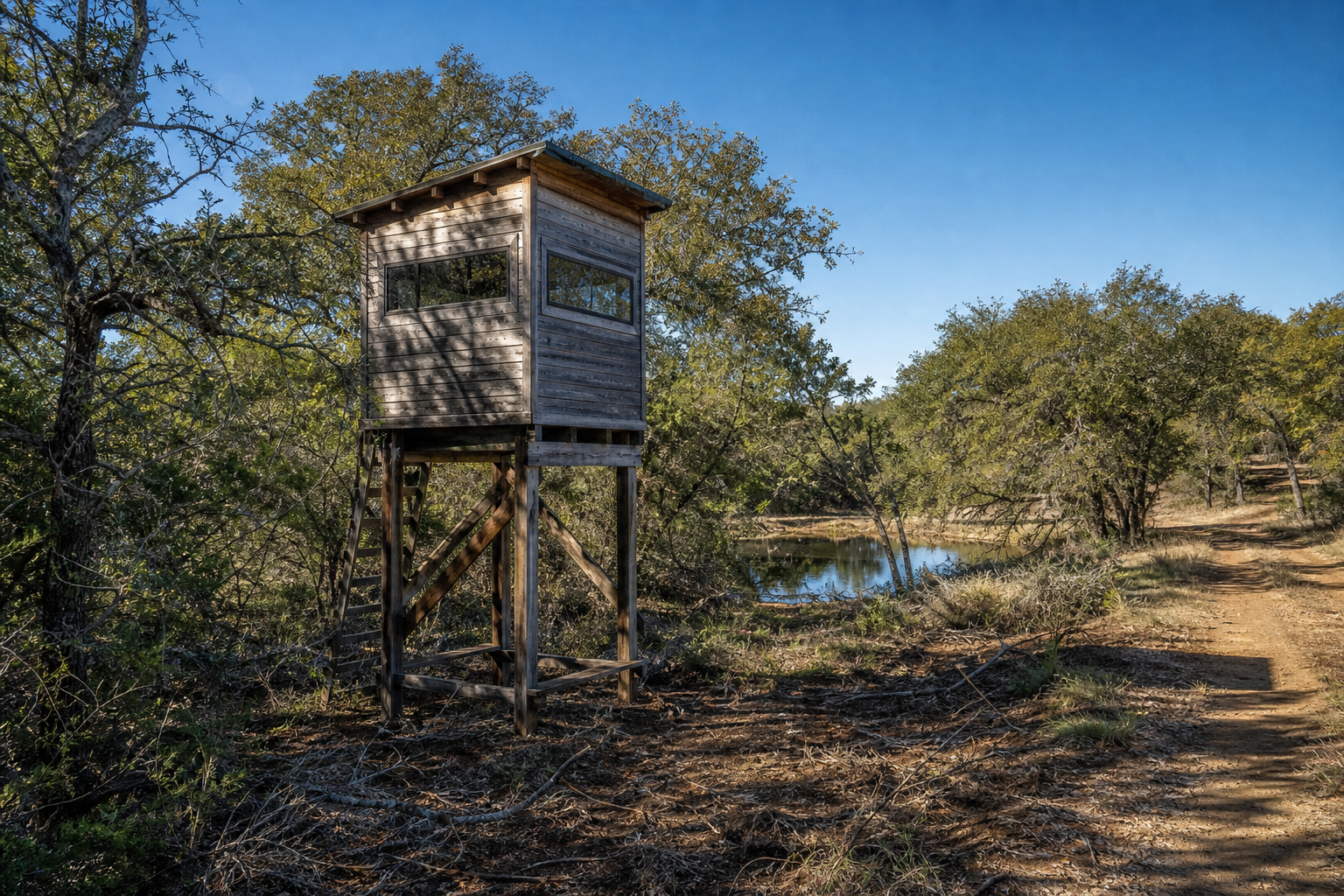
Paying hunters evaluate a property on access, infrastructure, and game quality, roughly in that order. Can they get a truck and trailer to the property without destroying a vehicle? Are there maintained senderos, cleared shooting lanes, and functional blinds? Is there evidence of a healthy deer population with mature bucks? A property near Jacksboro with good road access off a county road, well-maintained interior roads, and three or four permanent blinds positioned at water sources or natural funnels is going to lease far faster than raw, unimproved land.
Infrastructure Adds Measurable Value
Feeders, protein stations, blinds, a basic cabin or camp house with electricity, and perimeter fencing all reduce the barrier for a lessee to start using the property immediately. Every improvement you make before listing a lease translates directly into lease pricing power. Properties that can accommodate family hunting groups, not just solo hunters, tend to fill faster and retain lessees year over year.
The Reporting Advantage in Jack County
Here’s a practical detail that actually matters to your lessees: Jack County is not on TPWD’s mandatory harvest reporting list for the 2026–27 season — verify the current list at TPWD’s Jack County regulations page, as TPWD updates it annually. That means your hunters aren’t required to report every buck and antlerless deer harvest within 24 hours via the Texas Hunt & Fish app, which simplifies compliance. Counties like Collin, Dallas, Grayson, and Rockwall do have that requirement. It’s a small operational advantage, but lessees notice it.
Comparing Counties: Jack, Parker, and Palo Pinto for Hunting Land
When you’re shopping for deer hunting property across this region, the county you choose affects your regulatory framework, your acreage options, and your buyer competition.
- Jack County (Jacksboro): 5-deer bag limit, 2 bucks max, antler restrictions apply. More rural, larger available tracts. Ideal for buyers who want maximum acreage and a quieter hunting experience.
- Parker County (Weatherford): 4-deer bag limit, no more than 2 bucks and no more than 2 antlerless, all seasons combined, per TPWD’s 2026–27 Outdoor Annual. Closer to Fort Worth and the DFW growth corridor.
- Palo Pinto County: 5-deer bag limit, 2 bucks max, same antler restrictions. Home to Palo Pinto Mountains State Park, which has a drawn public hunt program administered by TPWD Palo Pinto County regulations. The presence of public hunting land nearby can affect deer movement onto and off your private tract, something you should evaluate before closing.
All three counties share identical archery season dates (October 3 through November 6, 2026) and general season dates (November 7, 2026, through January 3, 2027), per TPWD’s 2026–27 Outdoor Annual.
What does this mean for your decision? If your priority is acreage and a more generous bag limit, Jacksboro and the Jack County area give you the best combination. If proximity to Fort Worth matters more, Parker County properties near Weatherford offer convenience at a premium. And Palo Pinto splits the difference geographically, though you’ll want to investigate the impact of nearby public hunting areas on your private tract’s deer population.
CWD Awareness: An Emerging Due Diligence Item for Land Buyers
Chronic Wasting Disease monitoring is something every hunting land buyer should have on their radar. TPWD offers voluntary CWD check stations for hunters, and submissions help biologists gather data to manage CWD spread, per TPWD’s current guidance. If a property you’re considering sits in or near a CWD management zone, that carries regulatory risk that could affect your management flexibility and, by extension, your lease value.
I always recommend buyers verify a property’s CWD status with TPWD before making an offer. It’s a five-minute call that can save you from a significant headache. Report any symptomatic CWD-susceptible species to local Texas Game Wardens or a TPWD Wildlife Biologist.
Frequently Asked Questions
What bag limit applies to deer hunting in Jack County for 2026–27?
Jack County allows 5 deer per hunter, no more than 2 bucks, all seasons combined, according to the TPWD 2026–27 Outdoor Annual as of September 2026. Only one of those bucks may have an inside spread of 13 inches or greater. This is more generous than Parker County’s 4-deer limit, making Jack County’s bag limit more generous than Parker County’s for the 2026–27 season.
When does deer season open near Jacksboro, Texas?
Archery-only season in Jack County runs October 3 through November 6, 2026. General (gun) season opens November 7, 2026, and runs through January 3, 2027, per TPWD’s 2026–27 Outdoor Annual. That gives you roughly three months of hunting opportunity each year.
What is MLDP and why does it matter for hunting property buyers?
MLDP is TPWD’s Managed Lands Deer Program. On MLDP-enrolled properties, the standard annual bag limit does not apply, and harvest is managed through property-specific tags, per TPWD statewide regulations for 2026–27. This gives hunters more flexibility, which can support premium lease pricing and signals active wildlife management.
Do I need to report deer harvest in Jack County?
As of the 2026–27 season, Jack County is not on TPWD’s mandatory harvest reporting list, per the current Outdoor Annual. Counties like Collin, Dallas, Grayson, and Rockwall do require 24-hour harvest reporting. This simplified compliance is a practical advantage for your hunting lessees.
How does water availability affect a hunting property’s value?
Water is the single most important physical feature for deer habitat. Properties with year-round water sources like spring-fed creeks, stock tanks, or reliable seasonal draws hold deer populations more consistently. In drier areas around Jacksboro, verify water sources during peak summer, not after recent rainfall.
What should I look for in terrain when buying hunting land in Texas?
You want rolling terrain with natural draws, ridgelines, and creek bottoms that funnel deer movement into predictable travel patterns. These natural pinch points allow strategic blind placement and make a smaller property hunt more effectively than a larger flat tract with no terrain features.
Does the presence of nearby public hunting land affect my property?
Yes. Palo Pinto Mountains State Park, for example, has a drawn public hunt program per TPWD.
Are antler restrictions the same across Jack, Parker, and Palo Pinto counties?
Yes. All three counties apply the same antler restriction for the 2026–27 season: only one of your two legal bucks may have an inside spread of 13 inches or greater, per TPWD regulations as of September 2026. Your lease agreements should clearly spell out these rules.
What property improvements add the most value for hunting lease income?
Permanent blinds at natural funnels and water sources, maintained interior roads, functional feeders and protein stations, perimeter fencing, and a basic camp house with electricity all reduce barriers for lessees. Properties that can accommodate family groups with safe, separated hunting positions tend to retain lessees longer.
How do youth hunting seasons affect my property’s lease potential?
Verify current youth season dates at TPWD’s Jack County regulations page before including them in a lease agreement. Properties that can safely accommodate family groups with young hunters tend to attract a broader pool of potential lessees and command stronger lease commitments.
The Bottom Line
A good deer hunting property near Jacksboro is defined by reliable water, diverse native cover, terrain that creates natural deer travel corridors, and alignment with Jack County’s specific 2026–27 regulations. The regulatory details, from bag limits to MLDP enrollment status, directly affect your property’s lease income potential, so treat them as financial due diligence, not just fine print.
With 17 years helping buyers find the right ranch and recreational properties across Parker County, Palo Pinto, Jack County, and the surrounding region, and rated 5 out of 5 stars by my past clients, I can help you evaluate a hunting tract the way it should be evaluated: from the water sources and terrain down to the TPWD regulations that govern your harvest. If you’re ready to find the right piece of land near Jacksboro or anywhere across this part of Texas, call me at 817-522-2897. I’m Lynae Amason with Williams Trew Real Estate in Weatherford, and I’d love to put my experience to work for you.