
What a Farm and Ranch Realtor Does Differently in Parker County, Texas
What does a farm and ranch realtor do that a regular agent doesn’t?
A farm and ranch realtor handles land valuation, agricultural tax exemptions, mineral and water rights, specialized financing, and the TREC Farm and Ranch Contract, all of which fall outside the scope of a standard residential agent.
Why This Matters for Parker County Investors Right Now
If you’re looking at ranch properties in Parker County, you’re operating in one of the most layered real estate markets in North Texas. This is not a cookie-cutter subdivision environment. According to Q2 2026 market data, Weatherford’s market alone breaks into five distinct segments: suburban homes under half an acre at a median around $345,000, large-lot properties at roughly $395,000, acreage tracts at $485,000, and ranch properties on five-plus acres starting above $650,000, with an average of 65 days on market. That is not one market. That is four or five markets stacked on top of each other, and each one has different rules.
With 17 years of experience helping clients buy and sell across Parker County, and as someone who lives on a ranch, raises cattle, and participates in the equestrian world, I can tell you that the gap between what a regular residential agent knows and what a farm and ranch specialist handles is enormous. It is the difference between pricing per square foot and pricing per acre, between a standard home inspection and a soil test, well yield analysis, and mineral title search.
How Land Valuation Works Differently in Parker County
So how does a farm and ranch realtor actually value a property? You cannot use the same price-per-square-foot method that works for a three-bedroom in a Weatherford subdivision. On a ranch property, the house might be a small fraction of the total value. What drives the number is acreage quality, water access, fencing condition, cross-fencing, stock tanks, barn improvements, working pens, and the land’s agricultural productivity.
Consider the math in Parker County right now. As of June 2026, the median listing price in the county was $557,175 per FRED data. But the median sale price in Q2 2026 was $475,000, per the same source, a 2% decline from Q2 2025. Meanwhile, ranch properties with five or more acres are regularly listed at $650,000 and above, and the median active listing in Weatherford sits at $642,450 while the median closed sale comes in at $449,997. That gap signals that active inventory skews heavily toward larger, higher-end product. If you don’t understand that dynamic, you will either overpay as a buyer or misprice as a seller.
A farm and ranch realtor uses a per-acre analysis, an income approach based on agricultural production potential, and an improvements-value breakdown that accounts for every barn, arena, and outbuilding on the property. I tell my clients that a 20-acre tract with an older home but excellent cross-fencing, three stock tanks, and a 40-by-60 barn can be worth more than a 20-acre tract with a newer home and nothing else. You need someone who sees the full picture.
Agricultural Tax Exemptions: The Biggest Financial Factor You Cannot Overlook
Here is where a farm and ranch realtor earns their fee in a single conversation. Texas agricultural exemptions, commonly called “ag exemptions,” can reduce your property tax burden by over 90% on qualifying land. In a state with no income tax but high property taxes, this is the single most impactful financial consideration for any land investor.
A regular residential agent may know the term “ag exemption” exists. A farm and ranch specialist knows:
- Livestock stocking rate requirements specific to Parker County’s soil and grass types
- Wildlife management valuations and how they apply to recreational ranch properties extending into Palo Pinto, Wise, Hood, and Jack counties
- Timber production qualifications for wooded tracts
- How to maintain or transfer an ag exemption during a sale so you, the buyer, do not lose the valuation on day one
- Rollback tax implications if agricultural use is discontinued, which typically means five years of back taxes plus interest
If you buy a ranch property and accidentally lose the ag exemption because the transaction was not handled correctly, you could face a tax bill that makes your head spin. Having closed over 300 transactions across this market, I have seen this scenario come dangerously close to happening when buyers work with agents who treat land like a house with extra yard.

Mineral Rights, Water Rights, and What Lies Beneath Parker County
In Palo Pinto, Wise, Hood, and Jack counties especially, mineral rights and water rights can represent significant value, sometimes exceeding the surface value of the land itself. Texas is a non-disclosure state, which means sale prices are not public record, according to market research data. Most valuation sites quietly have no closing data to work with. That alone makes this market harder to navigate than most buyers realize.
A farm and ranch realtor knows how to:
- Research mineral ownership through county clerk records, because mineral rights may have been severed from the surface estate decades ago
- Evaluate existing oil and gas leases and any royalty income attached to the property
- Assess groundwater availability through the local Groundwater Conservation District
- Navigate surface use agreements that govern what an oil or gas operator can and cannot do on your land
If you are an investor evaluating a tract near Possum Kingdom Lake in Palo Pinto County or working ranch land in Jack County around Jacksboro, these below-the-surface assets can make or break your return. A residential agent simply does not have the training or the network to uncover this information.
The TREC Farm and Ranch Contract: A Completely Different Document
Texas Real Estate Commission provides a specific Farm and Ranch Contract (TREC No. 25-16) that is fundamentally different from the standard One to Four Family Residential Contract. This is not a minor technicality. The Farm and Ranch Contract includes provisions for:
- Mineral and water rights reservations and conveyances
- Agricultural lease assignments and existing tenant protections
- Exclusions for personal property like livestock, equipment, and feed
- Ag exemption transfer language and rollback tax responsibility allocation
- Surface use agreements and easement disclosures
A regular residential agent may never have used this contract. With my specialties in ranches, farm land, recreational land, and investor properties, I use this document regularly and understand how every paragraph affects your bottom line.
Infrastructure Due Diligence That Regular Agents Skip in Rural Parker County
Rural properties outside the Weatherford city limits often lack municipal water and sewer. You already know that. But do you know the specific questions to ask? A farm and ranch realtor evaluates:
- Well water quality and yield, including flow rate testing and water quality analysis
- Septic system condition and capacity, subject to TCEQ regulations for rural properties
- Road access, determining whether it is county-maintained or requires a private easement
- Electric service availability and the cost of line extension to remote parcels
- Internet and broadband availability, which is critical for remote workers relocating from Fort Worth or Tarrant County
Weatherford sits approximately 30 miles west of downtown Fort Worth along the I-20 corridor, and the cost of living in the Parker County area runs about 12% below the national average, according to Parker County area census data. That combination is drawing buyers from Tarrant County steadily westward. But those buyers often do not realize that a beautiful 15-acre tract off Old Brock Road may not have fiber internet, or that the well might produce only two gallons per minute. A farm and ranch realtor flags these issues before you are under contract, not after.
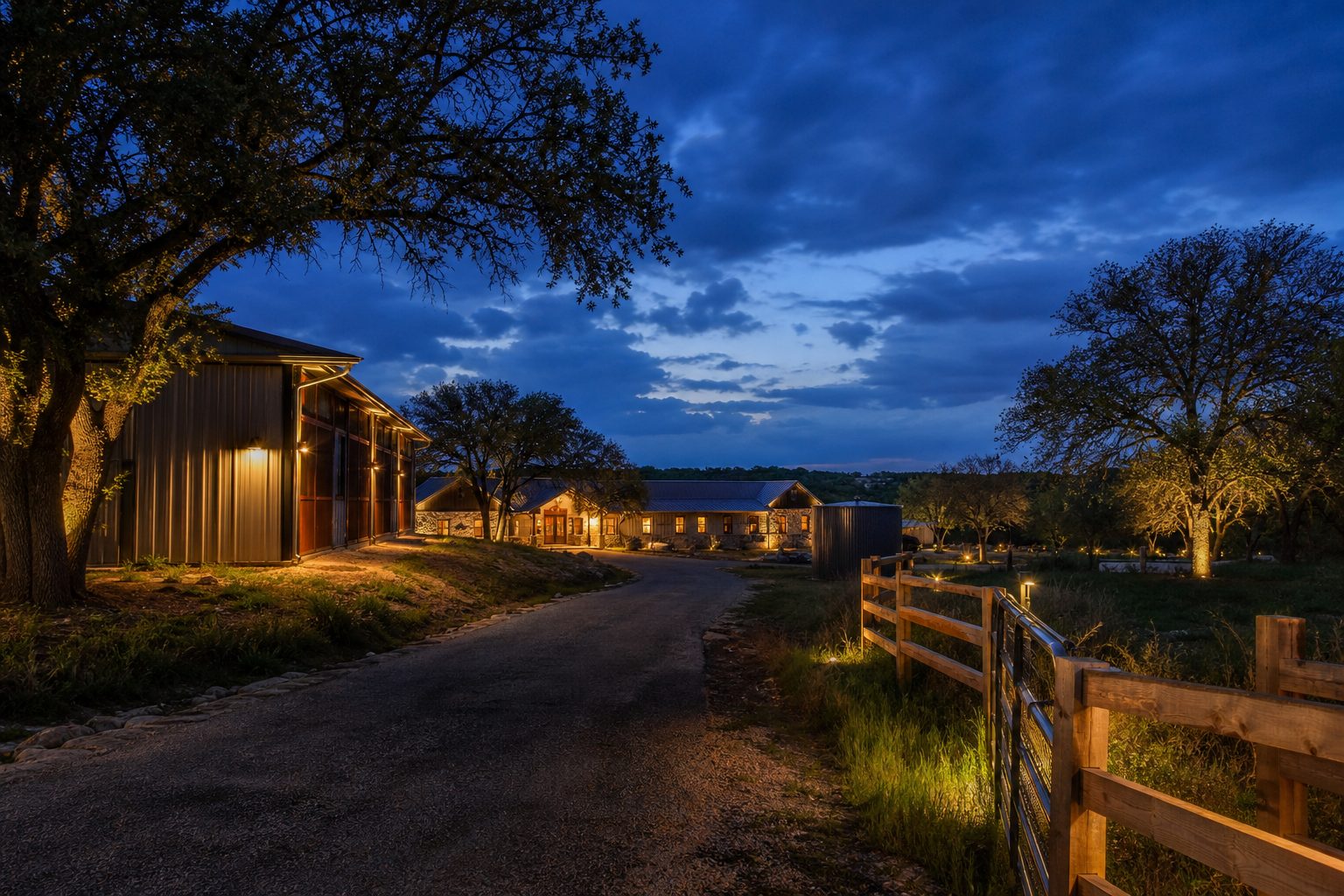
Specialized Marketing and Financing for Parker County Ranch Properties
Ranch properties with five-plus acres average 65 days on market in Weatherford compared to roughly 28 days for suburban homes, per local market segmentation data. More than double the marketing time. Why? Because the buyer pool is different. Farm and ranch realtors market through land-specific platforms, agricultural publications, equestrian networks, hunting and recreation buyer pools, and 1031 exchange buyer databases.
Financing is equally specialized. Instead of conventional, FHA, or VA mortgages, ranch buyers often use:
- Farm Credit System loans designed for agricultural properties
- FSA (Farm Service Agency) loans for qualifying agricultural operations
- USDA Rural Development programs for eligible rural areas
- Land contracts and owner financing structures
With 38 five-star reviews from past clients and the ABR (Accredited Buyer’s Representative) designation, I bring both the credentials and the relationships with rural lenders that this type of transaction demands. One past client put it well: “Her local knowledge of available properties is invaluable. She is a true professional in every sense.”
Frequently Asked Questions
Does a farm and ranch realtor cost more than a regular agent?
No. Commission structures are generally the same. The difference is in the depth of knowledge and the network your agent brings. Given the complexity of land transactions, including ag exemptions, mineral rights, and specialized contracts, working with a specialist often saves you far more than any potential cost difference.
What is the TREC Farm and Ranch Contract?
It is a Texas Real Estate Commission contract (TREC No. 25-16) designed specifically for rural property transactions. It includes provisions for mineral rights, water rights, agricultural leases, and personal property exclusions that do not appear in the standard residential contract.
How do agricultural tax exemptions work in Parker County?
Qualifying land used for agriculture, livestock, wildlife management, or timber production receives a dramatically reduced property tax valuation. Losing this exemption triggers rollback taxes, typically covering five years of back taxes plus interest. A farm and ranch realtor ensures the exemption transfers correctly during a sale.
Why do ranch properties in Parker County take longer to sell?
Ranch properties on five-plus acres average 65 days on market, per local segmentation data, compared to roughly 28 days for suburban homes. The buyer pool is smaller and more specialized, and due diligence takes longer because of well tests, surveys, mineral searches, and environmental assessments.
Can a regular agent handle a property with mineral rights?
Technically, any licensed agent can represent you. But mineral rights require specialized research through county clerk records, evaluation of existing leases, and proper contract language. In counties like Palo Pinto, Wise, and Jack, mineral rights can exceed the surface value of the land.
What financing options exist for ranch properties in Parker County?
Beyond conventional mortgages, ranch buyers often use Farm Credit System loans, FSA loans, USDA Rural Development programs, and land contracts. A farm and ranch realtor maintains relationships with these specialized lenders.
How do I know if a property’s well water is adequate?
A farm and ranch realtor will recommend a well yield test and water quality analysis as part of your due diligence. Flow rate, recovery rate, and contamination testing are all essential before closing on any rural property without municipal water.
What is a rollback tax in Texas?
If land with an agricultural exemption is converted to non-agricultural use, the owner owes the difference between the ag-exempt taxes and full market-rate taxes for the previous five years, plus interest. This can amount to tens of thousands of dollars.
Should investors care about ag exemptions on investment properties?
Absolutely. The 2026 homestead exemption removes $140,000 from taxable value for school taxes, but that only applies to owner-occupied properties. For investment land, maintaining an ag exemption is your primary tax reduction strategy.
How is Parker County’s market performing for ranch properties in 2026?
Closed sales in Parker County totaled 943 in Q2 2026, which was 18% more than Q2 2025, while inventory stood at 1,291 active listings, 5% fewer than Q2 2025, according to FRED data. The market is active, but ranch-specific inventory requires patience and expertise to navigate.
The Bottom Line
The corridor from Parker County through Palo Pinto, Wise, Hood, and Jack counties represents one of the most compelling farm and ranch investment markets in North Texas. But it is not a market where shortcuts work. Mineral rights, water rights, ag exemptions, specialized contracts, infrastructure due diligence, and niche financing all demand an agent who lives this world, not one who dabbles in it.
I raise cattle on my own ranch here in Parker County. I compete in the equestrian world. I have spent 17 years and over 300 transactions learning the details that protect my clients’ investments. If you are considering ranch properties, luxury estates, lake properties, or raw land anywhere in this region, I would love to have a conversation. Call me at 817-522-2897 or stop by my office at 220 Fort Worth Hwy, Suite 700 in Weatherford. I am not just your agent. I am your neighbor.