Fire-Resistant Building Tips for Palo Pinto, Parker, and Jack County Ranch Properties
Fire-Resistant Building Tips for Palo Pinto, Parker, and Jack County Ranch Properties
How do you build or upgrade a home in the wildfire zones of rural Palo Pinto, Parker, and Jack counties to maximize fire resistance through landscaping and roofing?
You protect your investment by choosing Class A fire-rated metal or tile roofing, creating defensible space zones around structures, and replacing cedar and juniper with fire-resistant native Texas plants.
Why This Matters Right Now in Rural North Texas
If you own ranch properties in Parker County, lake properties near Possum Kingdom Lake in Palo Pinto County, or recreational acreage out in Jack County, wildfire risk is not hypothetical. It is a present, annual threat. The Cross Timbers ecological region, which stretches across all three of these counties, features dense stands of Ashe juniper (cedar) and post oak interspersed with native grasslands. That combination creates a classic wildfire fuel load, and during the dry Texas summers, burn bans are issued for these counties regularly by the Texas A&M Forest Service.
The Smokehouse Creek Fire in February 2024, which burned over 1 million acres in the Texas Panhandle, was a wake-up call for rural property owners statewide. You do not need to be in the Panhandle for wildfire to affect your property, your insurance premiums, and your resale value. With 17 years of experience helping buyers and investors find the right properties across Parker, Palo Pinto, and Jack counties, I can tell you that fire-resistant construction and landscaping are no longer optional upgrades. They are investment essentials.
Roofing Materials That Protect Your Palo Pinto and Parker County Investment
Your roof is the single most vulnerable surface during a wildfire. Embers can travel more than a mile on high winds, and when they land on a combustible roof, the result is often a total loss. Here is what you need to know about roofing choices for properties in this corridor.
Class A Fire-Rated Roofing Is Non-Negotiable
Class A fire-rated materials, the highest rating available, should be your baseline for any build or upgrade in wildfire-prone areas of Palo Pinto, Parker, or Jack County. Your primary options include:
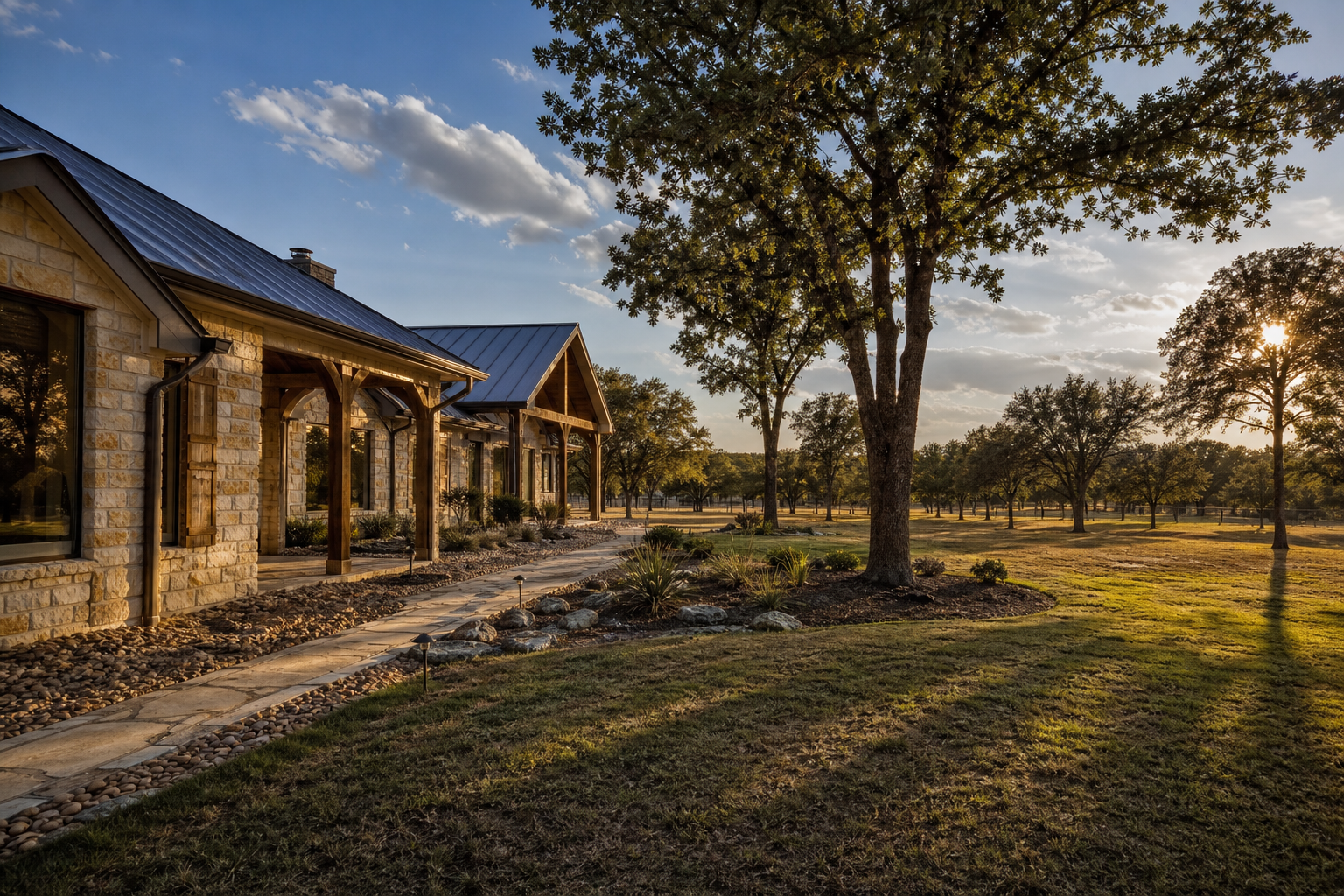
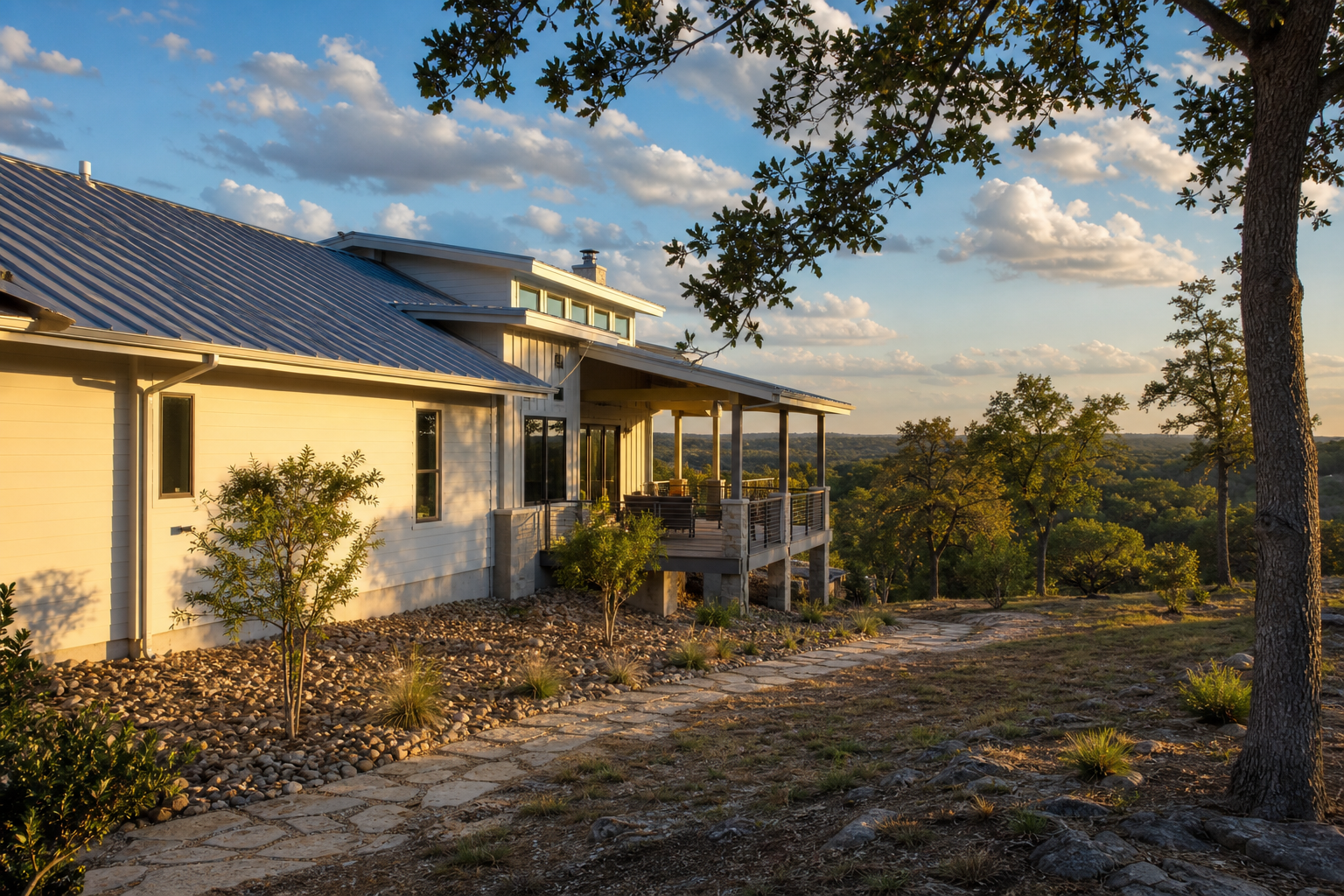
Standing-seam metal roofing: This is the most popular choice across rural Texas for good reason. Metal roofing is non-combustible, handles high winds common in this region, and lasts 40 to 60 years with minimal maintenance. For ranch properties in Parker County or lakefront builds near Possum Kingdom, metal is the workhorse option.
Clay or concrete tile: These offer excellent fire resistance and a more polished look suited to luxury properties in areas like Aledo or Weatherford. They are heavier, so your roof structure needs to be engineered accordingly.
Asphalt composition shingles with Class A ratings: More affordable than metal or tile, these are a solid middle ground. Make sure you verify the Class A designation specifically, as not all asphalt shingles carry it.
What to Avoid on Any Rural Texas Property
Wood shake and wood shingle roofs are the most dangerous choice in wildfire territory. They ignite rapidly from ember contact. If you are looking at an existing property in Jack County or western Parker County with a wood shake roof, factor the cost of a full roof replacement into your offer. I tell investors to treat this the same way you would treat a failed foundation inspection: it is a deal-breaker unless the price reflects the necessary fix.
Do Not Forget Vents and Soffits
Even a perfect metal roof can fail if embers enter through unprotected openings. Screen all roof vents, soffit vents, and eave openings with 1/8-inch metal mesh. This small detail prevents ember intrusion into your attic space, where one hot ember can ignite insulation and framing.
Creating Defensible Space Around Properties in Palo Pinto and Jack Counties
Defensible space is the managed area between your structure and the surrounding wildland. Think of it as your property’s firebreak. The Texas A&M Forest Service, which administers the Firewise USA program in Texas, provides detailed guidance on this, and I strongly recommend following it.
Zone 1: The Immediate Zone (0 to 5 Feet From Your Structure)
This is the most critical zone, especially for properties on acreage in Jack County or along the cedar-heavy draws near Possum Kingdom Lake. Within five feet of your home:
Use only non-combustible materials for decking, fencing, and ground cover (gravel, stone, or pavers)
Remove all dead vegetation, dried leaves, and mulch
Keep no firewood, propane tanks, or stored materials against the house
Trim tree branches so none overhang the roof or touch the structure
Zone 2: The Intermediate Zone (5 to 30 Feet)
This is where your landscaping choices matter most. Space trees so their canopies do not touch, keep grass mowed to four inches or less, and remove ladder fuels (low-growing vegetation that allows ground fire to climb into tree canopies). For ranch properties in Parker County where pasture meets the home site, maintaining this buffer is straightforward if you are already managing your grazing rotation.
Zone 3: The Extended Zone (30 to 100 Feet)
In this outer zone, you thin trees and brush to reduce overall fuel density. On a 20-acre tract in Palo Pinto County, you are not clearing everything. You are selectively removing the most flammable species, particularly cedar, and creating spacing that slows fire spread.
Fire-Resistant Landscaping for the Cross Timbers Region
What you plant matters as much as what you build. The Cross Timbers region that runs through Parker, Palo Pinto, and Jack counties is dominated by Ashe juniper (cedar), post oak, and native grasses. Cedar is one of the most explosive wildfire fuels in Texas because its oils are highly flammable and it retains dead material in its canopy. Here is how to make smart landscaping decisions.
Native Plants That Resist Fire
You do not have to sacrifice a beautiful landscape for fire safety. Several Texas-native and adapted species are naturally fire-resistant:
Live oak: Far more fire-resistant than post oak due to its higher moisture content in leaves
Texas mountain laurel: Evergreen, drought-tolerant, and slow to ignite
Red yucca: Low-growing, minimal fuel load, and thrives in the rocky soils common in Palo Pinto County
Buffalo grass and blue grama: Native grasses that stay low, require less water, and create less fuel volume than taller prairie grasses
Mexican buckeye: Deciduous, moderate moisture content, and well-suited to the Cross Timbers climate
What to Remove or Manage Aggressively
Ashe juniper (cedar): Remove within 30 feet of any structure without exception. Beyond that, thin aggressively.
Eastern red cedar: Same volatility as Ashe juniper; manage identically.
Dried ornamental grasses left uncut: These act as wicks during fire season. Cut them back every winter.
Having closed over 250 transactions in this market, including ranch and recreational land throughout these counties, I can tell you that buyers increasingly ask about wildfire preparedness. Properties that already have defensible space and fire-resistant landscaping in place command stronger offers and sell with fewer contingencies.
How Fire-Resistant Upgrades Affect Property Value and Insurance in Parker County
As an investor, you are thinking about return on investment. Fire-resistant upgrades deliver ROI through two channels: resale value and ongoing insurance costs.
Insurance Premium Impact
Insurance carriers serving rural Parker, Palo Pinto, and Jack County properties are paying close attention to wildfire risk. Properties with documented fire-resistant roofing, defensible space, and Firewise-compliant landscaping can qualify for lower premiums. Many rural properties in this corridor rely on private water wells rather than municipal fire hydrants, and fire suppression response times are longer in unincorporated areas. Insurance underwriters factor all of this in. Your fire-resistant upgrades directly address their risk calculations.
Resale and Rental Value
With the median listing price in Parker County at $557,175 as of June 2026 according to FRED data, and ranch properties in the county ranging well above that, protecting your investment from wildfire damage is not just about safety. It is about preserving and enhancing equity. Luxury properties in Parker County, particularly those on acreage west of Weatherford and along the Palo Pinto County line, benefit enormously from visible fire mitigation because buyers shopping in that price range are sophisticated enough to evaluate risk.
Exterior Construction Details That Matter in Wildfire Zones
Beyond roofing and landscaping, several exterior building details make or break your property’s fire resilience.
Fiber cement siding (such as HardiePlank) is non-combustible and outperforms vinyl or wood siding in fire exposure
Tempered or dual-pane windows resist radiant heat far better than single-pane glass, which can shatter from heat exposure and allow embers inside
Enclosed eaves and boxed soffits eliminate the gaps where embers accumulate
Metal or masonry fencing within five feet of the structure prevents fire from traveling along a wood fence line directly to your home
Non-combustible decking materials (composite or aluminum) protect the area where most families spend time outdoors
For first time home buyers in Weatherford considering properties that back up to undeveloped land, or for investors evaluating lake properties on Possum Kingdom Lake, these details should be part of your property inspection checklist before you make an offer.
Frequently Asked Questions
What is the most important fire-resistant upgrade for a rural Texas home?
A Class A fire-rated roof is the single most impactful upgrade. Metal roofing is the most popular choice in rural Parker, Palo Pinto, and Jack counties because it is non-combustible, wind-resistant, and lasts decades. Combined with 1/8-inch metal mesh screening on all vents and soffits, a metal roof dramatically reduces your risk of ember ignition.
How wide should defensible space be around a home in Palo Pinto County?
The Texas A&M Forest Service recommends maintaining defensible space in three zones: 0 to 5 feet with non-combustible materials only, 5 to 30 feet with managed and spaced vegetation, and 30 to 100 feet with thinned trees and reduced brush density. In the cedar-heavy terrain of Palo Pinto County, that 100-foot zone is especially important.
Is cedar (Ashe juniper) really that dangerous for wildfire?
Yes. Ashe juniper is one of the most flammable native species in Texas. Its oils ignite rapidly, and it retains dead material in its canopy that acts as fuel. Remove cedar within 30 feet of any structure and thin it aggressively beyond that distance across your property.
Do fire-resistant upgrades lower homeowners insurance in Parker County?
Many insurance carriers offer premium reductions for properties with documented fire-resistant roofing, defensible space, and Firewise-compliant landscaping. Since many rural Parker County properties rely on private water wells rather than municipal hydrants, these upgrades carry extra weight with underwriters.
What native Texas plants are fire-resistant for landscaping?
Live oak, Texas mountain laurel, red yucca, buffalo grass, blue grama, and Mexican buckeye are all native or adapted species that are naturally fire-resistant and thrive in the Cross Timbers climate of Parker, Palo Pinto, and Jack counties.
Should I choose metal roofing or asphalt shingles for a ranch property?
For ranch properties in Parker County and surrounding counties, metal roofing is generally the stronger choice. It is non-combustible, handles high winds, and requires minimal maintenance over a 40 to 60 year lifespan. Asphalt shingles with a Class A fire rating are a more affordable alternative if budget is a factor.
How does wildfire risk affect property values for ranch properties in Parker County?
Properties with visible fire mitigation, including fire-resistant roofing, defensible space, and managed landscaping, command stronger offers and sell with fewer contingencies. With the median listing price in Parker County at $557,175 as of June 2026, protecting that investment through fire-resistant upgrades is critical.
What exterior siding is best for wildfire zones?
Fiber cement siding is the recommended choice for homes in wildfire zones. It is non-combustible and significantly outperforms vinyl or wood siding when exposed to radiant heat or direct flame contact.
Are wood decks a fire hazard on rural Texas properties?
Yes. Wood decks within the immediate zone around your home can ignite from ember contact and carry fire directly to your structure. Use non-combustible decking materials such as composite or aluminum, especially within five feet of the home.
How do I find out if my property in Jack County is in a wildfire risk area?
The Texas A&M Forest Service provides wildfire risk assessment and administers the Firewise USA program statewide. They regularly issue burn bans for Jack, Palo Pinto, and Parker counties during dry periods. Contact them directly or work with a local real estate professional who understands the specific risks for your area.
The Bottom Line
Building or upgrading in the wildfire zones of Palo Pinto, Parker, and Jack counties is not about eliminating risk entirely. It is about making smart, documented decisions that protect your investment, reduce your insurance costs, and position your property competitively in a market where buyers are paying attention to fire resilience. Start with a Class A fire-rated metal roof, create defensible space in three clear zones, replace cedar with fire-resistant native plants, and upgrade your exterior materials.
I have spent 17 years helping buyers and investors find the right properties across this region, from luxury estates in Weatherford to recreational land in Jack County and lake properties on Possum Kingdom Lake. With 15 five-star reviews and over 250 closed transactions, I know this market and I know these properties. If you are building, upgrading, or evaluating a rural Texas property for wildfire readiness, I would love to walk through your options. Reach out to me, Lynae Amason, at 817-522-2897 or visit my office at 220 Fort Worth Hwy, Suite 700, in Weatherford.