
LIVING IN WEATHERFORD
Living in Weatherford, Texas: Your Local Guide to Homes, Schools, and Lifestyle

Living in Weatherford, Texas: Your Local Guide to Homes, Schools, and Lifestyle
What is it really like to live in Weatherford, Texas, and why are so many buyers and investors choosing Parker County right now?
Weatherford offers the rare combination of small-city charm, ranch-friendly acreage, strong school districts, and a straight shot down I-20 to Fort Worth’s job centers, all at price points that tend to run below the inner DFW suburbs.
Why Weatherford Matters for Buyers and Investors Right Now
If you’ve been watching the broader Texas market, you already know the landscape is shifting in your favor. Statewide, closed home sales ticked up 0.7% in Q1 2026 compared to Q1 2025, according to Texas REALTORS. That combination of softening prices and expanding inventory statewide creates a window where you have more negotiating room than you did during the frenzy of 2021 and 2022.
Now layer Weatherford on top of those statewide trends. As the Parker County seat, this city sits roughly 25 miles west of Fort Worth along I-20. You get freeway-level connectivity to Tarrant County employment centers without paying Tarrant County prices. With 17 years of experience working across Parker County, I see this dynamic play out constantly: buyers and investors who discover they can get more land, more square footage, and more breathing room here than almost anywhere else in the metroplex. And that’s before you factor in the lifestyle appeal of ranch properties, equestrian communities, and wide-open space that simply doesn’t exist closer in.
Weatherford Home Types and What They Mean for Your Investment
One of the things I love about Parker County is the sheer variety of property you can find within a short drive. Your options here go well beyond cookie-cutter subdivisions.
Ranch Properties in Parker County
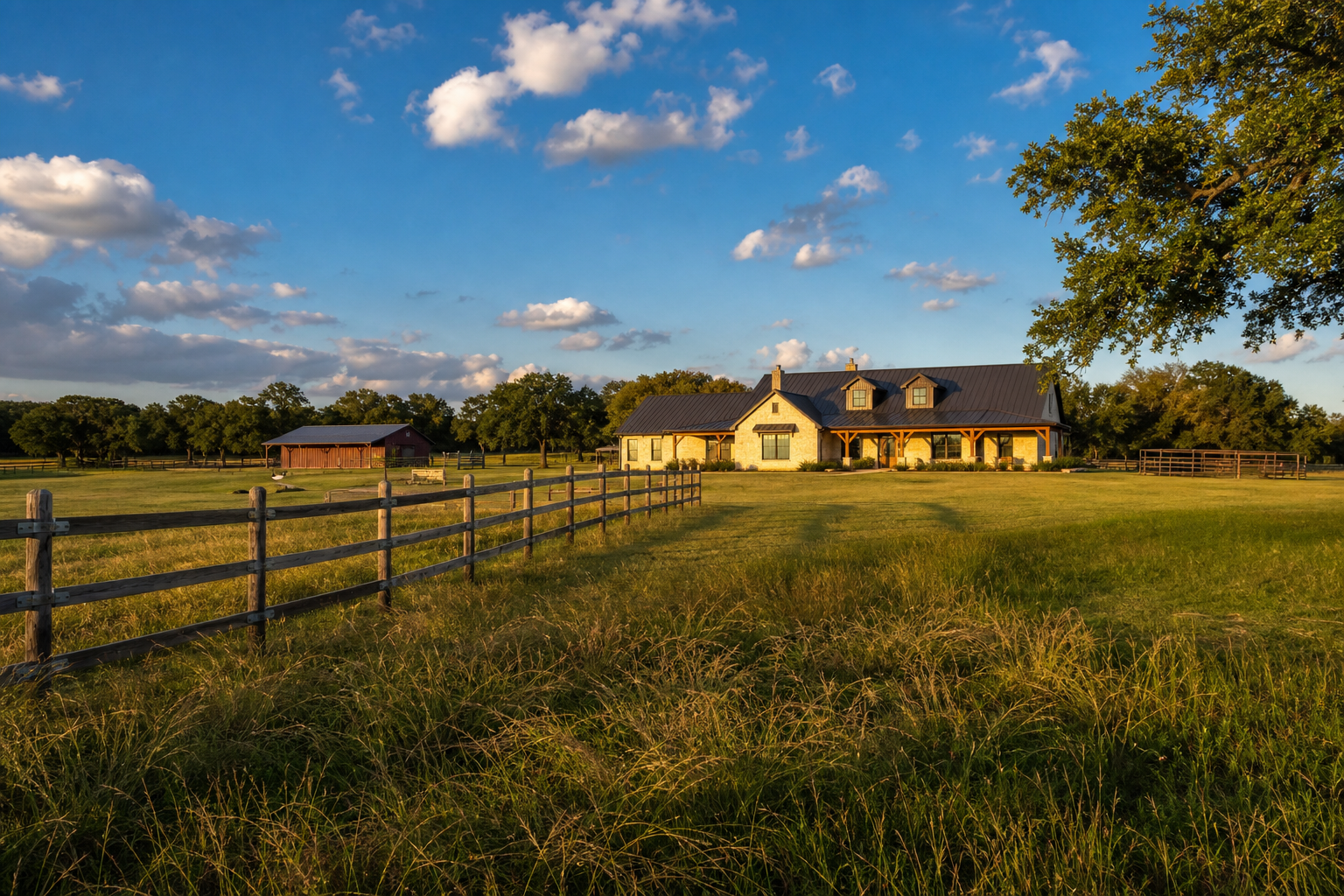
If you’re searching for ranch properties in Parker County, you’ll find everything from working cattle operations on 50-plus acres to small hobby ranches on 5 to 10 acres with improved pastures and pipe fencing. As someone who lives on a ranch here, raising cattle and participating in the equestrian world, I can tell you that the infrastructure for this lifestyle is well established. Feed stores, large-animal veterinarians, farriers, and auction facilities are all part of the fabric of daily life in Weatherford.
Luxury Properties in Parker County
The luxury segment in Parker County attracts buyers who want estate-level homes on generous acreage. Think custom-built homes with outdoor living spaces, ag-exempt land, private ponds, and barn setups designed for horses or cattle. These properties appeal to a specific buyer pool, and having closed over 250 transactions across this market, I can tell you that pricing and presentation matter enormously in this segment.
First-Time Buyer Opportunities in Weatherford
If you’re a first-time home buyer in Weatherford, you’ll find that newer-construction neighborhoods offer entry points that can be more accessible than comparable homes in Tarrant County. Builders have been active in the Weatherford area, and that activity gives you options. What I tell my clients is to think carefully about what you need now versus what you’ll grow into, because buying in Parker County often means you can afford the space you actually want rather than compromising on a smaller footprint closer to the city.
Lake Properties Near Possum Kingdom Lake
For investors and lifestyle buyers eyeing lake properties near Possum Kingdom Lake in Palo Pinto County, the calculus is different. This is a recreational destination that supports short-term rental demand and vacation-home investment. The drive from Weatherford to Possum Kingdom is manageable, which makes Weatherford itself a logical home base if you want to own lakefront investment property while living in a more service-rich community.
Schools in Weatherford and Parker County: Why They Drive Demand
You can’t underwrite a rental property or evaluate a family home without looking at the school districts, and this is an area worth examining closely for Parker County.
Weatherford ISD serves the city proper and has a long-standing presence in the community. Aledo ISD, which covers portions of Parker County west of Fort Worth, carries a strong academic reputation across the DFW region. Strong school performance is not just a lifestyle consideration for you. It is a hard financial factor. Properties within well-regarded districts tend to hold value more reliably and attract a deeper pool of both renters and resale buyers.
What does that mean practically? If you’re buying a rental property in a Weatherford ISD or Aledo ISD attendance zone, you can generally expect steadier tenant demand from families who specifically choose their rental based on school access. I consistently see this play out: families seeking both school quality and more space are part of the rental demand base in Parker County. Current TEA accountability ratings for both districts should be verified at tea.texas.gov before you finalize any investment decision.
Commuting from Weatherford to Fort Worth and the DFW Metroplex
Your commute is one of the biggest quality-of-life factors in any relocation or investment decision. Weatherford’s position on the I-20 corridor gives you direct freeway access to Fort Worth, approximately 25 to 30 miles east. During non-peak hours, that drive is straightforward. During rush hour, you’re looking at a longer trip, but the direct freeway access via I-20 is a practical advantage for many commuters.
Beyond I-20, US-180 and US-281 provide north-south access. You can reach Mineral Wells in Palo Pinto County heading northwest or Granbury in Hood County heading south via US-377. For investors, this multi-directional connectivity is meaningful because it broadens the tenant pool. Your Weatherford rental isn’t limited to Fort Worth commuters. You also capture tenants who work along the US-180 or US-281 corridors.
The rise of remote and hybrid work has expanded this even further. I work with buyers who no longer need to commute daily, and for them, Weatherford is not a compromise. It is the destination. They want the acreage and the pace of life, and they only need to drive into Fort Worth once or twice a week.
The Surrounding Counties: Expanding Your Weatherford Investment Radius
Smart investors don’t look at Weatherford in isolation. The surrounding counties each offer distinct opportunities that complement a Parker County strategy.
Hood County and Granbury
South of Weatherford, Hood County’s seat of Granbury is a historic lake town on Lake Granbury. It draws retiree and vacation-home buyers, creating a different investor sub-market. If you’re considering a portfolio approach, pairing a workforce rental in Weatherford with a short-term vacation rental in Granbury can diversify your income streams.
Wise County and Decatur
North of Parker County, Decatur in Wise County has attracted DFW spillover growth. Investors tracking the northward expansion of the metroplex watch this corridor closely. Wise County appeals to investors with longer time horizons focused on appreciation rather than immediate cash flow.
Palo Pinto and Jack Counties
These more rural counties west and northwest of Weatherford offer raw land, recreational property, and the kind of wide-open space that appeals to buyers looking for farm land, hunting property, or long-term land plays. If you’re interested in recreational land or agricultural holdings, this is where the opportunities stretch out.
Texas Property Taxes and What They Mean for Your Weatherford Budget
Here’s the part of the conversation where I always want to be direct with you: Texas has no state income tax, but property taxes are among the highest in the nation. This is a material line item in any budget, whether you’re a homeowner or an investor building a rental pro forma.
Parker County property tax rates are set by the county, the city of Weatherford, and the applicable school district, and the combined rate directly affects your net operating income on a rental or your monthly carrying cost on a primary residence. Before you buy anything in Weatherford, you should pull the current assessed value and combined tax rate from the Parker County Appraisal District (Parker CAD) for the specific property you’re evaluating. Tax rates can vary meaningfully between properties inside and outside city limits, or between different school district boundaries.
For investors, this means your cash-flow model needs to account for property taxes as a major expense category, right alongside insurance and maintenance. I always tell my clients to run the numbers with the actual tax bill, not a generic estimate, because the difference between being inside or outside a particular taxing entity can shift your returns significantly.
Frequently Asked Questions About Living in Weatherford, Texas
How far is Weatherford from Fort Worth?
Weatherford sits approximately 25 miles west of Fort Worth along I-20. Your drive time varies depending on traffic conditions, but the direct freeway access makes it a relatively straightforward commute for many buyers. Many of my clients find the trade-off between a slightly longer drive and significantly more property well worth it.
What types of properties are available in Parker County?
Parker County offers a wide spectrum, from new-construction homes in planned neighborhoods to historic properties in downtown Weatherford, luxury estates on large acreage, working cattle ranches, equestrian properties, and raw land. With over 250 closed transactions, I can help you navigate what’s available across every category.
Is Weatherford a good place for first-time home buyers?
Yes. First-time home buyers in Weatherford often find they can afford more space and land than comparable options in Tarrant County. Builder activity in the area has created inventory at various price points.
What school districts serve the Weatherford area?
Weatherford ISD serves the city proper, and Aledo ISD covers portions of Parker County west of Fort Worth. Aledo ISD has a strong academic reputation across the DFW region. You should verify current accountability ratings through the Texas Education Agency at tea.texas.gov for the most up-to-date performance data.
Can I find lake properties near Weatherford?
Absolutely. Possum Kingdom Lake in Palo Pinto County is the premier lake destination near Weatherford and supports both lifestyle buyers and short-term rental investors. Lake Granbury in Hood County, south of Weatherford, is another option that draws vacation-home and retiree buyers.
How does the Weatherford market compare to inner DFW suburbs?
Parker County has historically offered lower price-per-square-foot than Tarrant County, with the added advantage of larger lot sizes. You trade some proximity to urban amenities for significantly more space, a more rural character, and a lower density of development.
What should investors know about rental demand in Weatherford?
Rental demand in Weatherford draws on tenants who commute to Fort Worth employment centers, with school district quality and property size among the factors that make Parker County competitive with closer-in suburbs. Strong school districts like Weatherford ISD and Aledo ISD attract family renters, and I-20 connectivity keeps the commuter-renter pool active.
Are there investment opportunities in the counties surrounding Weatherford?
Yes. Hood County (Granbury), Wise County (Decatur), Palo Pinto County (Possum Kingdom Lake), and Jack County each offer distinct investment profiles. These range from vacation rentals and retiree housing to raw land appreciation plays. Each requires its own underwriting approach.
How long are homes sitting on the market in Texas right now?
Statewide, homes averaged 80 days on market in Q1 2026, which was 6 days longer than Q1 2025, according to Texas REALTORS. This trend gives you more time for due diligence and more room to negotiate. Parker County-specific days-on-market data should be sourced from a current NTREIS report.
Why should I work with a local agent in Weatherford?
Local knowledge in Parker County is not optional. With 17 years of experience here and a 5 out of 5 star average across 15 client reviews, I know the nuances of each sub-market, from which neighborhoods are in which school district to where the best ranch infrastructure already exists. One of my long-term clients put it this way: “Her local knowledge of available properties is invaluable. She is a true professional in every sense.”
The Bottom Line on Living and Investing in Weatherford, Texas
Weatherford and Parker County offer something that’s getting harder to find in the DFW metroplex: space, value, and a quality of life that doesn’t require you to sacrifice connectivity to major employment centers. Whether you’re a first-time buyer looking for your first home, an investor building a rental portfolio, or someone searching for ranch properties or lake properties near Possum Kingdom Lake, the opportunities here are real and varied.
The statewide market conditions heading through 2026 are giving buyers more room to negotiate than they’ve had in years. Pair that with Weatherford’s unique position on the I-20 corridor, strong school districts, and diverse property types, and you have a market that deserves serious attention. If you’re ready to explore what’s available, I’d love to help you find the right fit. Reach out to me, Lynae Amason, at 817-522-2897 or visit my office at 220 Fort Worth Hwy, Suite 700, in Weatherford. This is my home, and I’d be glad to make it yours.
Read More
Wildfire Risk and Home Insurance
Wildfire Risk and Home Insurance in Mineral Wells: What to Check Before Closing

Wildfire Risk and Home Insurance in Mineral Wells: What to Check Before Closing
What wildfire risk and insurance factors should sellers and buyers in the Mineral Wells area check before closing on a property?
If you are buying or selling property near Mineral Wells or anywhere in Palo Pinto County right now, you need to verify wildfire risk scores and confirm binding insurance quotes before you sign anything. The Ross Fire changed everything.
Why This Matters Right Now in Mineral Wells and Palo Pinto County
I am writing this in the immediate shadow of the Ross Fire, which started approximately 3 miles southwest of the town of Palo Pinto and has burned 90,400 acres across Palo Pinto and Jack counties. As of early September 2026, the fire is 57% contained. FEMA has approved a Fire Management Assistance Grant to help suppress it. Around 630 homes were evacuated, and at least five structures have been destroyed.
This is not a distant headline for investors eyeing ranch properties in Parker County or lake properties near Possum Kingdom Lake. This fire is burning in your backyard. The current Texas Wildfire Preparedness Level sits at Level 3, meaning state and local resources are heavily committed and national support is being called in. With 215 counties under outdoor burn bans, the insurance and risk landscape for North Texas real estate has shifted in real time, and if you are mid-transaction, you cannot afford to ignore it.
How the Ross Fire Changes Wildfire Risk for Mineral Wells Investors
You may already know that Mineral Wells sits in the heart of the Cross Timbers ecological region, where heavy, dry juniper, private timber, and continuous critically dry grass create the exact fuel conditions that made the Ross Fire so explosive. Fire behavior during the Ross Fire has been characterized by long-range spotting, crowning, and a smoke plume that created its own updraft. That is not typical grass fire behavior. That is extreme, and it is fueled by the same vegetation found on ranch and recreational land parcels throughout Palo Pinto and Jack counties.
What does this mean for your investment decision? It means the property you are evaluating west of Weatherford or around Mineral Wells needs to be assessed not just for its view, acreage, or proximity to Possum Kingdom Lake, but for its wildfire exposure at the parcel level.
Use the Texas Wildfire Risk Assessment Portal Before Making an Offer
The Texas Wildfire Risk Assessment Portal (TxWRAP) allows you to enter any property address and receive detailed wildfire threat data. The data layers include wildfire threat, wildland urban interface boundaries, surface fuels, historic wildfire ignitions, and fire behavior modeling. In my 17 years of working with buyers on ranch properties in Parker County and the surrounding areas, I have never seen this tool matter more than it does right now. Before you make an offer on any property in Mineral Wells, Palo Pinto, or the western edge of Parker County, you need that report in hand.
What Sellers in the Mineral Wells Area Must Disclose and Prepare
If you are listing property anywhere near the Ross Fire burn zone, or anywhere in Palo Pinto or Jack County, you should anticipate that buyers are going to ask harder questions than they did six months ago. Here is what I recommend you prepare in advance:
Defensible space documentation. Have you cleared brush, maintained a fuel-free zone around structures, and trimmed overhanging juniper? Experts recommend creating defensible space around properties, and buyers’ insurance companies will want to see it.
Roof classification. A Class A roof rating and ember-resistant construction can keep your property insurable and hold wildfire risk scores below carrier cutoffs. If you have invested in these upgrades, document them.
Current insurance policy details. Buyers and their lenders will want to know that the property is currently insured and what the premium looks like. If your carrier has issued a non-renewal notice or raised your premium significantly, be transparent about it. The Texas Department of Insurance notes that homeowners in the Cross Timbers region have experienced non-renewals citing wildfire risk.
Having closed over 250 transactions across this market, I can tell you that seller credibility on wildfire preparedness is about to become a negotiation factor, not just a disclosure checkbox.
What Buyers and Investors Must Verify Before Closing in North Texas
You are the one taking on the risk when you close. Here is your pre-closing wildfire and insurance checklist:
Obtain a binding insurance quote before your option period expires. Do not assume you can get coverage after closing. Carriers are using property-level wildfire scoring tools like Verisk FireLine, and those scores can trigger non-renewal or outright denial. Get quotes early.
Understand your deductible structure. Most Texas policies carry a separate percentage deductible for wind and hail damage, typically 1% to 5% of dwelling value. On a $300,000 policy with a 2% wind deductible, that means $6,000 out of pocket before the carrier pays on storm damage. Stack that on top of your wildfire exposure and you need to model worst-case insurance costs into your ROI.
Know the Texas FAIR Plan exists, but understand its limits. If you are denied coverage because your property is too high-risk, you may be eligible for a policy through the Texas FAIR Plan. This is a state-backed last-resort option. It was built as a temporary safety net, not a permanent fixture, and it is now stretched thin.
Budget for the real cost of insurance. Texas homeowners insurance averages about $4,085 per year statewide in 2026. In wildfire-exposed areas near Mineral Wells, you should expect to pay more. Premiums rose around 4% in 2026, but that is a statewide average. Properties in the Cross Timbers face the most pressure.
How Wildfire Risk Impacts Ranch Properties in Parker County and Lake Properties Near Possum Kingdom
If you are investing in ranch properties in Parker County or recreational land around Possum Kingdom Lake, you are investing in the Cross Timbers, and you need to think about wildfire as a permanent cost of ownership, not a one-time event.
Ranch and Land Parcels
The emerging dryness across the northern Cross Timbers and North Texas, combined with the January 2026 National Interagency Fire Center forecast projecting above-normal wildfire risk for much of Texas, tells you that 2026 is not an anomaly. It is a pattern. Ranch properties with heavy juniper or timber cover will face higher insurance premiums and potential coverage gaps. I tell my clients to evaluate whether the property’s fuel load can be managed through clearing and prescribed burns.
The Prescribed Burn Insurance Program, a Positive Signal
Texas A&M Forest Service launched the Texas Prescribed Burn Manager Insurance Program on September 2, 2026. Previously, certified burn managers faced personal liability and commercial insurance was unavailable, so prescribed burns stopped happening, and fuel loads accumulated. This program signals a long-term state strategy to reduce wildfire fuel loads, and it could eventually improve insurability across the Cross Timbers counties. For investors with a long hold horizon, this matters.
Lake Properties and Smoke Damage
Even if your lake property near Possum Kingdom is spared from flame, smoke and soot damage can erode value. Insurers may pay only a percentage of the loss of living plants on the property, and cleanup and debris removal endorsements often cover just a fraction of actual costs. Factor these hidden costs into your acquisition analysis.
Insurance Shopping Strategy for First Time Home Buyers in Weatherford and Mineral Wells
If you are a first time home buyer in Weatherford or Mineral Wells, insurance costs can catch you off guard. Here is what I walk my clients through:
Shop multiple carriers. Insurance experts recommend it, and in this market, the spread between the cheapest and most expensive quotes can be substantial.
Ask about mitigation discounts. Defensible space, ember-resistant vents, and Class A roofing can lower your premium.
Check the county burn ban status. With 215 counties currently under outdoor burn bans, this is an ongoing condition, not a seasonal blip. Your property’s county status affects your risk profile.
Do not wait until closing week. In the current environment, binding coverage on properties in Palo Pinto or Jack County could take weeks, not days.
With 15 five-star reviews from clients I have worked with over the years, the most common feedback I receive is about the value of local knowledge. One client put it this way: “Her local knowledge of available properties is invaluable. She is a true professional in every sense.” That local knowledge is exactly what helps buyers avoid the wildfire insurance pitfalls that out-of-area buyers stumble into.
Frequently Asked Questions
Does a standard homeowners policy cover wildfire damage in Mineral Wells?
Yes. Wildfire damage is typically covered under a standard Texas homeowners insurance policy, including additional living expenses if your home is temporarily unlivable. However, the key issue in the Mineral Wells area right now is whether you can obtain that standard policy at all. Carriers are using property-level wildfire scoring, and high-risk parcels may be denied coverage.
What is the Texas FAIR Plan and when would I need it?
The Texas FAIR Plan is a state-backed last-resort insurance option for homeowners denied coverage by traditional carriers. If your property in Palo Pinto or Jack County scores too high on wildfire risk, this may be your only option. It was designed as a temporary safety net, and flood damage is excluded.
How do I check wildfire risk for a specific property near Mineral Wells?
You can use the Texas Wildfire Risk Assessment Portal. Enter your property address and receive data on wildfire threat, surface fuels, historic ignitions, fire behavior, and wildland urban interface boundaries. This should be standard due diligence on any transaction in the Cross Timbers region.
How much does homeowners insurance cost in North Texas in 2026?
Texas homeowners insurance averages about $4,085 per year statewide in 2026. Properties in wildfire-exposed areas near Mineral Wells, Palo Pinto, and Jack County should expect premiums above that average due to elevated risk scoring.
What is a wind and hail deductible and why does it matter for investors?
Most Texas policies carry a separate percentage deductible for wind and hail damage, typically 1% to 5% of dwelling value. On a $300,000 policy with a 2% wind deductible, you would pay $6,000 out of pocket before the carrier contributes. This is a critical line item for investor ROI calculations.
Can a property’s wildfire risk score cause an insurance non-renewal?
Yes. Carriers are using tools like Verisk FireLine to generate property-level wildfire scores. If your score rises above the carrier’s threshold, they may raise your premium sharply or stop writing your policy entirely. The Texas Department of Insurance can be contacted at 1-800-252-3439 if you experience a non-renewal.
How does the Ross Fire affect property values in Palo Pinto County?
The full impact is still unfolding. With 90,400 acres burned and 630 homes evacuated, buyer caution in Palo Pinto and Jack counties is expected to increase. Insurance availability will be a major factor in whether transactions can close in the coming months.
What is defensible space and do I need it for my Mineral Wells property?
Defensible space is the cleared, fuel-free zone around structures that reduces wildfire vulnerability. Insurance companies increasingly require it, and it can keep your wildfire risk score below carrier cutoffs. For any property with juniper or timber cover, this is not optional.
What is the new Prescribed Burn Manager Insurance Program?
Launched September 2, 2026, by Texas A&M Forest Service, this program provides liability coverage for certified prescribed burn managers. Previously, the lack of insurance stopped prescribed burns, causing dangerous fuel accumulation. For investors, this signals long-term state commitment to reducing wildfire risk.
Should I get an insurance quote before or after making an offer on a property?
Before. In the current environment, especially in Palo Pinto, Jack, and western Parker County, you need to confirm that binding coverage is available and understand your premium before committing. Discovering you cannot insure a property after your option period expires is a costly mistake.
The Bottom Line on Wildfire Risk and Closing in Mineral Wells
The 2026 wildfire season has fundamentally changed the due diligence required to buy or sell property in Mineral Wells, Palo Pinto County, and the broader North Texas Cross Timbers. Whether you are acquiring ranch properties in Parker County, lake properties near Possum Kingdom Lake, or a first home in Weatherford, wildfire risk scoring and insurance availability must be part of your pre-closing checklist, not an afterthought.
I have spent 17 years helping clients navigate this market, from luxury properties to raw land, and I have never seen wildfire and insurance move to the top of the transaction conversation the way they have right now. If you are evaluating a property in this region and want someone who knows the terrain, the risks, and the right questions to ask, I would be glad to help. Reach out to me, Lynae Amason, at 817-522-2897 or through my office at 220 Fort Worth Hwy, Suite 700, Weatherford, TX 76086.

Read More

Posted on

Creating Defensible Space for Weatherford Countryside Properties: Your Wildfire Readiness Guide

Creating Defensible Space for Weatherford Countryside Properties: Your Wildfire Readiness Guide
Is your countryside home in Weatherford and the surrounding North Texas counties prepared to survive a wildfire, and what does creating defensible space actually involve?
Yes, and it starts now. Defensible space is the managed buffer zone between your structure and surrounding wildland vegetation, and for countryside properties across Parker County and neighboring counties, it is no longer optional. It is the single most important factor in whether your property survives a fire event.
Why Wildfire Preparedness Matters in Weatherford and Parker County Right Now
If you own ranch properties in Parker County, land along the Palo Pinto County line, or a countryside home anywhere between Weatherford and Jack County, this is the most urgent conversation you can have about protecting your investment. The Ross Fire, which sparked near Palo Pinto on August 24, 2026, has burned at least 90,400 acres across Palo Pinto and Jack counties, destroying 157 structures and damaging 140 more. It is now the second-largest wildfire in North Texas history.
Here is what also demands your attention: 453 structures were saved during the Ross Fire. That is nearly three times the number destroyed. The difference, in case after case, was defensible space.
I have spent 17 years helping clients buy, sell, and protect properties across Parker County, from ranches along FM 1189 to luxury homes near the historic Weatherford square. I live on a ranch with my husband, raise cattle, and participate in the equestrian community here. The land in this region is not abstract to me; it is personal. And after watching the Ross Fire unfold just one county to our west, I can tell you that every property owner in our area needs to take wildfire preparedness seriously in 2026 and beyond.
Understanding the Three Zones of Defensible Space for North Texas Properties
The Texas A&M Forest Service and the Texas Wildfire Risk Assessment Portal break defensible space into three distinct zones. If you own countryside acreage anywhere from Weatherford to Possum Kingdom Lake, here is exactly what each zone requires.
Zone 1: The Immediate Zone (0 to 5 Feet from Your Structure)
This is the most critical zone. According to the Texas Department of Insurance, you should keep all fire-prone landscaping, plants, and decking at least 5 feet from the building. Consider replacing combustible material with rock gardens, concrete walkways, non-combustible decking, or stone patios. Remove vegetation from roofs and gutters and trim any tree branches hanging over the roof or chimney.
The Texas Wildfire Risk Assessment Portal notes that cleaning out combustible material from just the first five feet around the house has been shown multiple times to increase the likelihood of a structure surviving a wildfire. Five feet. That is all it takes to start making a measurable difference.
Zone 2: The Intermediate Zone (5 to 30 Feet)
In this zone, you need to create space between trees and tree crowns. Break up the continuity of fuel across the landscape by limiting vegetation to small clusters and creating fuel breaks with flower beds, driveways, or walkways. For investors with ranch properties in Parker County running cattle or horses, this zone often includes fence lines, feed storage, and outbuildings that need deliberate clearance.
Zone 3: The Extended Zone (30 to 100+ Feet)
This is where you interrupt the fire’s path and keep flames small and on the ground. Clear vegetation from outbuildings, propane tanks, and other infrastructure. Remove heavy accumulations of litter and debris, dead or decaying plant material, and smaller conifers growing between mature trees. Reduce the density of taller trees throughout the zone.
For properties with significant acreage, and many ranch properties in Parker County sit on 10 to 50 or more acres, Zone 3 management is an ongoing commitment, not a weekend project.
How Wildfire Risk Impacts Property Values and Insurance in Parker County
If you are evaluating investment properties in this market, wildfire preparedness is now a financial calculation, not just a safety one. More than 8 million Texans, about 32% of the state’s population, live in a wildland-urban interface according to the Texas Department of Insurance. Yet only about 20% of businesses in those areas have a wildfire protection plan.
What does that mean for your bottom line? Properties with documented wildfire mitigation measures are increasingly attractive to both buyers and insurers. Meanwhile, properties without defensible space may face rising insurance premiums or even non-renewal. Tarrant County has issued a 90-day burn ban as wildfire threats continue across the region, and Dallas County has been under a similar ban since July 27.
With Parker County’s median sales price at $475,000 in Q2 2026 and the median listing price reaching $557,175 as of June 2026 according to Federal Reserve Bank of St. Louis data, you are protecting a substantial asset. The All-Transactions House Price Index for Parker County reached 304.52 (with the year 2000 as the baseline of 100), meaning home values here have more than tripled since 2000. That kind of long-term appreciation is worth defending with $500 in gravel and a weekend of brush clearing.
Having closed over 250 transactions across this region and holding an ABR designation, I help investors evaluate properties through every lens, including wildfire resilience. It is part of the due diligence conversation I have with every buyer looking at countryside acreage.
The Ross Fire: What Weatherford and Parker County Investors Need to Learn
In 2026, the Texas A&M Forest Service has responded to 1,078 wildfires burning 301,528 acres. In August alone, the agency responded to 313 wildfires for 121,774 acres. For comparison, all of 2025 saw 6,304 wildfires burning about 132,366 acres total. The 2026 season has already more than doubled last year’s burned acreage.
Texas A&M Forest Service fire analyst Walter Flocke stated that the rapid onset of a flash drought increased fire occurrence and intensity statewide in August, and that critically dry fuels are present across much of North, Central, and East Texas.
Nine in 10 wildfires are caused by people, according to the Texas A&M Forest Service. Common causes include burning debris on windy days, dragging tow chains on the ground, or driving on tall grass. Equipment use, including vehicles, trailers, and ATVs, is the second-most common cause behind debris burning.
So what does this mean for you as a property owner in Weatherford or the surrounding countryside? It means the threat is not hypothetical. It is geographic and seasonal reality. If you own lake properties near Possum Kingdom Lake or ranch acreage in Palo Pinto or Jack County, you are quite literally bordering the Ross Fire’s footprint.
Emergency Access and Rural Property Design in Parker County
Here is something many investors overlook when acquiring countryside properties: can a fire truck actually reach your structures? The Texas Wildfire Risk Assessment Portal specifies that public and private streets should be a minimum of 10 feet wide to allow two traffic lanes. Curves and intersections need to be wide enough for large fire equipment to pass and turn. Streets and bridges should withstand at least 40,000 pounds, and dead-end streets or long driveways should include a turnaround area designed as a T or circle large enough for emergency vehicles.
If you are looking at ranch properties in Parker County or recreational land in the surrounding counties, evaluate access roads as part of your purchase decision. A beautiful 40-acre tract with a single narrow cattle path for access is a liability during a fire event, no matter how much defensible space you have created around the structures themselves.
Firewise Landscaping for Weatherford and North Texas Countryside Homes
Firewise landscaping is a set of design and maintenance practices specifically aimed at reducing the chance that flames reach or damage a home. It focuses on creating defensible space, selecting fire-resistant plants, and managing vegetation in ways that slow fire spread.
What I tell the investors I work with is that Firewise landscaping is not a one-time project. It requires ongoing care. Throughout the year, you need to monitor vegetation growth and adjust landscaping as conditions change. For properties in this part of Texas, that means paying particular attention during late summer drought conditions, which is exactly when the Ross Fire ignited.
With Weatherford’s population having grown approximately 25% over five years to 38,000, and 229 new homes listed in the last 30 days alone (up 20.5% year over year), more structures are pushing into that wildland-urban interface every season. Rated 5 out of 5 stars by 15 past clients, I take seriously the responsibility of guiding buyers toward properties that are both beautiful and resilient.
Frequently Asked Questions
What is defensible space, and why do Weatherford countryside properties need it?
Defensible space is the managed buffer between your home and surrounding wildland vegetation. According to the Texas Wildfire Risk Assessment Portal, this space, when maintained properly, slows or stops the spread of wildfire and protects your home from catching fire. It is also important for protecting firefighters defending your property. With the Ross Fire burning 90,400 acres just one county west of Parker County, defensible space is essential for countryside homes here.
How far should defensible space extend around a property in Parker County?
The three recognized zones extend from 0 to 5 feet (immediate zone), 5 to 30 feet (intermediate zone), and 30 to 100 feet or more (extended zone) from the furthest exterior point of the home. The Texas Department of Insurance and Texas A&M Forest Service both recommend maintaining all three zones for countryside properties in North Texas.
What should I remove from Zone 1, the area closest to my home?
Keep all fire-prone landscaping, plants, and combustible decking at least 5 feet away from your structure. Replace them with rock gardens, concrete walkways, non-combustible decking, stone patios, or irrigated grass. Remove vegetation from roofs and gutters and trim any branches hanging over the roof or chimney.
How does wildfire risk affect insurance on ranch properties in Parker County?
Properties in the wildland-urban interface face rising premiums or potential non-renewal. The Texas Department of Insurance notes that only about 20% of businesses in wildfire-prone areas have a protection plan. Documented defensible space and Firewise landscaping can help demonstrate risk mitigation to insurers.
What caused the Ross Fire near Palo Pinto County in 2026?
The Ross Fire began near U.S. Highway 180 and R D Bell Road, approximately 3 miles southwest of Palo Pinto, on August 24, 2026. While the specific ignition source is under investigation, the Texas A&M Forest Service reports that nine in 10 wildfires are caused by people, with debris burning and equipment use as the two leading causes.
How large is the Ross Fire, and how close is it to Weatherford?
The Ross Fire has burned at least 90,400 acres across Palo Pinto and Jack counties and is approximately 57% contained. Palo Pinto County directly borders Parker County to the west, placing Weatherford-area properties within a realistic radius of concern during high-wind events.
Are burn bans currently in effect near Parker County?
Yes. Tarrant County has issued a 90-day burn ban as wildfire threats continue, and Dallas County has been under a 90-day burn ban since July 27. Check with Parker County and your specific county for the most current local restrictions before any outdoor burning.
What are the driveway and access requirements for fire truck access to rural properties?
Roads should be at least 10 feet wide for two traffic lanes. Curves and intersections must accommodate large fire equipment. Roads and bridges should support at least 40,000 pounds. Dead-end streets and long driveways need a T or circle turnaround large enough for emergency vehicles to turn around.
Is Firewise landscaping a one-time project for countryside properties?
No. Firewise landscaping requires ongoing care throughout the year. You should monitor vegetation growth and adjust landscaping as conditions change, paying particular attention during drought conditions and late summer, which is when North Texas wildfire risk peaks.
How many structures were saved during the Ross Fire thanks to defensible space?
According to Texas A&M Forest Service data, 453 structures were saved during the Ross Fire, compared to 157 destroyed and 140 damaged. Reports from similar Texas fires, like the Rolling Pines Fire, confirmed that structures classified as defensible were the ones firefighters could actually stay and protect.
The Bottom Line
Defensible space is not a luxury feature for countryside properties in Weatherford and the surrounding North Texas counties. It is a financial imperative. With the Ross Fire still burning in Palo Pinto and Jack counties and 2026 wildfire acreage already more than doubling the entire 2025 season, every property owner and investor in this region needs to evaluate their structures, their landscaping, and their access roads.
Whether you are buying a home in Weatherford, looking at homes for sale in the area, or evaluating first-time home buying options, wildfire preparedness should be part of your acquisition checklist and ongoing property management plan. I would love to help you find the right property and protect it the right way. Give me a call at 817-522-2897 or visit my office at 220 Fort Worth Hwy, Suite 700 in Weatherford. After 17 years in this market and 250 closed transactions, I know this land, and I know what it takes to invest wisely here.

Read More
REALTOR and Multiple Listing Service marksEqual Housing Opportunity
© 2026 Lynae Amason · Williams Trew Real Estate · TX License #0615086 · TREC Information About Brokerage Services · TREC Consumer Protection Notice · Powered by AgentSpotlight.ai