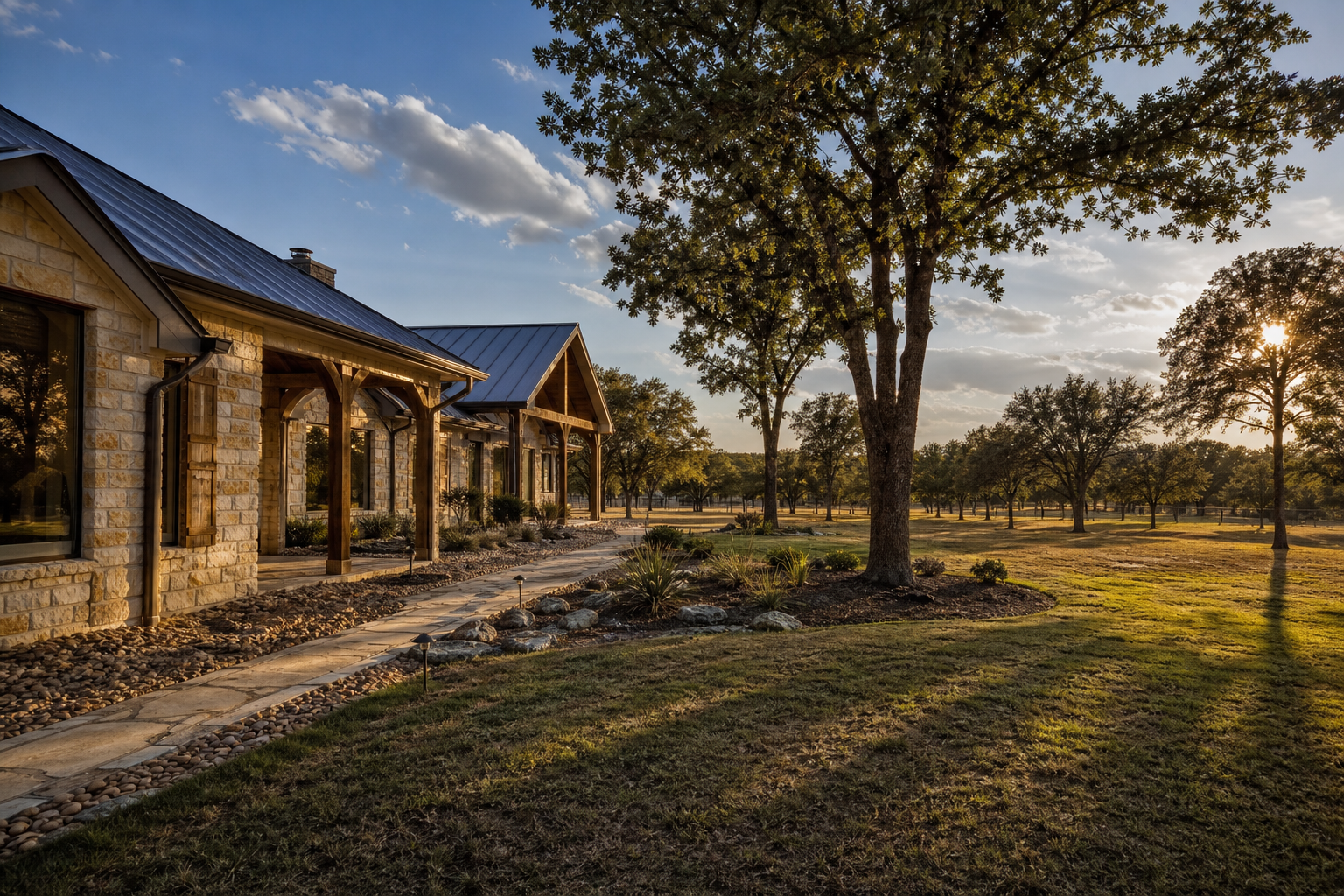
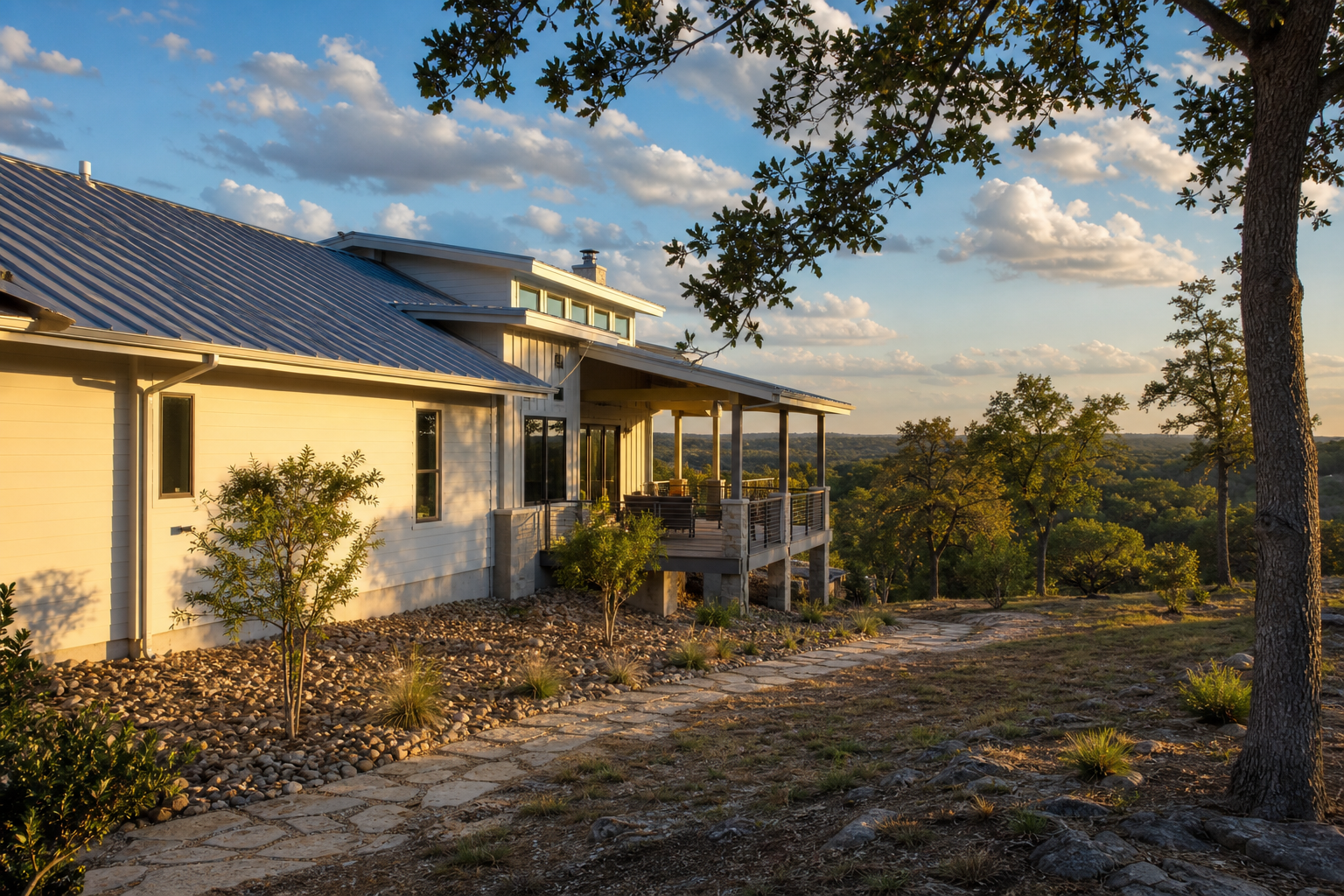
Fire-Resistant Building Tips
Fire-Resistant Building Tips for Palo Pinto, Parker, and Jack County Ranch Properties

Fire-Resistant Building Tips for Palo Pinto, Parker, and Jack County Ranch Properties
How do you build or upgrade a home in the wildfire zones of rural Palo Pinto, Parker, and Jack counties to maximize fire resistance through landscaping and roofing?
You protect your investment by choosing Class A fire-rated metal or tile roofing, creating defensible space zones around structures, and replacing cedar and juniper with fire-resistant native Texas plants.
Why This Matters Right Now in Rural North Texas
If you own ranch properties in Parker County, lake properties near Possum Kingdom Lake in Palo Pinto County, or recreational acreage out in Jack County, wildfire risk is not hypothetical. It is a present, annual threat. The Cross Timbers ecological region, which stretches across all three of these counties, features dense stands of Ashe juniper (cedar) and post oak interspersed with native grasslands. That combination creates a classic wildfire fuel load, and during the dry Texas summers, burn bans are issued for these counties regularly by the Texas A&M Forest Service.
The Smokehouse Creek Fire in February 2024, which burned over 1 million acres in the Texas Panhandle, was a wake-up call for rural property owners statewide. You do not need to be in the Panhandle for wildfire to affect your property, your insurance premiums, and your resale value. With 17 years of experience helping buyers and investors find the right properties across Parker, Palo Pinto, and Jack counties, I can tell you that fire-resistant construction and landscaping are no longer optional upgrades. They are investment essentials.
Roofing Materials That Protect Your Palo Pinto and Parker County Investment
Your roof is the single most vulnerable surface during a wildfire. Embers can travel more than a mile on high winds, and when they land on a combustible roof, the result is often a total loss. Here is what you need to know about roofing choices for properties in this corridor.
Class A Fire-Rated Roofing Is Non-Negotiable
Class A fire-rated materials, the highest rating available, should be your baseline for any build or upgrade in wildfire-prone areas of Palo Pinto, Parker, or Jack County. Your primary options include:
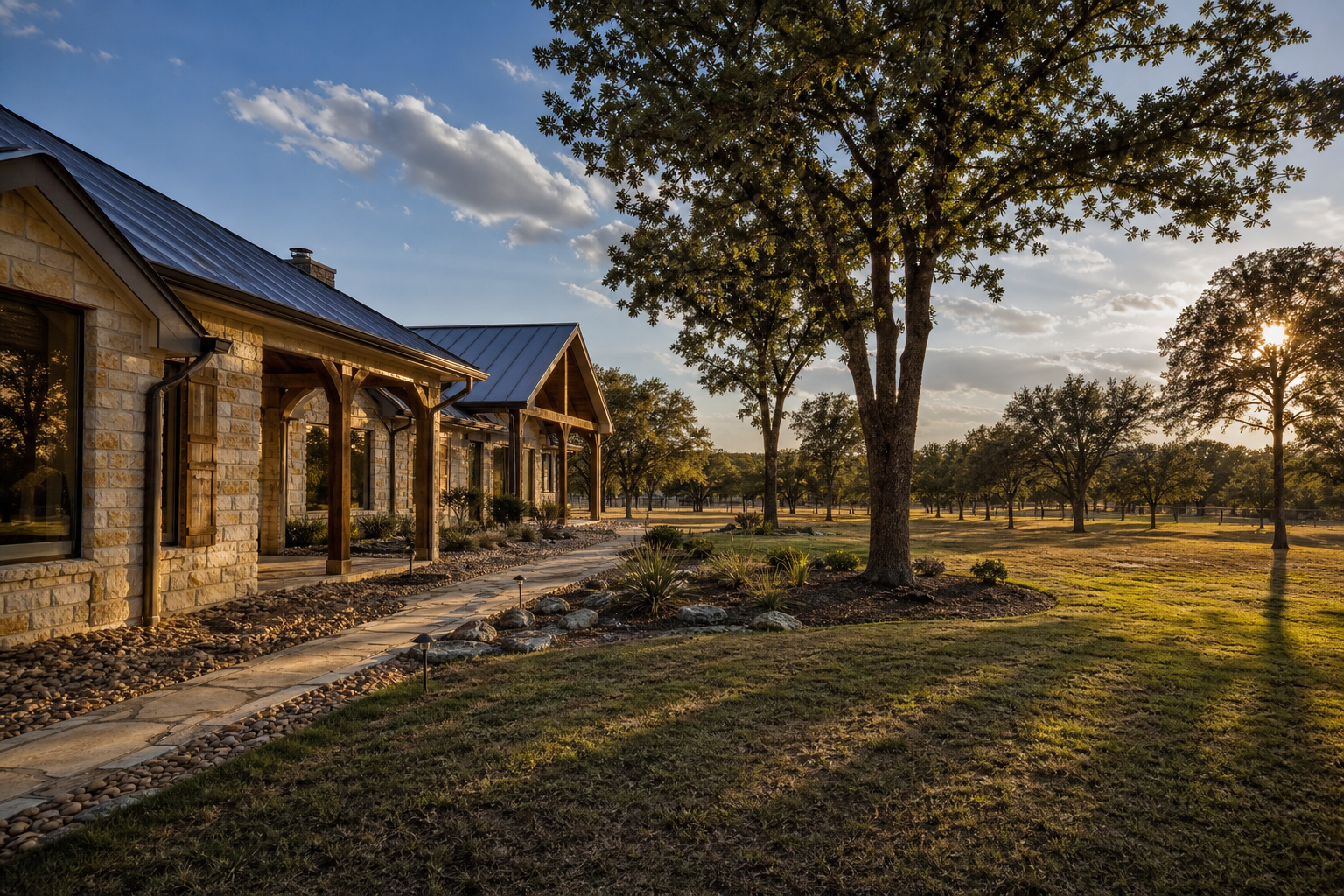
Standing-seam metal roofing: This is the most popular choice across rural Texas for good reason. Metal roofing is non-combustible, handles high winds common in this region, and lasts 40 to 60 years with minimal maintenance. For ranch properties in Parker County or lakefront builds near Possum Kingdom, metal is the workhorse option.
Clay or concrete tile: These offer excellent fire resistance and a more polished look suited to luxury properties in areas like Aledo or Weatherford. They are heavier, so your roof structure needs to be engineered accordingly.
Asphalt composition shingles with Class A ratings: More affordable than metal or tile, these are a solid middle ground. Make sure you verify the Class A designation specifically, as not all asphalt shingles carry it.
What to Avoid on Any Rural Texas Property
Wood shake and wood shingle roofs are the most dangerous choice in wildfire territory. They ignite rapidly from ember contact. If you are looking at an existing property in Jack County or western Parker County with a wood shake roof, factor the cost of a full roof replacement into your offer. I tell investors to treat this the same way you would treat a failed foundation inspection: it is a deal-breaker unless the price reflects the necessary fix.
Do Not Forget Vents and Soffits
Even a perfect metal roof can fail if embers enter through unprotected openings. Screen all roof vents, soffit vents, and eave openings with 1/8-inch metal mesh. This small detail prevents ember intrusion into your attic space, where one hot ember can ignite insulation and framing.
Creating Defensible Space Around Properties in Palo Pinto and Jack Counties
Defensible space is the managed area between your structure and the surrounding wildland. Think of it as your property’s firebreak. The Texas A&M Forest Service, which administers the Firewise USA program in Texas, provides detailed guidance on this, and I strongly recommend following it.
Zone 1: The Immediate Zone (0 to 5 Feet From Your Structure)
This is the most critical zone, especially for properties on acreage in Jack County or along the cedar-heavy draws near Possum Kingdom Lake. Within five feet of your home:
Use only non-combustible materials for decking, fencing, and ground cover (gravel, stone, or pavers)
Remove all dead vegetation, dried leaves, and mulch
Keep no firewood, propane tanks, or stored materials against the house
Trim tree branches so none overhang the roof or touch the structure
Zone 2: The Intermediate Zone (5 to 30 Feet)
This is where your landscaping choices matter most. Space trees so their canopies do not touch, keep grass mowed to four inches or less, and remove ladder fuels (low-growing vegetation that allows ground fire to climb into tree canopies). For ranch properties in Parker County where pasture meets the home site, maintaining this buffer is straightforward if you are already managing your grazing rotation.
Zone 3: The Extended Zone (30 to 100 Feet)
In this outer zone, you thin trees and brush to reduce overall fuel density. On a 20-acre tract in Palo Pinto County, you are not clearing everything. You are selectively removing the most flammable species, particularly cedar, and creating spacing that slows fire spread.
Fire-Resistant Landscaping for the Cross Timbers Region
What you plant matters as much as what you build. The Cross Timbers region that runs through Parker, Palo Pinto, and Jack counties is dominated by Ashe juniper (cedar), post oak, and native grasses. Cedar is one of the most explosive wildfire fuels in Texas because its oils are highly flammable and it retains dead material in its canopy. Here is how to make smart landscaping decisions.
Native Plants That Resist Fire
You do not have to sacrifice a beautiful landscape for fire safety. Several Texas-native and adapted species are naturally fire-resistant:
Live oak: Far more fire-resistant than post oak due to its higher moisture content in leaves
Texas mountain laurel: Evergreen, drought-tolerant, and slow to ignite
Red yucca: Low-growing, minimal fuel load, and thrives in the rocky soils common in Palo Pinto County
Buffalo grass and blue grama: Native grasses that stay low, require less water, and create less fuel volume than taller prairie grasses
Mexican buckeye: Deciduous, moderate moisture content, and well-suited to the Cross Timbers climate
What to Remove or Manage Aggressively
Ashe juniper (cedar): Remove within 30 feet of any structure without exception. Beyond that, thin aggressively.
Eastern red cedar: Same volatility as Ashe juniper; manage identically.
Dried ornamental grasses left uncut: These act as wicks during fire season. Cut them back every winter.
Having closed over 250 transactions in this market, including ranch and recreational land throughout these counties, I can tell you that buyers increasingly ask about wildfire preparedness. Properties that already have defensible space and fire-resistant landscaping in place command stronger offers and sell with fewer contingencies.
How Fire-Resistant Upgrades Affect Property Value and Insurance in Parker County
As an investor, you are thinking about return on investment. Fire-resistant upgrades deliver ROI through two channels: resale value and ongoing insurance costs.
Insurance Premium Impact
Insurance carriers serving rural Parker, Palo Pinto, and Jack County properties are paying close attention to wildfire risk. Properties with documented fire-resistant roofing, defensible space, and Firewise-compliant landscaping can qualify for lower premiums. Many rural properties in this corridor rely on private water wells rather than municipal fire hydrants, and fire suppression response times are longer in unincorporated areas. Insurance underwriters factor all of this in. Your fire-resistant upgrades directly address their risk calculations.
Resale and Rental Value
With the median listing price in Parker County at $557,175 as of June 2026 according to FRED data, and ranch properties in the county ranging well above that, protecting your investment from wildfire damage is not just about safety. It is about preserving and enhancing equity. Luxury properties in Parker County, particularly those on acreage west of Weatherford and along the Palo Pinto County line, benefit enormously from visible fire mitigation because buyers shopping in that price range are sophisticated enough to evaluate risk.
Exterior Construction Details That Matter in Wildfire Zones
Beyond roofing and landscaping, several exterior building details make or break your property’s fire resilience.
Fiber cement siding (such as HardiePlank) is non-combustible and outperforms vinyl or wood siding in fire exposure
Tempered or dual-pane windows resist radiant heat far better than single-pane glass, which can shatter from heat exposure and allow embers inside
Enclosed eaves and boxed soffits eliminate the gaps where embers accumulate
Metal or masonry fencing within five feet of the structure prevents fire from traveling along a wood fence line directly to your home
Non-combustible decking materials (composite or aluminum) protect the area where most families spend time outdoors
For first time home buyers in Weatherford considering properties that back up to undeveloped land, or for investors evaluating lake properties on Possum Kingdom Lake, these details should be part of your property inspection checklist before you make an offer.
Frequently Asked Questions
What is the most important fire-resistant upgrade for a rural Texas home?
A Class A fire-rated roof is the single most impactful upgrade. Metal roofing is the most popular choice in rural Parker, Palo Pinto, and Jack counties because it is non-combustible, wind-resistant, and lasts decades. Combined with 1/8-inch metal mesh screening on all vents and soffits, a metal roof dramatically reduces your risk of ember ignition.
How wide should defensible space be around a home in Palo Pinto County?
The Texas A&M Forest Service recommends maintaining defensible space in three zones: 0 to 5 feet with non-combustible materials only, 5 to 30 feet with managed and spaced vegetation, and 30 to 100 feet with thinned trees and reduced brush density. In the cedar-heavy terrain of Palo Pinto County, that 100-foot zone is especially important.
Is cedar (Ashe juniper) really that dangerous for wildfire?
Yes. Ashe juniper is one of the most flammable native species in Texas. Its oils ignite rapidly, and it retains dead material in its canopy that acts as fuel. Remove cedar within 30 feet of any structure and thin it aggressively beyond that distance across your property.
Do fire-resistant upgrades lower homeowners insurance in Parker County?
Many insurance carriers offer premium reductions for properties with documented fire-resistant roofing, defensible space, and Firewise-compliant landscaping. Since many rural Parker County properties rely on private water wells rather than municipal hydrants, these upgrades carry extra weight with underwriters.
What native Texas plants are fire-resistant for landscaping?
Live oak, Texas mountain laurel, red yucca, buffalo grass, blue grama, and Mexican buckeye are all native or adapted species that are naturally fire-resistant and thrive in the Cross Timbers climate of Parker, Palo Pinto, and Jack counties.
Should I choose metal roofing or asphalt shingles for a ranch property?
For ranch properties in Parker County and surrounding counties, metal roofing is generally the stronger choice. It is non-combustible, handles high winds, and requires minimal maintenance over a 40 to 60 year lifespan. Asphalt shingles with a Class A fire rating are a more affordable alternative if budget is a factor.
How does wildfire risk affect property values for ranch properties in Parker County?
Properties with visible fire mitigation, including fire-resistant roofing, defensible space, and managed landscaping, command stronger offers and sell with fewer contingencies. With the median listing price in Parker County at $557,175 as of June 2026, protecting that investment through fire-resistant upgrades is critical.
What exterior siding is best for wildfire zones?
Fiber cement siding is the recommended choice for homes in wildfire zones. It is non-combustible and significantly outperforms vinyl or wood siding when exposed to radiant heat or direct flame contact.
Are wood decks a fire hazard on rural Texas properties?
Yes. Wood decks within the immediate zone around your home can ignite from ember contact and carry fire directly to your structure. Use non-combustible decking materials such as composite or aluminum, especially within five feet of the home.
How do I find out if my property in Jack County is in a wildfire risk area?
The Texas A&M Forest Service provides wildfire risk assessment and administers the Firewise USA program statewide. They regularly issue burn bans for Jack, Palo Pinto, and Parker counties during dry periods. Contact them directly or work with a local real estate professional who understands the specific risks for your area.
The Bottom Line
Building or upgrading in the wildfire zones of Palo Pinto, Parker, and Jack counties is not about eliminating risk entirely. It is about making smart, documented decisions that protect your investment, reduce your insurance costs, and position your property competitively in a market where buyers are paying attention to fire resilience. Start with a Class A fire-rated metal roof, create defensible space in three clear zones, replace cedar with fire-resistant native plants, and upgrade your exterior materials.
I have spent 17 years helping buyers and investors find the right properties across this region, from luxury estates in Weatherford to recreational land in Jack County and lake properties on Possum Kingdom Lake. With 15 five-star reviews and over 250 closed transactions, I know this market and I know these properties. If you are building, upgrading, or evaluating a rural Texas property for wildfire readiness, I would love to walk through your options. Reach out to me, Lynae Amason, at 817-522-2897 or visit my office at 220 Fort Worth Hwy, Suite 700, in Weatherford.
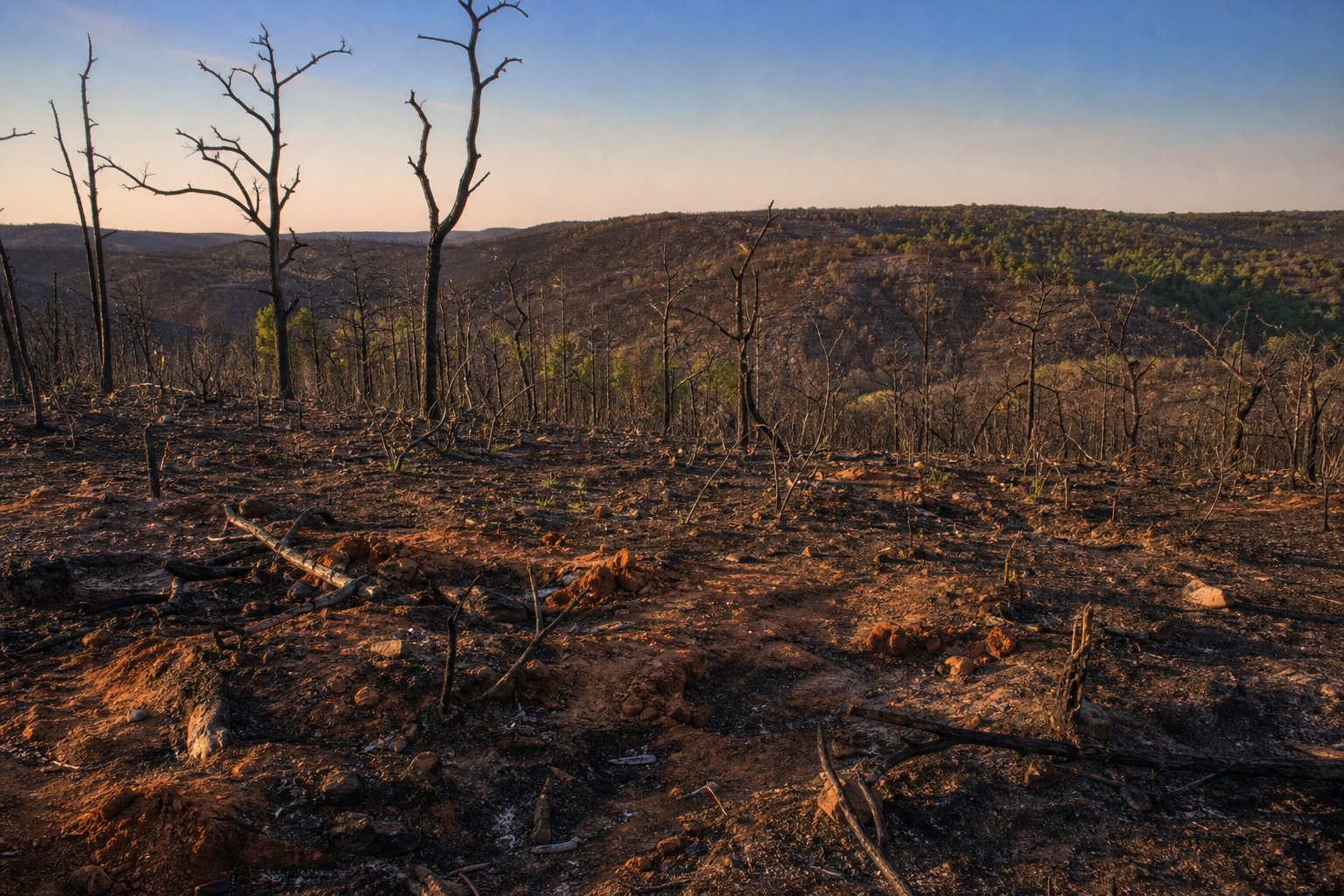
Read More
Rebuilding After Wildfire
Rebuilding After Wildfire Damage in Palo Pinto County: What Investors Need to Know

Rebuilding After Wildfire Damage in Palo Pinto County: What Investors Need to Know
How do you navigate property valuation, insurance, and rebuilding in Palo Pinto County after wildfire damage, and what should real estate investors understand before buying in?
If you are investing in fire-affected Palo Pinto County property, expect valuations to drop 20-40% on unrepaired structures, insurance premiums to climb significantly, and rebuilding timelines to stretch longer than metro projects due to remote access and code upgrades.
Why This Matters Right Now in Palo Pinto County
The Ross Fire is still burning. As of late August 2026, it has consumed more than 50,000 acres across Palo Pinto County and Jack County with only 8% containment. Worth Ranch, a youth scout camp run by Longhorn Council, has suffered what officials describe as catastrophic damage. Governor Abbott’s disaster proclamation, originally issued in August 2025 and renewed in January 2026, specifically includes counties in this region.
I have spent 17 years working real estate across Parker County, Palo Pinto, and the surrounding North Texas counties. I live on a ranch with my husband, raise cattle, and know this land as intimately as anyone. What I can tell you is that the landscape we are looking at right now in Palo Pinto County is not without precedent. The 2011 Possum Kingdom Complex fire burned more than 125,000 acres and destroyed over 100 buildings in this same region. Properties did recover. But the timeline, the insurance complications, and the rebuilding realities are things every investor needs to understand before writing a check.
How Wildfire Damage Affects Property Values in Palo Pinto County
You need to separate two distinct forces when evaluating fire-impacted property: physical damage and stigma. Both reduce value, but they behave differently over time.
Properties with unresolved fire damage in Texas can lose 20-40% of their pre-fire value. That decline reflects structural compromise, smoke and water damage, potential environmental contamination, and the simple reality that most buyers do not want the headache. For investors, that gap between current market price and post-rebuild value is where opportunity lives.
But here is the nuance most people miss. Location and fire risk significantly influence long-term land values, particularly in areas prone to recurring wildfire events. Palo Pinto County sits in a region where Texas has two distinct wildfire seasons: late winter and late summer through early fall. That recurring risk is something appraisers and lenders factor into valuations even after repairs are complete.
What does that actually mean for your investment math? It means you cannot simply look at the acquisition discount and assume full recovery. You need to account for ongoing insurance cost increases, potential buyer reluctance on resale, and the mandatory disclosure requirements under Texas Property Code § 92.054, which requires sellers to disclose fire damage history.
In desirable areas, particularly around Possum Kingdom Lake and Mineral Wells, properties historically recover faster because buyer demand for lake access and scenic ranch land persists. In more remote corridors, the stigma can linger three to five years.
Insurance Realities for Palo Pinto County Investment Properties
If there is one area where I tell investors to do their homework before anything else, it is insurance. The fire-insurance landscape in Palo Pinto County is shifting fast, and what was affordable coverage two years ago may not even be available today.
Understanding the Underinsurance Trap
Construction cost inflation and updated building code requirements mean that a property insured to a figure set even a few years ago may be materially underinsured today. If you are acquiring a fire-damaged property and planning a rebuild, you need to get current replacement cost estimates from contractors, not rely on the previous owner’s policy limits. A total loss in a remote area like western Palo Pinto County will be slower and more expensive to rebuild than the same loss in the DFW metro.
What to Expect From Carriers
Standard homeowners insurance carriers may decline coverage entirely on properties with recent fire damage or those located in active burn zones
Premium increases in high-risk areas can run significantly above what comparable properties in, say, Weatherford or eastern Parker County would pay
The Texas FAIR Plan Association, administered through the Texas Department of Insurance, provides basic property insurance for properties that cannot obtain coverage in the standard market. This is your backstop if private carriers refuse to write a policy
How Insurance Costs Affect Your Investment Returns
Insurance costs in high-risk areas directly erode your cap rate and your eventual resale value. Prospective buyers will face the same elevated premiums, which shrinks the buyer pool and compresses what the market will bear. Factor this into your hold period analysis from day one.
Tax Relief and Financial Incentives After the Disaster Declaration
Here is something many investors overlook entirely. Under Texas Tax Code §11.35, property owners whose property is damaged by a disaster in a governor-declared disaster area may qualify for a temporary property tax exemption. Governor Abbott’s January 2026 proclamation renewal specifically includes Hood and Jack counties, and the original August 2025 proclamation covers additional affected areas.
What this means practically is that your holding costs during the rebuild period may be lower than you expect. That temporary exemption can meaningfully change your cash flow projections during the months or years it takes to complete renovations and bring a property back to market.
With 250 closed transactions across this region and an ABR designation, I have walked investors through post-disaster acquisitions before. The tax relief is real, but it is temporary, so you need to build your pro forma with the understanding that full tax assessments will return once the property is restored.
Rebuilding Smart: Fire-Resistant Construction in Palo Pinto County
If you are rebuilding on fire-damaged land in Palo Pinto County, you have an opportunity to do it right. Rebuilds often trigger updated building code compliance, which means you may be required to meet current standards regardless. But even where codes are not mandated, fire-resistant construction is an investment that protects your asset and appeals to future buyers.
Key Fire-Resistant Building Strategies
Class A fire-rated roofing (metal, tile, or composite) instead of traditional wood shakes
Fiber cement siding rather than wood or vinyl, which resists ignition from radiant heat and flying embers
Ember-resistant vents and fully enclosed eaves to prevent burning debris from entering attic spaces
Non-combustible decking and fencing within five feet of any structure
Defensible space creation with a minimum 30-foot clearance zone around all structures
These upgrades cost more upfront. But consider this: 85% of Texas wildfires start within two miles of a community, and climate change is extending the summer dry season and making it more intense. Building to resist ignition is not just about code compliance. It is about protecting a six- or seven-figure asset in a county with documented recurring fire risk.
The Texas A&M Forest Service Wildfire Risk Assessment Portal is the best resource for evaluating specific parcel-level risk before you commit to a purchase.
Financing a Fire-Damaged Property Acquisition in North Texas
Your financing options look different when you are buying in a declared disaster area. Here is what you need to know.
Conventional lenders may require additional inspections and fire mitigation documentation for properties in the affected zone. Do not expect a standard 30-day close on a fire-damaged ranch property along the Brazos in Palo Pinto County; the process will take longer.
Hard money and private lending may be more accessible for fire-damaged acquisitions where conventional underwriting stalls
SBA disaster loans may be available for investment properties in declared disaster areas
USDA Rural Development programs may apply in the rural portions of Palo Pinto, Jack, and Wise counties
Your due diligence checklist should include a thorough damage inspection, current replacement cost estimates from licensed contractors, an insurance pre-qualification (before you close, not after), and a realistic renovation budget that accounts for material cost inflation and the logistical realities of building in remote areas.
How the Broader North Texas Market Frames Your Palo Pinto Investment
Context matters. While Palo Pinto County processes fire damage, the adjacent Parker County market remains strong. As of June 2026, the median listing price in Parker County was $557,175. Weatherford specifically shows a median sold price of $449,997 with 4.8% year-over-year appreciation, the highest rate in the western DFW corridor.
That matters for you as an investor because Parker County’s stability demonstrates continued demand for the broader North Texas corridor. Ranch properties in Parker County, lake properties near Weatherford, and luxury properties throughout this region continue to attract both first-time home buyers and seasoned investors. When Palo Pinto County properties recover, they benefit from that same westward expansion of DFW demand.
Since 2005, more than 243,000 separate Texas wildfires have burned 13.9 million acres. The 2025 count identified roughly 243,000 at-risk properties statewide, with total reconstruction costs valued at more than $88 billion. These numbers tell you that wildfire risk is a permanent feature of the Texas investment landscape, not a one-time event.
Frequently Asked Questions
How much do property values typically decline after wildfire damage in Palo Pinto County?
Properties with unresolved fire damage can lose 20-40% of their pre-fire value. The extent of the decline depends on whether structures are partially or totally destroyed, the desirability of the location, and whether the owner has completed repairs. Properties near Possum Kingdom Lake and other high-demand areas tend to recover faster than those in more remote corridors.
Does the Texas disaster proclamation help property owners with taxes?
Yes. Under Texas Tax Code §11.35, property owners in governor-declared disaster areas may qualify for a temporary property tax exemption. Governor Abbott’s proclamation, renewed in January 2026, specifically includes Hood and Jack counties among the declared areas, and the broader proclamation covers fire-affected regions.
Can I get standard homeowners insurance on fire-damaged property in Palo Pinto County?
Standard carriers may decline coverage on fire-damaged or fire-adjacent properties. The Texas FAIR Plan Association provides basic property insurance for properties that cannot obtain coverage in the standard market. Expect elevated premiums regardless of which carrier writes the policy.
What is the Ross Fire and how large is it?
The Ross Fire has burned more than 50,000 acres across Palo Pinto County and Jack County as of late August 2026, with only 8% containment. It has been compared to the 2011 Possum Kingdom Complex fire, which burned 125,000 acres and destroyed more than 100 buildings in the same region.
Do I have to disclose fire damage when I resell a property in Texas?
Yes. Under Texas Property Code § 92.054, sellers must disclose fire damage. Cities may also impose additional rebuild requirements, such as mandating wildfire-resistant materials in high-risk zones, which can affect both rebuilding costs and resale value.
What fire-resistant building materials should I use when rebuilding?
Focus on Class A fire-rated roofing, fiber cement siding, ember-resistant vents, enclosed eaves, non-combustible decking within five feet of structures, and a minimum 30-foot defensible space clearance zone. These upgrades protect your investment against the recurring fire risk that characterizes this region.
How long does it typically take for property values to recover after a major wildfire?
In desirable North Texas locations, property values can begin recovering within one to two years of completed repairs. Stigma from fire damage history can linger three to five years in less sought-after areas. Full recovery depends on demand, insurance availability, and the quality of the rebuild.
What financing options exist for fire-damaged property purchases?
Hard money and private lending tend to be more accessible than conventional financing for fire-damaged acquisitions. SBA disaster loans and USDA Rural Development programs may also apply in rural portions of Palo Pinto, Jack, and Wise counties. Conventional lenders typically require additional inspections and fire mitigation documentation.
How does the broader Parker County market compare to fire-affected Palo Pinto County?
Parker County’s median listing price was $557,175 as of June 2026, and Weatherford shows 4.8% year-over-year appreciation. That stability in adjacent markets supports long-term recovery in Palo Pinto County, as westward DFW expansion continues to drive demand for ranch, lake, and rural properties.
Is wildfire risk in North Texas a one-time event or ongoing concern?
It is ongoing. Texas has two wildfire seasons annually, and since 2005, more than 243,000 wildfires have burned 13.9 million acres statewide. Climate change is extending the dry season and increasing intensity. Roughly 243,000 Texas properties were identified as at-risk in the 2025 count, with reconstruction costs exceeding $88 billion.
The Bottom Line
Investing in fire-affected Palo Pinto County property is not for the faint of heart, but it is not uncharted territory either. This region recovered from the 2011 Possum Kingdom fire, and the fundamentals that make this part of North Texas desirable, the lake access, the ranch land, the proximity to the growing DFW corridor, have not changed. What has changed is the insurance landscape, the building code expectations, and the level of due diligence required to invest wisely.
I have spent 17 years helping buyers and investors navigate this exact market, from first-time buyers in Weatherford to seasoned investors acquiring ranch properties across Parker County and beyond. With 250 closed transactions and 13 five-star reviews from clients who trust my local real estate knowledge, I understand the complexities of this region in a way that only comes from living here. If you are considering an investment in Palo Pinto County or anywhere in the North Texas fire-affected corridor, I would welcome the chance to walk through your options with you. Contact me today at 817-522-2897. I am Lynae Amason with Williams Trew Real Estate in Weatherford, and I am ready to help you navigate this complex market.

Read More

Posted on

Rebuilding After the Ross Fire: Soil and Vegetation Recovery in Palo Pinto and Jack Counties

Rebuilding After the Ross Fire: Soil and Vegetation Recovery in Palo Pinto and Jack Counties
What do landowners in Palo Pinto and Jack Counties need to know about soil and vegetation recovery after the Ross Fire before rebuilding or investing in burned land?
The Ross Fire burned over 90,400 acres across Palo Pinto and Jack Counties, and if you own land in the burn zone, your recovery timeline depends on soil health, erosion management, and strategic revegetation before any rebuilding begins.
Why This Matters Right Now in Palo Pinto and Jack Counties
The Ross Fire started near the city of Palo Pinto on August 24, 2026, and within hours it had grown to 15,000 acres as winds pushed flames north into Jack County. As of September 7, the Texas A&M Forest Service reports 157 structures destroyed, 140 structures damaged, and 453 structures saved. The fire is approximately 57% contained, but some debris continues to burn, and it could take weeks before fire-riddled trees across the terrain fully die out.
This is the second-largest wildfire in North Texas’ recorded history, according to the National Weather Service, behind only the 2011 Possum Kingdom Complex Fire that burned 126,734 acres. If you own ranch properties in this region, or you’re an investor evaluating land near Possum Kingdom Lake, the decisions you make in the next 6 to 12 months about soil recovery will determine the long-term value of your investment.
With 17 years of experience helping clients buy and sell ranch properties, farm land, and recreational land across Parker County, Palo Pinto, and Jack Counties, I can tell you that the questions I’m getting right now from landowners are urgent, and they deserve clear answers.
Understanding the Burn Zone: Where the Ross Fire Hit Hardest
You need to know exactly what happened on your property before you plan your next move. The Ross Fire burned in central Palo Pinto County, southeast of Possum Kingdom Lake, actively burning from US 180 near the city of Palo Pinto to TX 337 near Graford. The fire spread north into Jack County, forcing the evacuation of 630 households.
What makes this fire especially damaging to the land itself is the terrain. Firefighters reported extreme fire behavior, including trees torching in groups amid strong winds. Crews struggled to suppress flames in steep and rocky terrain, according to the Texas A&M Forest Service. That steep, rocky terrain is the same landscape that makes recovery harder, because burned slopes without vegetation are the most vulnerable to erosion.
What Caused These Conditions
The conditions that fed this fire were building for weeks. After more than a month without measurable rainfall, fine surface fuels became critically to extremely dry. Every high temperature in August measured above average, and there have been 30 days in 2026 with triple-digit temperatures or above. Burn bans were already in effect for Tarrant, Palo Pinto, and Jack Counties before the fire started.
A three-month forecast from NOAA shows North Texas has a maximum 40% chance of continued above-average temperatures through November, but the likelihood of rainfall should level out to average. So the question is: will the rain come in time to help your soil recover, or will drought compound the damage?
Soil Recovery After Wildfire: What Palo Pinto County Landowners Must Assess First
If you own burned land in Palo Pinto or Jack County, here is the sequence I recommend before you make any decisions about rebuilding, replanting, or selling.
Conduct a comprehensive soil test. You need to know your soil’s pH, organic matter content, and nutrient levels. High-severity fire can volatilize nitrogen and organic matter from topsoil, while phosphorus and potassium typically remain but can be redistributed by wind and water erosion.
Assess soil hydrophobicity. Intense wildfire creates a waxy, water-repellent layer in soil. In the Cross Timbers ecoregion, which encompasses both Palo Pinto and Jack Counties, this layer can persist for months to years depending on burn severity. If water beads on your soil surface rather than soaking in, you have a hydrophobicity problem.
Evaluate erosion risk immediately. The steep, rocky terrain in the Ross Fire burn zone is especially vulnerable. Without vegetation to hold soil, the first significant rainfall events can cause severe erosion, mudslides, and sediment runoff into waterways, including Possum Kingdom Lake.
Having closed over 250 transactions across this region, many of them on ranch and recreational land, I know that skipping the soil assessment phase is the most expensive mistake a landowner can make after a fire. What looks like minor surface damage can mask deep structural changes in the soil profile that affect everything from building foundations to pasture productivity.
Vegetation Recovery Timelines for the Cross Timbers Ecoregion
So how long will it actually take for your land to come back? Here is what the science tells us about the Cross Timbers ecoregion that covers Palo Pinto and Jack Counties.
Native grasses typically take 1 to 3 growing seasons to recover on their own, depending on rainfall and whether root systems survived
Brush and understory vegetation may begin regrowing within the first growing season, though full density takes longer
Mature tree canopy, the signature post oaks and blackjack oaks of the Cross Timbers, can take 5 to 15 years to approach pre-fire maturity
What does that mean for your property’s usability? If you’re running cattle, you may need to defer grazing for at least one to two full growing seasons to allow root systems to re-establish. If you’re planning construction, you need to address erosion control before breaking ground.
Protecting Your Land From Erosion Before Rebuilding
Erosion is your biggest enemy right now, not just because it strips topsoil, but because it can undermine any future building site, road, or fence line. The steep terrain where the Ross Fire burned means water will flow fast when rain finally arrives. What I tell my clients in situations like this is to prioritize erosion control measures before anything else.
Install temporary erosion barriers on slopes, particularly near drainages feeding into Possum Kingdom Lake
Apply mulch or straw cover to exposed soil areas where practical
Avoid heavy equipment on saturated burned soil, which compacts what little structure remains
Work with the USDA Natural Resources Conservation Service (NRCS) for site-specific guidance and potential cost-share programs
Investment Considerations for Burned Land in Palo Pinto and Jack Counties
If you’re a real estate investor evaluating fire-affected parcels, you’re facing both risk and opportunity. Let me be straightforward about both.
The risks are real. Burned ranchland will likely see temporary value depression. With 157 structures destroyed and 25 homes lost, some landowners will choose to sell rather than rebuild. Properties with unresolved soil issues, uncleared debris, or active erosion problems carry significant risk for any buyer.
The long-term fundamentals remain strong. Palo Pinto County sits approximately 60 miles west of Fort Worth. Lake properties on Possum Kingdom Lake have been a consistent draw for recreational buyers and investors for decades. Jack County offers large-acreage ranch properties that appeal to agricultural investors and those seeking recreational land.
What I would caution any investor to do before purchasing burned land is to verify whether the property carries wildfire insurance, understand how FEMA assistance may affect any transaction, and budget for soil remediation. FEMA approved a Fire Management Assistance Grant for the Ross Fire, making the state eligible for 75% reimbursement in suppression costs. Governor Abbott stated that Texas will provide all necessary resources to protect Texans from the fire. However, that federal assistance is directed at firefighting costs, not at individual land rehabilitation.
Rebuilding permits in both Palo Pinto County and Jack County may require updated soil assessments and erosion control plans. Plan for these costs before you close.
Livestock and Agricultural Recovery Near Possum Kingdom Lake
For those of you running cattle or managing agricultural operations in the burn zone, you already know the immediate impact was severe. The Graham Livestock Commission offered space for livestock displaced by the wildfire at the Old Mineral Wells Sale Barn. Residents of Palo Pinto and Jack Counties were directed to relocate livestock to facilities including the Parker County Sheriff’s Posse Arena Pens in Weatherford.
The community response has been remarkable, and it reflects something I’ve seen throughout my 17 years working in this part of Texas: people here take care of each other. But the question you’re asking now is: when can my land support livestock again?
The answer depends entirely on your soil recovery. Grazing too early on burned pasture destroys regrowth and extends your recovery timeline by years. Get a soil test, work with your local NRCS office, and plan for a conservative return to grazing.
Frequently Asked Questions
How long does soil take to recover after the Ross Fire in Palo Pinto County?
Soil recovery timelines vary by burn severity. In the Cross Timbers ecoregion covering Palo Pinto and Jack Counties, soil hydrophobicity can persist for months to years. Native grasses typically return within 1 to 3 growing seasons, while mature tree canopy may take 5 to 15 years. A soil test conducted after the fire cools is the first step in estimating your specific timeline.
What is soil hydrophobicity and why does it matter after the Ross Fire?
Intense wildfire creates a waxy, water-repellent layer in the soil. When rain hits hydrophobic soil, it runs off rather than soaking in, dramatically increasing erosion risk. This is especially dangerous in the steep, rocky terrain of the Ross Fire burn zone, where firefighters reported extreme fire behavior and trees torching in groups.
Can I rebuild on burned land in Jack County right away?
You should not rebuild until you’ve completed a comprehensive soil assessment and addressed erosion control. Rebuilding permits in Jack County may require updated soil assessments and erosion control plans. Skipping this step can lead to foundation problems and ongoing erosion issues that cost far more to fix later.
How does the Ross Fire affect property values in Palo Pinto County?
Burned ranchland will likely experience temporary value depression. However, the area’s proximity to Fort Worth (approximately 60 miles) and the enduring appeal of lake properties on Possum Kingdom Lake support long-term value recovery. Investors should factor in soil remediation costs when evaluating fire-affected parcels.
What federal assistance is available for Ross Fire landowners?
FEMA approved a Fire Management Assistance Grant for the Ross Fire, making the state eligible for 75% reimbursement in suppression costs. This assistance is directed at firefighting operations, not individual property rehabilitation. Landowners should contact the NRCS for potential cost-share programs related to soil and vegetation recovery.
When can I return cattle to burned pasture in Palo Pinto or Jack County?
Grazing too early on burned pasture destroys new root growth and extends recovery timelines significantly. Most fire science guidance recommends deferring grazing for at least one to two full growing seasons. Get a soil test and work with your local NRCS office for a site-specific recommendation.
Is there erosion risk near Possum Kingdom Lake after the Ross Fire?
Yes, significant erosion risk exists. Without vegetation to hold soil on burned slopes, the first heavy rainfall events can cause sediment runoff directly into Possum Kingdom Lake and its tributaries. Temporary erosion barriers and mulch cover on exposed slopes are critical mitigation steps.
How many structures did the Ross Fire destroy?
According to the Texas A&M Forest Service, as of September 7, 2026, 157 structures have been destroyed, 140 structures are damaged, and 453 structures have been saved. Among the destroyed structures, 25 were confirmed homes.
Should I sell my burned land in Jack County or rebuild?
That depends on your financial position, your recovery timeline tolerance, and whether you carry wildfire insurance. If you’re an investor considering purchasing burned land, factor in soil remediation costs, erosion control, and the 1 to 3 year vegetation recovery window. If you’re a landowner, a soil assessment will tell you what you’re actually working with.
How does the Ross Fire compare to the 2011 Possum Kingdom Complex Fire?
The Ross Fire has burned over 90,400 acres, making it the second-largest wildfire in North Texas’ recorded history according to the National Weather Service. The 2011 Possum Kingdom Complex Fire burned 126,734 acres. Both fires occurred in the same Cross Timbers ecoregion, and recovery lessons from 2011 are directly applicable to 2026.
The Bottom Line
If you own land in Palo Pinto or Jack County that was affected by the Ross Fire, your first step is not rebuilding. It is understanding what happened to your soil. Every decision that follows, from erosion control to livestock management to construction planning, depends on that foundation. Investors evaluating fire-affected parcels should approach this market with clear eyes: the long-term fundamentals of this region are strong, but the short-term costs of proper recovery are real.
With 250 closed transactions, 15 five-star client reviews, and nearly two decades helping clients navigate ranch properties, farm land, and recreational land across Parker County, Palo Pinto, and the surrounding counties, I’m here to help you evaluate your options. Whether you’re a landowner deciding whether to rebuild or an investor looking at fire-affected parcels near Possum Kingdom Lake, I can help you understand what the land is actually worth and what recovery looks like. Call me at 817-522-2897 or reach out through my office at 220 Fort Worth Hwy, Suite 700, Weatherford, TX 76086. I’m Lynae Amason, and this is my community. Let’s figure out your next step together.

Read More

Posted on

Creating Defensible Space for Weatherford Countryside Properties: Your Wildfire Readiness Guide

Creating Defensible Space for Weatherford Countryside Properties: Your Wildfire Readiness Guide
Is your countryside home in Weatherford and the surrounding North Texas counties prepared to survive a wildfire, and what does creating defensible space actually involve?
Yes, and it starts now. Defensible space is the managed buffer zone between your structure and surrounding wildland vegetation, and for countryside properties across Parker County and neighboring counties, it is no longer optional. It is the single most important factor in whether your property survives a fire event.
Why Wildfire Preparedness Matters in Weatherford and Parker County Right Now
If you own ranch properties in Parker County, land along the Palo Pinto County line, or a countryside home anywhere between Weatherford and Jack County, this is the most urgent conversation you can have about protecting your investment. The Ross Fire, which sparked near Palo Pinto on August 24, 2026, has burned at least 90,400 acres across Palo Pinto and Jack counties, destroying 157 structures and damaging 140 more. It is now the second-largest wildfire in North Texas history.
Here is what also demands your attention: 453 structures were saved during the Ross Fire. That is nearly three times the number destroyed. The difference, in case after case, was defensible space.
I have spent 17 years helping clients buy, sell, and protect properties across Parker County, from ranches along FM 1189 to luxury homes near the historic Weatherford square. I live on a ranch with my husband, raise cattle, and participate in the equestrian community here. The land in this region is not abstract to me; it is personal. And after watching the Ross Fire unfold just one county to our west, I can tell you that every property owner in our area needs to take wildfire preparedness seriously in 2026 and beyond.
Understanding the Three Zones of Defensible Space for North Texas Properties
The Texas A&M Forest Service and the Texas Wildfire Risk Assessment Portal break defensible space into three distinct zones. If you own countryside acreage anywhere from Weatherford to Possum Kingdom Lake, here is exactly what each zone requires.
Zone 1: The Immediate Zone (0 to 5 Feet from Your Structure)
This is the most critical zone. According to the Texas Department of Insurance, you should keep all fire-prone landscaping, plants, and decking at least 5 feet from the building. Consider replacing combustible material with rock gardens, concrete walkways, non-combustible decking, or stone patios. Remove vegetation from roofs and gutters and trim any tree branches hanging over the roof or chimney.
The Texas Wildfire Risk Assessment Portal notes that cleaning out combustible material from just the first five feet around the house has been shown multiple times to increase the likelihood of a structure surviving a wildfire. Five feet. That is all it takes to start making a measurable difference.
Zone 2: The Intermediate Zone (5 to 30 Feet)
In this zone, you need to create space between trees and tree crowns. Break up the continuity of fuel across the landscape by limiting vegetation to small clusters and creating fuel breaks with flower beds, driveways, or walkways. For investors with ranch properties in Parker County running cattle or horses, this zone often includes fence lines, feed storage, and outbuildings that need deliberate clearance.
Zone 3: The Extended Zone (30 to 100+ Feet)
This is where you interrupt the fire’s path and keep flames small and on the ground. Clear vegetation from outbuildings, propane tanks, and other infrastructure. Remove heavy accumulations of litter and debris, dead or decaying plant material, and smaller conifers growing between mature trees. Reduce the density of taller trees throughout the zone.
For properties with significant acreage, and many ranch properties in Parker County sit on 10 to 50 or more acres, Zone 3 management is an ongoing commitment, not a weekend project.
How Wildfire Risk Impacts Property Values and Insurance in Parker County
If you are evaluating investment properties in this market, wildfire preparedness is now a financial calculation, not just a safety one. More than 8 million Texans, about 32% of the state’s population, live in a wildland-urban interface according to the Texas Department of Insurance. Yet only about 20% of businesses in those areas have a wildfire protection plan.
What does that mean for your bottom line? Properties with documented wildfire mitigation measures are increasingly attractive to both buyers and insurers. Meanwhile, properties without defensible space may face rising insurance premiums or even non-renewal. Tarrant County has issued a 90-day burn ban as wildfire threats continue across the region, and Dallas County has been under a similar ban since July 27.
With Parker County’s median sales price at $475,000 in Q2 2026 and the median listing price reaching $557,175 as of June 2026 according to Federal Reserve Bank of St. Louis data, you are protecting a substantial asset. The All-Transactions House Price Index for Parker County reached 304.52 (with the year 2000 as the baseline of 100), meaning home values here have more than tripled since 2000. That kind of long-term appreciation is worth defending with $500 in gravel and a weekend of brush clearing.
Having closed over 250 transactions across this region and holding an ABR designation, I help investors evaluate properties through every lens, including wildfire resilience. It is part of the due diligence conversation I have with every buyer looking at countryside acreage.
The Ross Fire: What Weatherford and Parker County Investors Need to Learn
In 2026, the Texas A&M Forest Service has responded to 1,078 wildfires burning 301,528 acres. In August alone, the agency responded to 313 wildfires for 121,774 acres. For comparison, all of 2025 saw 6,304 wildfires burning about 132,366 acres total. The 2026 season has already more than doubled last year’s burned acreage.
Texas A&M Forest Service fire analyst Walter Flocke stated that the rapid onset of a flash drought increased fire occurrence and intensity statewide in August, and that critically dry fuels are present across much of North, Central, and East Texas.
Nine in 10 wildfires are caused by people, according to the Texas A&M Forest Service. Common causes include burning debris on windy days, dragging tow chains on the ground, or driving on tall grass. Equipment use, including vehicles, trailers, and ATVs, is the second-most common cause behind debris burning.
So what does this mean for you as a property owner in Weatherford or the surrounding countryside? It means the threat is not hypothetical. It is geographic and seasonal reality. If you own lake properties near Possum Kingdom Lake or ranch acreage in Palo Pinto or Jack County, you are quite literally bordering the Ross Fire’s footprint.
Emergency Access and Rural Property Design in Parker County
Here is something many investors overlook when acquiring countryside properties: can a fire truck actually reach your structures? The Texas Wildfire Risk Assessment Portal specifies that public and private streets should be a minimum of 10 feet wide to allow two traffic lanes. Curves and intersections need to be wide enough for large fire equipment to pass and turn. Streets and bridges should withstand at least 40,000 pounds, and dead-end streets or long driveways should include a turnaround area designed as a T or circle large enough for emergency vehicles.
If you are looking at ranch properties in Parker County or recreational land in the surrounding counties, evaluate access roads as part of your purchase decision. A beautiful 40-acre tract with a single narrow cattle path for access is a liability during a fire event, no matter how much defensible space you have created around the structures themselves.
Firewise Landscaping for Weatherford and North Texas Countryside Homes
Firewise landscaping is a set of design and maintenance practices specifically aimed at reducing the chance that flames reach or damage a home. It focuses on creating defensible space, selecting fire-resistant plants, and managing vegetation in ways that slow fire spread.
What I tell the investors I work with is that Firewise landscaping is not a one-time project. It requires ongoing care. Throughout the year, you need to monitor vegetation growth and adjust landscaping as conditions change. For properties in this part of Texas, that means paying particular attention during late summer drought conditions, which is exactly when the Ross Fire ignited.
With Weatherford’s population having grown approximately 25% over five years to 38,000, and 229 new homes listed in the last 30 days alone (up 20.5% year over year), more structures are pushing into that wildland-urban interface every season. Rated 5 out of 5 stars by 15 past clients, I take seriously the responsibility of guiding buyers toward properties that are both beautiful and resilient.
Frequently Asked Questions
What is defensible space, and why do Weatherford countryside properties need it?
Defensible space is the managed buffer between your home and surrounding wildland vegetation. According to the Texas Wildfire Risk Assessment Portal, this space, when maintained properly, slows or stops the spread of wildfire and protects your home from catching fire. It is also important for protecting firefighters defending your property. With the Ross Fire burning 90,400 acres just one county west of Parker County, defensible space is essential for countryside homes here.
How far should defensible space extend around a property in Parker County?
The three recognized zones extend from 0 to 5 feet (immediate zone), 5 to 30 feet (intermediate zone), and 30 to 100 feet or more (extended zone) from the furthest exterior point of the home. The Texas Department of Insurance and Texas A&M Forest Service both recommend maintaining all three zones for countryside properties in North Texas.
What should I remove from Zone 1, the area closest to my home?
Keep all fire-prone landscaping, plants, and combustible decking at least 5 feet away from your structure. Replace them with rock gardens, concrete walkways, non-combustible decking, stone patios, or irrigated grass. Remove vegetation from roofs and gutters and trim any branches hanging over the roof or chimney.
How does wildfire risk affect insurance on ranch properties in Parker County?
Properties in the wildland-urban interface face rising premiums or potential non-renewal. The Texas Department of Insurance notes that only about 20% of businesses in wildfire-prone areas have a protection plan. Documented defensible space and Firewise landscaping can help demonstrate risk mitigation to insurers.
What caused the Ross Fire near Palo Pinto County in 2026?
The Ross Fire began near U.S. Highway 180 and R D Bell Road, approximately 3 miles southwest of Palo Pinto, on August 24, 2026. While the specific ignition source is under investigation, the Texas A&M Forest Service reports that nine in 10 wildfires are caused by people, with debris burning and equipment use as the two leading causes.
How large is the Ross Fire, and how close is it to Weatherford?
The Ross Fire has burned at least 90,400 acres across Palo Pinto and Jack counties and is approximately 57% contained. Palo Pinto County directly borders Parker County to the west, placing Weatherford-area properties within a realistic radius of concern during high-wind events.
Are burn bans currently in effect near Parker County?
Yes. Tarrant County has issued a 90-day burn ban as wildfire threats continue, and Dallas County has been under a 90-day burn ban since July 27. Check with Parker County and your specific county for the most current local restrictions before any outdoor burning.
What are the driveway and access requirements for fire truck access to rural properties?
Roads should be at least 10 feet wide for two traffic lanes. Curves and intersections must accommodate large fire equipment. Roads and bridges should support at least 40,000 pounds. Dead-end streets and long driveways need a T or circle turnaround large enough for emergency vehicles to turn around.
Is Firewise landscaping a one-time project for countryside properties?
No. Firewise landscaping requires ongoing care throughout the year. You should monitor vegetation growth and adjust landscaping as conditions change, paying particular attention during drought conditions and late summer, which is when North Texas wildfire risk peaks.
How many structures were saved during the Ross Fire thanks to defensible space?
According to Texas A&M Forest Service data, 453 structures were saved during the Ross Fire, compared to 157 destroyed and 140 damaged. Reports from similar Texas fires, like the Rolling Pines Fire, confirmed that structures classified as defensible were the ones firefighters could actually stay and protect.
The Bottom Line
Defensible space is not a luxury feature for countryside properties in Weatherford and the surrounding North Texas counties. It is a financial imperative. With the Ross Fire still burning in Palo Pinto and Jack counties and 2026 wildfire acreage already more than doubling the entire 2025 season, every property owner and investor in this region needs to evaluate their structures, their landscaping, and their access roads.
Whether you are buying a home in Weatherford, looking at homes for sale in the area, or evaluating first-time home buying options, wildfire preparedness should be part of your acquisition checklist and ongoing property management plan. I would love to help you find the right property and protect it the right way. Give me a call at 817-522-2897 or visit my office at 220 Fort Worth Hwy, Suite 700 in Weatherford. After 17 years in this market and 250 closed transactions, I know this land, and I know what it takes to invest wisely here.

Read More
REALTOR and Multiple Listing Service marksEqual Housing Opportunity
© 2026 Lynae Amason · Williams Trew Real Estate · TX License #0615086 · TREC Information About Brokerage Services · TREC Consumer Protection Notice · Powered by AgentSpotlight.ai